
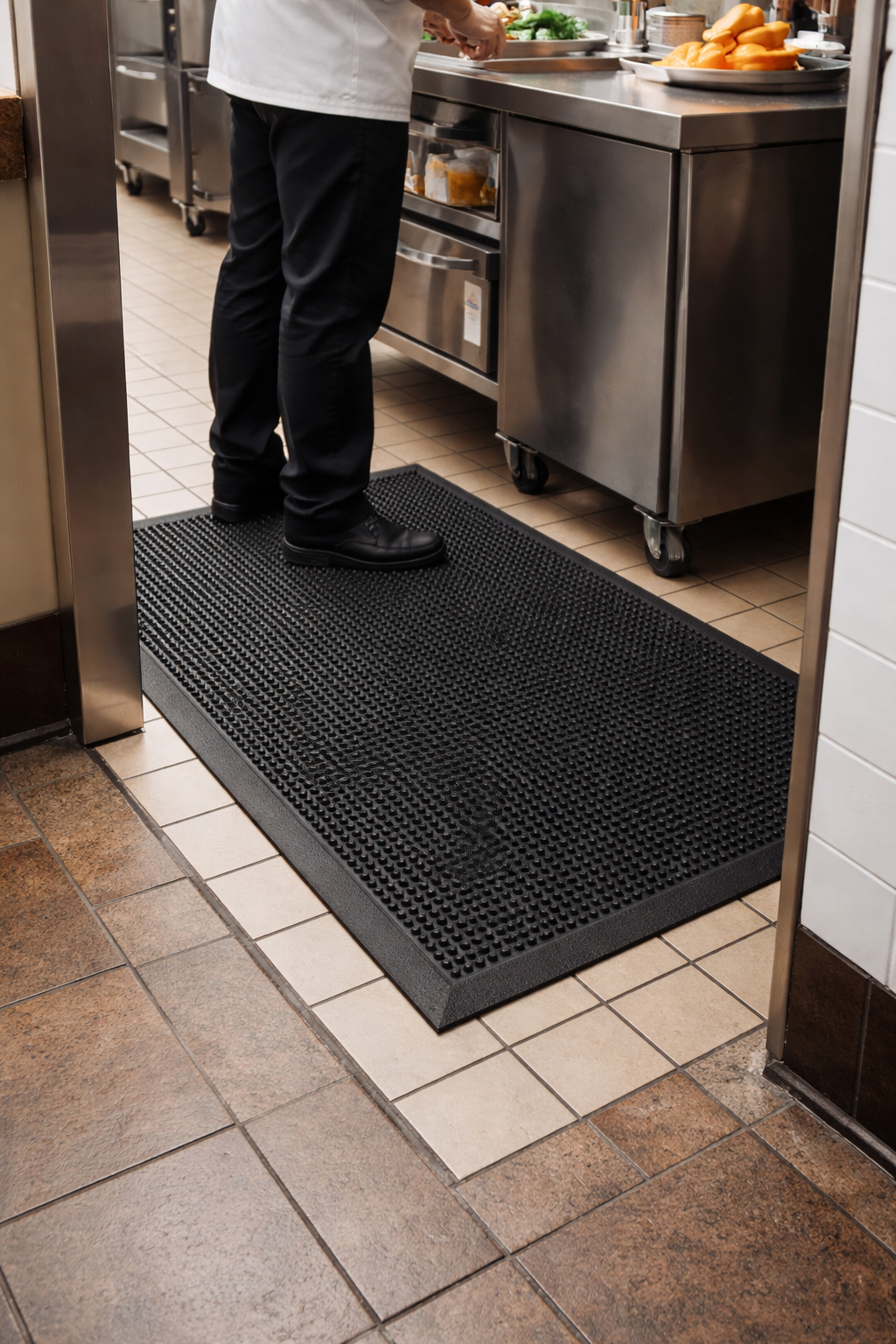
Anti-Fatigue Rubber Floor Mat UK 2026: Expert Guide
Anti-fatigue rubber floor mat UK solutions have become essential for workplace safety and employee wellbeing across England, Scotland, Wales, and Northern Ireland in 2026. When your workforce spends hours standing on hard concrete or industrial flooring, investing in professional-grade ergonomic matting isn't just about comfort—it's about productivity, safety compliance, and reducing workplace injuries. This comprehensive guide examines everything UK facilities managers, health and safety officers, and business owners need to know about selecting, installing, and maintaining premium anti-fatigue matting for demanding professional environments.
Whether you're outfitting an NHS hospital, university laboratory, manufacturing facility, or warehouse across the UK, understanding the critical differences between basic foam mats and professional-grade rubber solutions will help you make informed decisions that protect your team and deliver measurable return on investment. The heavy-duty anti-fatigue rubber floor mat represents the gold standard in workplace ergonomic protection, combining advanced materials science with intelligent design features that address the specific challenges faced by UK workplaces in 2026.
Why Anti-Fatigue Matting Matters in UK Workplaces
Standing for extended periods on hard surfaces creates significant physiological stress that manifests in multiple ways throughout your organisation. Medical research consistently demonstrates that prolonged standing on concrete or tile flooring restricts blood circulation in the lower extremities, leading to muscle fatigue, joint pain, and chronic lower back problems. For UK employers in 2026, these issues translate directly into increased absenteeism, reduced productivity, higher workers' compensation claims, and decreased employee morale.
The Health and Safety Executive (HSE) recognises musculoskeletal disorders as one of the leading causes of work-related illness across the United Kingdom. Implementing proper ergonomic solutions like professional anti-fatigue rubber floor mats demonstrates your commitment to regulatory compliance whilst simultaneously addressing the root causes of workplace discomfort.
Beyond the immediate comfort benefits, quality anti-fatigue matting creates subtle instability that encourages micro-movements in leg muscles and feet. These small, continuous adjustments promote blood circulation, reduce static muscle loading, and can decrease fatigue by up to 50% compared to standing on hard floors. For facilities across England, Scotland, Wales, and Northern Ireland, this translates into workers who remain alert, focused, and productive throughout their entire shift.
Understanding Anti-Fatigue Mat Technology in 2026
Not all anti-fatigue mats deliver equal performance, and understanding the technological differences is crucial for UK procurement decisions in 2026. The market offers three primary categories: basic foam mats, standard rubber mats, and premium engineered rubber solutions like the heavy-duty anti-fatigue rubber floor mat with non-slip studded surface.
Material composition forms the foundation of performance. Low-density foam mats compress rapidly under constant use, losing their supportive properties within months. Basic recycled rubber offers improved durability but lacks the engineered properties necessary for optimal ergonomic support. Premium rubber compounds, specifically formulated for anti-fatigue applications, maintain consistent cushioning properties through years of intensive use whilst resisting compression, chemicals, and environmental degradation.
Surface design significantly impacts both safety and ergonomic effectiveness. Smooth surfaces provide minimal traction, particularly in wet or oily conditions common in UK industrial environments. The studded surface pattern featured on professional-grade mats serves dual purposes: exceptional slip resistance meeting HSE standards, and the creation of subtle surface variations that encourage beneficial micro-movements in feet and legs.
Edge design represents a critical safety consideration often overlooked in budget matting solutions. Square-edged mats create trip hazards that contradict their safety purpose. Bevelled edges on all four sides, as featured on the premium anti-fatigue mat, eliminate trip risks whilst ensuring smooth wheelchair, trolley, and pallet jack access—essential for comprehensive workplace accessibility across the UK.
Comprehensive Anti-Fatigue Mat Comparison for UK Buyers
| Feature | Heavy-Duty Rubber Mat (Our Product) | Standard Foam Mats | Basic Rubber Mats |
|---|---|---|---|
| Material Construction | Premium engineered rubber compound | Low-density foam (compresses quickly) | Basic recycled rubber |
| Surface Design | Non-slip studded pattern (HSE compliant) | Smooth or basic texture | Flat surface (limited traction) |
| Edge Safety | Bevelled on all 4 sides (no trip hazard) | Square edges (creates trip hazard) | Minimal or no bevelling |
| Chemical Resistance | Excellent (oils, solvents, chemicals) | Poor (absorbs liquids, degrades) | Moderate resistance |
| Compression Recovery | Excellent (maintains support indefinitely) | Poor (flattens within 6-12 months) | Good (some compression over time) |
| Expected Lifespan | 5+ years with heavy daily use | 6-12 months before replacement needed | 2-3 years typical lifespan |
| Hygiene Rating | Excellent (non-porous, bacteria resistant) | Poor (harbours bacteria, difficult to clean) | Good (cleanable but porous) |
| Slip Resistance | Superior (studded surface, wet/dry) | Moderate (becomes slippery when wet) | Basic (limited wet traction) |
| UK Workplace Suitability | Healthcare, labs, manufacturing, warehouses | Light-duty retail only | Moderate industrial use |
| Total Cost of Ownership | Lowest (long lifespan, no frequent replacement) | Highest (constant replacement costs) | Moderate (periodic replacement) |
This comparison clearly demonstrates why the heavy-duty anti-fatigue rubber floor mat represents the optimal choice for professional UK environments in 2026, delivering superior performance across every critical metric.
How to Choose the Right Anti-Fatigue Mat for Your UK Facility
Selecting appropriate anti-fatigue matting requires careful consideration of your specific operational environment, workforce needs, and regulatory requirements across England, Scotland, Wales, and Northern Ireland. Follow this systematic approach to ensure optimal selection:
Assess your environment:
- Identify areas where workers stand for 2+ hours continuously
- Evaluate floor surface conditions (concrete, tile, sealed, unsealed)
- Determine exposure to liquids, chemicals, oils, or solvents
- Consider temperature ranges and environmental conditions
- Measure available floor space and traffic patterns
Evaluate safety requirements:
- Verify HSE slip resistance standards for your industry
- Assess wheelchair and equipment accessibility needs
- Identify trip hazard concerns in high-traffic areas
- Review fire safety and material compliance requirements
- Consider hygiene standards for healthcare or food service
Calculate lifecycle costs:
- Compare initial purchase price against expected lifespan
- Factor replacement frequency and associated labour costs
- Estimate cleaning and maintenance requirements
- Project potential savings from reduced workplace injuries
- Consider productivity improvements from reduced fatigue
Match features to applications:
- Chemical resistance for laboratories and automotive workshops
- Hygienic non-porous surfaces for healthcare and food service
- Heavy-duty construction for manufacturing and warehousing
- Professional appearance for retail and reception areas
- Temperature resistance for cold storage or heated production
For most demanding UK professional environments in 2026, the heavy-duty anti-fatigue rubber floor mat meets or exceeds requirements across all these criteria, making it the versatile choice for multi-application facilities.
Step-by-Step Installation Guide for Maximum Performance
Proper installation ensures your anti-fatigue matting delivers optimal performance and longevity. Follow this professional installation protocol for UK workplaces:
Step 1: Surface Preparation
Thoroughly clean the installation area, removing all dirt, debris, oil, grease, and loose material. Sweep the floor completely, then mop with appropriate cleaning solution for your floor type. Allow the surface to dry completely—moisture trapped beneath matting can create slip hazards and promote bacterial growth. For unsealed concrete, consider applying a concrete sealer to prevent dust generation that could migrate onto the mat surface.
Step 2: Acclimatisation Period
If your matting has been stored in cold conditions or transported during winter months across the UK, allow it to acclimatise to room temperature for 24 hours before installation. This ensures the rubber achieves optimal flexibility and the mat will lie flat immediately upon placement. Unroll or unpack the mat in the installation area during this period.
Step 3: Positioning and Alignment
Place the mat in the designated location, ensuring bevelled edges face outward in all directions to prevent trip hazards. Position the mat to cover the primary standing area where workers spend the most time. For workstations with equipment, ensure the mat extends sufficiently to accommodate natural movement and shifting positions. When installing multiple mats, position them edge-to-edge to create continuous coverage without gaps that could create trip hazards.
Step 4: Securing (When Required)
The substantial weight and grip of premium rubber matting typically prevents movement without additional securing. However, in high-traffic areas, near doorways, or where forklifts and heavy equipment operate, consider using double-sided tape or mat anchoring systems around the perimeter. Apply tape to the floor surface (not the mat) for easier future removal and repositioning.
Step 5: Safety Verification
Conduct a thorough safety inspection before allowing worker use. Verify that all bevelled edges lie completely flat against the floor with no curling, lifting, or gaps. Walk across the mat in multiple directions to ensure it sits flush without rocking, sliding, or movement. Check that the mat doesn't interfere with door clearances, equipment operation, or emergency egress routes.
Step 6: User Orientation and Training
Inform your workforce about the new matting installation and its ergonomic benefits. Encourage proper use by standing directly on the mat rather than at edges or partially off the mat. Explain that maximum benefit comes from allowing natural micro-movements rather than standing rigidly. Remind staff to report any mat movement, damage, or safety concerns immediately.
Cost Analysis: Investment vs. Return for UK Businesses
Understanding the true cost of anti-fatigue matting requires looking beyond initial purchase price to comprehensive lifecycle economics. For a typical UK facility in 2026, consider this analysis:
Initial Investment:
Premium anti-fatigue rubber floor mats represent a higher upfront cost compared to basic foam alternatives. However, this initial investment must be evaluated against performance, durability, and total cost of ownership over the product's lifespan.
Replacement Frequency:
- Basic foam mats: Replacement every 6-12 months = 5-10 replacements over 5 years
- Standard rubber mats: Replacement every 2-3 years = 2-3 replacements over 5 years
- Premium rubber mats: Single purchase lasts 5+ years = No replacement costs
Labour and Downtime Costs:
Each mat replacement requires staff time for removal, disposal, and installation of new matting. Multiply this by the number of workstations across your UK facility and the frequency of replacement. Premium matting eliminates these recurring costs entirely.
Injury Reduction Benefits:
HSE statistics indicate that musculoskeletal disorders cost UK businesses billions annually in lost productivity, absenteeism, and compensation claims. Effective anti-fatigue matting can reduce these incidents by 30-50%, delivering substantial savings that far exceed the initial mat investment.
Productivity Improvements:
Workers experiencing less fatigue maintain higher concentration levels, make fewer errors, and sustain productivity throughout their shift. Studies demonstrate 10-15% productivity improvements in standing work environments with proper ergonomic matting—a benefit that compounds daily across your entire workforce.
Regulatory Compliance:
Investing in proper workplace ergonomics demonstrates HSE compliance and reduces liability exposure. The cost of a single workplace injury claim or regulatory citation typically exceeds the investment in comprehensive anti-fatigue matting for an entire facility.
When calculated over a 5-year period, premium anti-fatigue matting delivers 3-5 times better value than budget alternatives, whilst providing superior safety, comfort, and performance throughout its lifespan.
Common Mistakes When Selecting Anti-Fatigue Mats
UK facilities managers and procurement teams frequently make these costly errors when selecting anti-fatigue matting. Avoid these pitfalls to ensure optimal results:
Prioritising Initial Cost Over Lifecycle Value:
Selecting the cheapest option invariably leads to frequent replacements, higher total costs, and inferior performance. Budget foam mats that require replacement every 6-12 months cost significantly more over time than premium rubber solutions lasting 5+ years.
Ignoring Edge Design:
Square-edged mats create trip hazards that contradict their safety purpose. Bevelled edges on all four sides are non-negotiable for comprehensive workplace safety across England, Scotland, Wales, and Northern Ireland.
Overlooking Chemical Resistance:
Mats that absorb oils, solvents, or cleaning chemicals deteriorate rapidly and harbour bacteria. For UK industrial, laboratory, and automotive environments, chemical resistance is essential, not optional.
Underestimating Cleaning Requirements:
Porous materials that trap dirt and bacteria create hygiene problems and require excessive maintenance. Non-porous surfaces that clean quickly with standard procedures save time and ensure compliance with health standards.
Selecting Incorrect Sizes:
Mats that don't adequately cover the standing work area force workers to stand partially off the mat, negating ergonomic benefits. Measure workstations carefully and select sizes that accommodate natural movement and position changes.
Failing to Consider Traffic Patterns:
High-traffic areas require more durable construction and secure placement to prevent mat movement. Assess traffic flow and equipment movement when planning mat placement and securing methods.
Neglecting Temperature Considerations:
Some materials become brittle in cold environments or excessively soft in heated areas. Verify that your selected matting maintains performance across the temperature range in your facility.
Assuming All Rubber Mats Are Equal:
Significant quality differences exist between basic recycled rubber and premium engineered rubber compounds. Material composition directly impacts compression resistance, durability, and ergonomic effectiveness.
Expert Recommendations for UK Industries
Based on extensive experience supplying safety solutions across England, Scotland, Wales, and Northern Ireland, here are industry-specific recommendations for 2026:
Healthcare & NHS Facilities:
Prioritise hygienic non-porous surfaces that resist bacterial growth and clean thoroughly with hospital-grade disinfectants. Bevelled edges are essential for wheelchair accessibility. The heavy-duty anti-fatigue rubber floor mat meets stringent healthcare standards whilst providing exceptional comfort for nursing staff during extended shifts.
Laboratories & Research Facilities:
Chemical resistance is paramount for environments where spills of acids, bases, solvents, and reagents occur regularly. Select matting that maintains integrity when exposed to laboratory chemicals whilst providing easy cleanup. Non-slip surfaces prevent accidents in areas where liquid spills are common.
Manufacturing & Production:
Heavy-duty construction that withstands constant use, equipment traffic, and industrial conditions is essential. Look for compression-resistant materials that maintain supportive properties despite intensive daily use. Oil and solvent resistance protects against common industrial contaminants.
Warehousing & Distribution:
Durability and slip resistance are critical for packing stations, order picking areas, and shipping desks where workers stand on concrete for entire shifts. Bevelled edges ensure smooth pallet jack and trolley movement whilst preventing trip hazards in busy environments.
Food Service & Commercial Kitchens:
Hygienic surfaces that resist bacterial growth and clean easily with food-safe detergents are mandatory. Exceptional slip resistance in wet conditions prevents accidents in areas where water, oils, and food debris are present. Verify that matting meets food service hygiene standards.
Retail & Customer Service:
Professional appearance matters in customer-facing environments. Select matting with clean lines and neutral colours that complement your brand aesthetic whilst providing ergonomic support for staff at checkout counters and service desks.
Maintenance Tips for Extended Mat Lifespan
Proper maintenance ensures your anti-fatigue matting delivers optimal performance throughout its expected lifespan. Implement these professional maintenance protocols across your UK facility:
Daily Cleaning Routine:
- Sweep or vacuum mat surfaces to remove loose dirt, debris, and dust
- Wipe up spills immediately to prevent tracking and staining
- For light soiling, damp mop with mild detergent solution
- Allow mats to air dry completely before resuming use
- Inspect for visible damage or displacement during daily cleaning
Weekly Deep Cleaning:
- Scrub mat surface with deck brush and industrial floor cleaner
- Pay special attention to studded surface areas where dirt accumulates
- Rinse thoroughly with clean water to remove all cleaning residue
- For heavily soiled mats, pressure washing is acceptable and effective
- Ensure complete drying before returning mats to service
Monthly Inspection Schedule:
- Examine all edges for damage, curling, or wear that could create trip hazards
- Check studded surface for significant wear or flattening
- Verify mat remains securely positioned without sliding or movement
- Assess overall cushioning properties by standing test
- Document inspection findings and schedule repairs or replacement as needed
Chemical Spill Management:
- Wipe up chemical spills immediately, even on resistant materials
- Rinse affected area thoroughly with water after chemical exposure
- Avoid prolonged contact with strong acids or bases
- Consult material safety data sheets for specific chemical compatibility
- Inspect mat integrity after significant chemical exposure
Storage Guidelines:
- If temporary removal is necessary, store mats flat or rolled (studded side out)
- Keep stored mats in dry locations away from direct sunlight
- Avoid extreme temperature exposure during storage
- Do not stack heavy objects on stored mats
- Allow stored mats to acclimatise before reinstallation
Replacement Indicators:
Replace anti-fatigue matting when you observe: significant wear of studded surface pattern, edge damage creating trip hazards, loss of cushioning properties (mat feels hard or compressed), chemical degradation or cracking, or persistent odours that don't resolve with cleaning. Premium rubber mats typically require replacement after 5+ years of heavy use.
Frequently Asked Questions About Anti-Fatigue Mats UK
Q: How quickly will workers notice the ergonomic benefits of anti-fatigue matting?
A: Most workers report reduced leg and back fatigue within the first day of use. The immediate cushioning effect provides noticeable relief compared to standing on hard concrete or tile. The full ergonomic benefits become increasingly apparent over the first week as workers' bodies adjust to the improved support and circulation benefits. Long-term benefits include reduced chronic pain, improved posture, and sustained energy levels throughout shifts.
Q: Will anti-fatigue mats work effectively on uneven concrete floors common in older UK facilities?
A: Premium rubber matting features flexible construction that conforms to minor surface irregularities, maintaining contact with the floor and providing stable support. However, for optimal performance and safety, we recommend using anti-fatigue mats on reasonably level surfaces. Significant unevenness may affect mat stability and could create trip hazards. Consider floor levelling for severely uneven areas before mat installation.
Q: Are anti-fatigue rubber mats suitable for food preparation areas and commercial kitchens?
A: Absolutely. The non-porous, easy-clean surface of premium rubber matting meets hygiene standards for food service environments across the UK. These mats resist bacterial growth, clean thoroughly with food-safe detergents, and provide exceptional slip resistance even when wet—critical for kitchen safety. Verify that your selected matting specifically states food service suitability and meets relevant UK hygiene regulations.
Q: How much do professional-grade anti-fatigue mats typically weigh?
A: Weight varies by size and thickness, but premium rubber construction ensures substantial weight that keeps mats securely in place without shifting during use. This eliminates the need for adhesives or securing systems in most applications. The weight also indicates quality—lightweight mats typically use inferior materials that compress quickly and require frequent replacement.
Q: Can I use anti-fatigue matting outdoors or in uncovered areas?
A: While rubber construction offers weather resistance, most anti-fatigue mats are engineered for indoor industrial and commercial use. Prolonged UV exposure from direct sunlight causes gradual degradation of rubber compounds. If outdoor use is necessary, look for specifically UV-resistant formulations and expect shorter lifespan than indoor applications. For covered outdoor areas with minimal sun exposure, standard rubber matting performs adequately.
Q: Will rubber matting damage or stain my floor finish?
A: Premium rubber compounds are non-marking and will not stain or damage properly sealed concrete, tile, vinyl, or industrial flooring. The material is specifically formulated to avoid plasticiser migration that causes staining with inferior rubber products. If you have concerns about specific floor finishes, particularly unsealed surfaces or specialty coatings, test the mat on a small inconspicuous area before full installation.
Q: What's the difference between anti-fatigue mats and standard rubber floor mats?
A: Anti-fatigue mats use specially engineered rubber compounds and thickness designed to provide optimal cushioning and ergonomic support for standing workers. Standard rubber mats prioritise durability and traction but lack the cushioning properties necessary for fatigue reduction. The material density, compression resistance, and surface design of anti-fatigue mats are specifically optimised for ergonomic performance, not just floor protection.
Q: How do I determine the correct size anti-fatigue mat for my workstation?
A: Measure the primary standing area where workers spend the most time, then add 15-30cm on each side to accommodate natural movement and position changes. Workers should be able to stand comfortably on the mat in any natural working position without stepping off the edges. For workstations with equipment, ensure the mat extends sufficiently to cover the full range of movement required for job tasks. When in doubt, select the larger size—inadequate coverage negates ergonomic benefits.
Conclusion: Invest in Workplace Comfort and Safety Today
As we've explored throughout this comprehensive guide, anti-fatigue rubber floor mat UK solutions represent far more than simple floor coverings—they're strategic investments in employee wellbeing, workplace safety, and operational productivity across England, Scotland, Wales, and Northern Ireland. The evidence is clear: workers standing on hard surfaces for extended periods experience significant fatigue, discomfort, and increased injury risk that directly impacts your organisation's performance and costs.
In 2026, UK businesses face increasing pressure to demonstrate HSE compliance, reduce workplace injuries, and create environments where employees can perform at their best. Premium anti-fatigue matting addresses all these requirements simultaneously whilst delivering measurable return on investment through reduced absenteeism, fewer compensation claims, and improved productivity.
The heavy-duty anti-fatigue rubber floor mat with non-slip studded surface and bevelled safety edges represents the gold standard for demanding professional environments. Its premium rubber construction, intelligent surface design, comprehensive safety features, and exceptional durability make it the optimal choice for healthcare facilities, laboratories, manufacturing operations, warehouses, and commercial environments across the UK.
Don't let employee fatigue compromise your workplace safety, productivity, and team morale. The investment in professional-grade ergonomic matting pays for itself through reduced injury costs, improved worker performance, and extended product lifespan that eliminates frequent replacement expenses. Your workforce deserves the comfort and protection that only premium anti-fatigue matting can provide.
Take action today: Transform your UK workplace with the proven performance of the heavy-duty anti-fatigue rubber floor mat. Experience immediate fatigue reduction, enhanced safety compliance, and long-term cost savings that make this investment one of the smartest decisions you'll make for your facility in 2026. Order now and join thousands of UK businesses that have discovered the difference professional-grade ergonomic matting makes in workplace comfort and safety.