
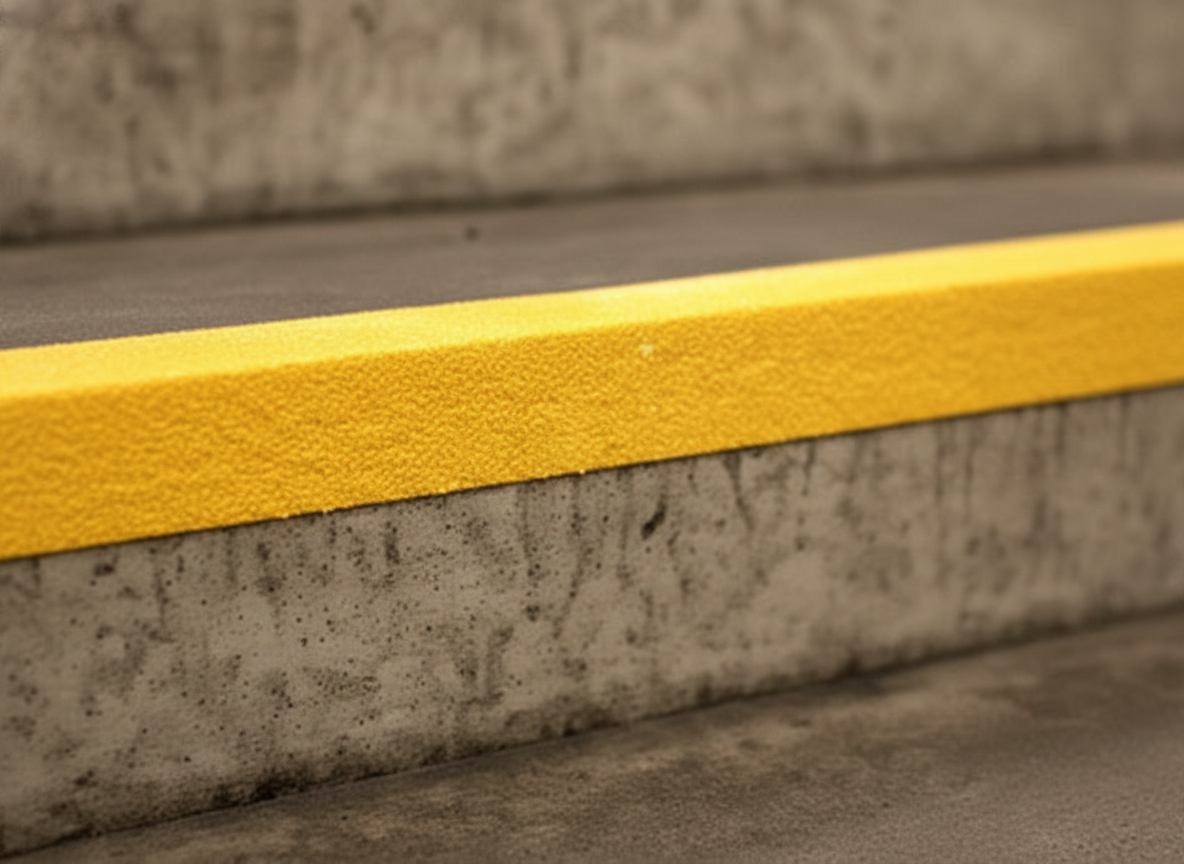
Anti-Slip GRP Stair Nosing UK 2026: Expert Guide

Anti-slip GRP stair nosing UK solutions have become the gold standard for stair safety across England, Scotland, Wales, and Northern Ireland in 2026. As property owners and facilities managers face increasing regulatory scrutiny and duty of care obligations, investing in premium fiberglass stair nosing represents the most cost-effective, durable, and reliable approach to preventing slips, trips, and falls on staircases. This comprehensive guide examines everything UK property professionals need to know about GRP (Glass Reinforced Plastic) stair nosing technology, from material science and installation techniques to cost analysis and regulatory compliance. Whether you're managing commercial facilities, industrial sites, healthcare environments, or residential properties across the United Kingdom, understanding the superior performance characteristics of medium grit anti-slip GRP stair nosing will help you make informed decisions that protect both people and budgets for decades to come.
Why Anti-Slip GRP Stair Nosing Matters for UK Properties in 2026
Stair-related accidents continue to represent one of the most significant liability risks for UK property owners, with thousands of incidents reported annually across England, Scotland, Wales, and Northern Ireland. In 2026, regulatory bodies have intensified enforcement of safety standards, making proactive stair protection not just prudent but legally essential. Premium anti-slip GRP stair nosing addresses this challenge by providing exceptional traction in all weather conditions, from rain-soaked outdoor staircases to moisture-prone indoor environments.
The financial implications of inadequate stair safety extend far beyond initial installation costs. Legal claims, insurance premium increases, operational disruptions, and reputational damage from accidents can devastate businesses and property portfolios across the UK. By contrast, professional-grade fiberglass stair nosing delivers 20+ years of maintenance-free performance, making it the most economical long-term investment for facilities throughout the United Kingdom. The medium grit surface texture maintains slip resistance even under heavy traffic, contamination, and the challenging weather cycles characteristic of British climates.
Beyond compliance and liability reduction, quality GRP stair nosing solutions enhance accessibility for diverse user populations. Wheelchair users, individuals with mobility aids, elderly residents, and visually impaired persons all benefit from the enhanced traction and visual contrast that professional nosing provides. In 2026's increasingly inclusive built environment across England, Scotland, Wales, and Northern Ireland, these accessibility benefits represent both ethical imperatives and practical advantages for property owners serving the UK public.
Understanding GRP Material Technology and Performance Advantages
Glass Reinforced Plastic (GRP) represents a composite material engineering breakthrough that combines polymer resins with glass fiber reinforcement to create exceptionally strong, lightweight, and durable products. For stair nosing applications across the UK, this material science delivers performance characteristics that far exceed traditional alternatives like aluminum, rubber, or adhesive strips. The fiberglass matrix provides structural rigidity while the resin component offers chemical resistance and weather protection essential for British environmental conditions.
The medium grit surface texture incorporated into premium anti-slip GRP stair nosing creates microscopic peaks and valleys that mechanically interlock with footwear, wheelchair wheels, and mobility aids. This physical grip mechanism remains effective even when surfaces are wet, icy, or contaminated with oils and debris—conditions frequently encountered on UK staircases throughout the year. Unlike coatings or treatments that wear away over time, the grit texture is integral to the material itself, ensuring consistent slip resistance throughout the product's multi-decade service life across England, Scotland, Wales, and Northern Ireland.
Thermal stability represents another critical advantage of GRP technology for UK installations. The material maintains structural integrity and performance characteristics across temperature ranges from -40°C to +80°C, easily accommodating the seasonal variations experienced throughout the United Kingdom. Unlike metals that expand and contract significantly with temperature changes, potentially loosening fixings and creating trip hazards, fiberglass stair nosing exhibits minimal dimensional change, maintaining secure installation and safe profiles year-round in British climates.
Comprehensive Comparison: GRP vs. Alternative Stair Nosing Solutions
Selecting the optimal stair nosing solution for UK properties requires understanding the performance, durability, and cost implications of available alternatives. The following detailed comparison examines how premium GRP stair nosing performs against aluminum, rubber, and adhesive strip options across critical evaluation criteria relevant to England, Scotland, Wales, and Northern Ireland installations.
| Performance Factor | Premium GRP Nosing | Aluminum Nosing | Rubber Nosing | Adhesive Strips |
|---|---|---|---|---|
| Slip Resistance | Excellent – integral medium grit texture | Good – requires separate inserts | Good initially – degrades with wear | Moderate – wears quickly |
| UK Weather Resistance | Outstanding – all conditions | Poor – corrodes in damp UK climate | Moderate – UV and frost damage | Poor – adhesive fails in moisture |
| Expected Lifespan | 20+ years proven performance | 5-10 years before replacement | 3-7 years typical service life | 1-2 years maximum durability |
| Maintenance Requirements | Minimal – occasional washing only | Regular – corrosion prevention needed | Moderate – frequent cleaning required | High – constant monitoring and replacement |
| Load Bearing Capacity | Heavy-duty industrial grade | Good – can dent under impact | Moderate – compresses over time | Light duty applications only |
| 10-Year Total Cost | Low – single installation investment | Moderate – replacement costs accumulate | High – multiple replacement cycles | Very high – continuous replacement |
This comparison clearly demonstrates why professional facilities managers across the UK increasingly specify GRP stair nosing for both new construction and retrofit safety upgrades throughout England, Scotland, Wales, and Northern Ireland. The superior durability and minimal maintenance requirements translate directly to lower total cost of ownership despite potentially higher initial investment compared to inferior alternatives.
How to Choose the Right Anti-Slip Stair Nosing for Your UK Property
Selecting appropriate stair nosing requires evaluating several critical factors specific to your property type, usage patterns, and environmental conditions across the United Kingdom. Understanding these selection criteria ensures optimal performance and value from your safety investment in England, Scotland, Wales, or Northern Ireland.
Traffic Volume and User Demographics: High-traffic commercial environments across the UK benefit most from heavy-duty GRP stair nosing that withstands constant use without degradation. Consider whether users include vulnerable populations like elderly residents, children, or individuals with mobility challenges who require maximum slip resistance and visual contrast for safe navigation.
Indoor vs. Outdoor Application: External staircases throughout England, Scotland, Wales, and Northern Ireland face rain, ice, snow, UV exposure, and temperature cycling that rapidly deteriorate inferior materials. Premium fiberglass stair nosing maintains performance in all UK weather conditions, making it the only viable long-term solution for outdoor installations across the United Kingdom.
Existing Stair Construction: Evaluate whether your staircases are constructed from concrete, wood, metal, or composite materials. Quality GRP nosing adheres effectively to all common substrates found in UK buildings, but installation methods may vary. Older or deteriorating stairs may require surface preparation or mechanical fixing rather than adhesive-only installation.
Regulatory and Insurance Requirements: Verify specific slip resistance standards and safety regulations applicable to your property type and location across the UK. Commercial, industrial, healthcare, and public buildings face stricter requirements than residential properties. Consult with your insurance provider, as premium safety installations may qualify for reduced premiums throughout England, Scotland, Wales, and Northern Ireland.
Budget and Lifecycle Considerations: While initial cost matters, evaluate total cost of ownership over 10-20 years including maintenance, replacement, and potential liability exposure. Professional-grade GRP stair nosing delivers superior long-term value despite higher upfront investment compared to alternatives that require frequent replacement across UK installations.
Step-by-Step Installation Guide for UK Environments
Proper installation ensures maximum performance and longevity from your anti-slip GRP stair nosing investment across England, Scotland, Wales, and Northern Ireland. Follow this professional methodology for optimal results in UK conditions.
Step 1: Surface Preparation and Assessment
Thoroughly clean all stair edges where nosing will be installed, removing dirt, grease, loose paint, rust, and debris using wire brushes, scrapers, and appropriate solvents. Ensure surfaces are completely dry before proceeding—moisture trapped beneath nosing prevents proper adhesion and can cause premature failure in UK installations. Measure each step individually as dimensions often vary throughout staircases.
Step 2: Cutting and Test Fitting
Cut GRP stair nosing to precise step widths using fine-toothed saws or angle grinders with cutting discs. Wear safety glasses, dust masks, and gloves when cutting fiberglass materials. Test-fit each piece before applying adhesive to verify proper alignment and complete edge coverage. Make any necessary adjustments before proceeding to adhesive application.
Step 3: Adhesive Selection and Application
Select high-quality polyurethane construction adhesive or epoxy resin formulated for GRP bonding in UK climate conditions. Apply continuous beads along the nosing back, ensuring complete coverage without gaps. For outdoor installations across England, Scotland, Wales, and Northern Ireland, consider supplementing adhesive with mechanical fixings using stainless steel screws to resist thermal cycling and moisture exposure.
Step 4: Installation and Securing
Position nosing carefully on step edges, pressing firmly to ensure full adhesive contact. For mechanical installations, drill pilot holes at recommended intervals and insert corrosion-resistant fixings appropriate for UK weather exposure. Use temporary clamps or weights to maintain pressure during the curing period specified by your adhesive manufacturer—typically 24-48 hours depending on temperature and humidity.
Step 5: Finishing and Quality Control
Remove excess adhesive immediately using appropriate solvents before curing occurs. Inspect all installations to verify secure bonding, proper alignment, and absence of trip hazards. Allow full curing before permitting foot traffic on staircases. Document installation dates and methods for future maintenance reference across your UK property portfolio.
Detailed Cost Analysis for UK Stair Safety Investments
Understanding the true cost of stair nosing solutions requires examining both initial investment and long-term ownership expenses across typical UK installation scenarios in England, Scotland, Wales, and Northern Ireland.
Initial Material and Installation Costs: Premium GRP stair nosing typically costs £24-84 per linear meter depending on length and specifications, with professional installation adding £15-30 per step for labour across the UK. A typical 20-step commercial staircase might require £800-1,500 total investment including materials and installation throughout the United Kingdom.
Maintenance and Replacement Costs: GRP nosing requires minimal maintenance—occasional washing costs essentially nothing beyond routine cleaning already performed on UK staircases. Over 20 years, expect near-zero maintenance expenses. By contrast, aluminum nosing requires corrosion treatment and potential replacement after 5-10 years, while rubber and adhesive alternatives need replacement every 2-5 years, multiplying costs significantly across England, Scotland, Wales, and Northern Ireland.
Liability and Insurance Implications: Inadequate stair safety can result in injury claims ranging from £5,000 for minor incidents to £100,000+ for serious accidents across the UK. Insurance premiums may increase 20-50% following claims. Professional-grade safety installations demonstrate duty of care compliance, potentially reducing premiums and providing legal protection for property owners throughout the United Kingdom.
Productivity and Operational Costs: Frequent replacement of inferior nosing products disrupts operations, requires staircase closures, and consumes facilities management time across UK properties. GRP's 20+ year lifespan eliminates these recurring disruptions and associated costs in England, Scotland, Wales, and Northern Ireland installations.
Total Cost of Ownership Comparison: Over 20 years, premium GRP stair nosing costs approximately £800-1,500 total for a typical staircase across the UK. Aluminum alternatives cost £2,000-3,500 including replacements. Rubber nosing totals £3,000-5,000 with multiple replacement cycles. Adhesive strips accumulate £4,000-7,000 in continuous replacement costs throughout England, Scotland, Wales, and Northern Ireland—making GRP the clear economic choice for UK property owners.
Common Mistakes to Avoid with Stair Nosing Installations
UK property owners and contractors frequently make preventable errors that compromise safety performance and product longevity across England, Scotland, Wales, and Northern Ireland. Avoid these common pitfalls when installing anti-slip GRP stair nosing.
Inadequate Surface Preparation: Failing to properly clean and dry stair edges before installation represents the most common cause of premature nosing failure across the UK. Moisture, grease, or loose material prevents proper adhesive bonding, leading to detachment and safety hazards. Always invest adequate time in thorough surface preparation for installations throughout the United Kingdom.
Using Inappropriate Adhesives: Generic construction adhesives not formulated for GRP materials often fail in UK weather conditions, particularly on outdoor staircases across England, Scotland, Wales, and Northern Ireland. Always specify polyurethane or epoxy products designed specifically for fiberglass bonding in British climates to ensure reliable long-term performance.
Insufficient Curing Time: Allowing foot traffic before adhesives fully cure compromises bond strength and can cause nosing displacement. Follow manufacturer curing time recommendations strictly—typically 24-48 hours depending on temperature and humidity conditions across the UK. Rushing installations creates safety risks and necessitates costly remedial work.
Neglecting Mechanical Fixings for Outdoor Applications: Relying solely on adhesive for external staircases exposed to UK weather cycling often proves inadequate across England, Scotland, Wales, and Northern Ireland. Thermal expansion, moisture penetration, and freeze-thaw cycles can stress adhesive bonds. Supplement with stainless steel mechanical fixings for outdoor installations throughout the United Kingdom.
Choosing Inferior Materials to Reduce Initial Costs: Selecting cheap aluminum, rubber, or adhesive alternatives to save money upfront inevitably costs more through frequent replacements, maintenance, and potential liability exposure across UK properties. Premium GRP stair nosing delivers superior long-term value despite higher initial investment throughout England, Scotland, Wales, and Northern Ireland.
Ignoring Manufacturer Installation Guidelines: Each product has specific installation requirements for optimal performance. Deviating from recommended methods, adhesives, or fixing patterns can void warranties and compromise safety across UK installations. Always follow professional installation guidelines for properties throughout the United Kingdom.
Expert Recommendations for Maximum Stair Safety Performance
Drawing on decades of professional experience with safety installations across England, Scotland, Wales, and Northern Ireland, these expert recommendations ensure optimal results from your anti-slip GRP stair nosing investment throughout the UK.
Prioritize Quality Over Initial Cost: Professional-grade materials deliver exponentially better long-term value than budget alternatives across UK installations. The difference between premium GRP nosing and inferior products often amounts to £200-500 per staircase initially but saves thousands in replacement costs, maintenance, and potential liability over 20 years throughout England, Scotland, Wales, and Northern Ireland.
Conduct Comprehensive Site Assessments: Evaluate all staircases systematically across your UK property portfolio, prioritizing high-traffic areas, outdoor installations, and locations serving vulnerable populations. Develop phased implementation plans that address highest-risk areas first while budgeting for comprehensive coverage throughout the United Kingdom.
Document Installations Thoroughly: Maintain detailed records including installation dates, products used, adhesive types, and contractor information for all UK staircase safety upgrades. This documentation demonstrates duty of care compliance, supports insurance claims if needed, and facilitates future maintenance planning across England, Scotland, Wales, and Northern Ireland.
Implement Regular Inspection Protocols: Establish quarterly inspection schedules for all stair nosing installations across UK properties, checking for loosening, damage, or wear. Early detection of issues allows simple repairs before problems escalate into safety hazards or require complete replacement throughout the United Kingdom.
Combine with Comprehensive Safety Strategies: While premium nosing provides exceptional slip resistance, integrate it within broader safety approaches including adequate lighting, handrails, signage, and user education across England, Scotland, Wales, and Northern Ireland. Comprehensive strategies deliver maximum accident prevention for UK properties.
Engage Professional Installers for Critical Applications: While DIY installation is possible for simple residential staircases, commercial, industrial, and high-traffic applications across the UK benefit from professional installation expertise. Experienced contractors ensure proper surface preparation, adhesive selection, and installation techniques that maximize performance throughout the United Kingdom.
Maintenance Tips for Long-Term Performance Across UK Climates
Proper maintenance preserves the exceptional performance characteristics of GRP stair nosing throughout its 20+ year service life across England, Scotland, Wales, and Northern Ireland.
- Weekly Cleaning: Sweep or vacuum stair nosing to remove loose dirt, debris, and contaminants that can reduce slip resistance. This simple maintenance takes minutes but preserves safety performance across UK installations.
- Monthly Deep Cleaning: Wash nosing surfaces with warm water and mild detergent using stiff brushes to scrub the grit texture. Rinse thoroughly and allow natural drying. This removes embedded dirt and maintains optimal traction throughout the United Kingdom.
- Quarterly Inspections: Examine all installations for signs of loosening, damage, or wear across your UK property portfolio. Check mechanical fixings remain tight and adhesive bonds stay secure, particularly after harsh winter weather in England, Scotland, Wales, and Northern Ireland.
- Annual Professional Assessment: Engage safety professionals to conduct comprehensive evaluations of stair nosing condition and performance across UK properties. Expert assessments identify issues before they compromise safety throughout the United Kingdom.
- Winter Weather Protocols: While GRP nosing maintains slip resistance in ice and snow, standard de-icing procedures can be applied safely across England, Scotland, Wales, and Northern Ireland. The material resists damage from salt and chemical de-icers used throughout UK winters.
- Stain and Contamination Removal: Address oil, grease, or chemical spills promptly using appropriate solvents compatible with GRP materials. Test cleaning products on inconspicuous areas first to verify compatibility across UK installations.
Frequently Asked Questions About Anti-Slip GRP Stair Nosing UK
What is the typical lifespan of GRP stair nosing in UK weather conditions?
Premium GRP stair nosing delivers 20+ years of reliable performance in UK indoor and outdoor environments across England, Scotland, Wales, and Northern Ireland. The fiberglass construction resists UV degradation, moisture damage, and temperature cycling that causes premature failure in alternative materials throughout the United Kingdom.
Can GRP nosing be installed on existing stairs without major modifications?
Absolutely. GRP stair nosing is specifically designed for retrofit applications on existing staircases constructed from concrete, wood, metal, or composite materials across the UK. Installation requires only surface preparation and appropriate adhesive or mechanical fixings—no structural modifications needed throughout England, Scotland, Wales, and Northern Ireland.
Is medium grit surface suitable for wheelchair users and mobility aids?
Yes, the medium grit texture provides excellent traction for wheelchair wheels, walking frames, and mobility scooters while remaining comfortable for standard foot traffic across UK properties. The grit level balances slip resistance with accessibility requirements for inclusive environments throughout the United Kingdom.
How does GRP perform in freezing temperatures and ice conditions?
GRP material maintains structural integrity and slip-resistant properties even in sub-zero temperatures common during UK winters across Scotland, Wales, England, and Northern Ireland. Unlike plastics that become brittle when frozen, fiberglass-reinforced construction remains flexible and impact-resistant throughout British winter conditions.
What fixing method works best for outdoor UK installations?
For external applications across England, Scotland, Wales, and Northern Ireland, combine high-quality polyurethane construction adhesive with stainless steel mechanical fixings. This dual-fixing approach ensures nosing remains securely attached despite thermal expansion, moisture exposure, and weather cycling experienced in outdoor UK environments.
Does this product comply with UK building regulations?
Yes, premium GRP stair nosing meets relevant UK standards for slip resistance and stair safety applications across England, Scotland, Wales, and Northern Ireland. The product helps property owners fulfill duty of care obligations under UK health and safety legislation throughout the United Kingdom.
Can nosing be cut to fit non-standard stair widths?
Certainly. GRP material cuts easily to any required length using standard tools including fine-toothed saws, angle grinders, or circular saws fitted with appropriate blades. This flexibility allows precise fitting to stairs of any width across UK properties throughout England, Scotland, Wales, and Northern Ireland.
How does GRP compare to aluminum nosing for UK applications?
GRP significantly outperforms aluminum across UK installations, offering superior corrosion resistance, longer lifespan (20+ years vs. 5-10 years), lower maintenance requirements, and better slip resistance in wet conditions common throughout England, Scotland, Wales, and Northern Ireland. While aluminum may cost less initially, GRP delivers far superior long-term value across the United Kingdom.
Conclusion: Invest in Premium Stair Safety for Your UK Property
As we progress through 2026, the importance of professional-grade stair safety solutions continues to intensify across England, Scotland, Wales, and Northern Ireland. Regulatory enforcement, insurance requirements, and duty of care obligations make premium anti-slip GRP stair nosing not just advisable but essential for responsible UK property management throughout the United Kingdom.
The comprehensive analysis presented in this expert guide demonstrates that GRP technology delivers unmatched performance, durability, and long-term value compared to alternative materials across UK installations. From superior weather resistance and 20+ year lifespan to minimal maintenance requirements and exceptional slip resistance, fiberglass stair nosing represents the definitive solution for commercial, industrial, healthcare, educational, and residential properties throughout England, Scotland, Wales, and Northern Ireland.
Don't compromise on stair safety or accept the false economy of inferior alternatives that require constant replacement and compromise protection across your UK property portfolio. Invest in professional-grade GRP stair nosing that delivers decades of reliable performance, regulatory compliance, and peace of mind throughout the United Kingdom.
Take action today to protect your people and your property. Explore premium anti-slip GRP stair nosing solutions and experience the Price Cart UK difference in professional safety equipment across England, Scotland, Wales, and Northern Ireland. Your safer staircases are just one decision away—order your premium GRP stair nosing now and join thousands of satisfied UK property owners who trust professional-grade protection for their facilities throughout the United Kingdom.