
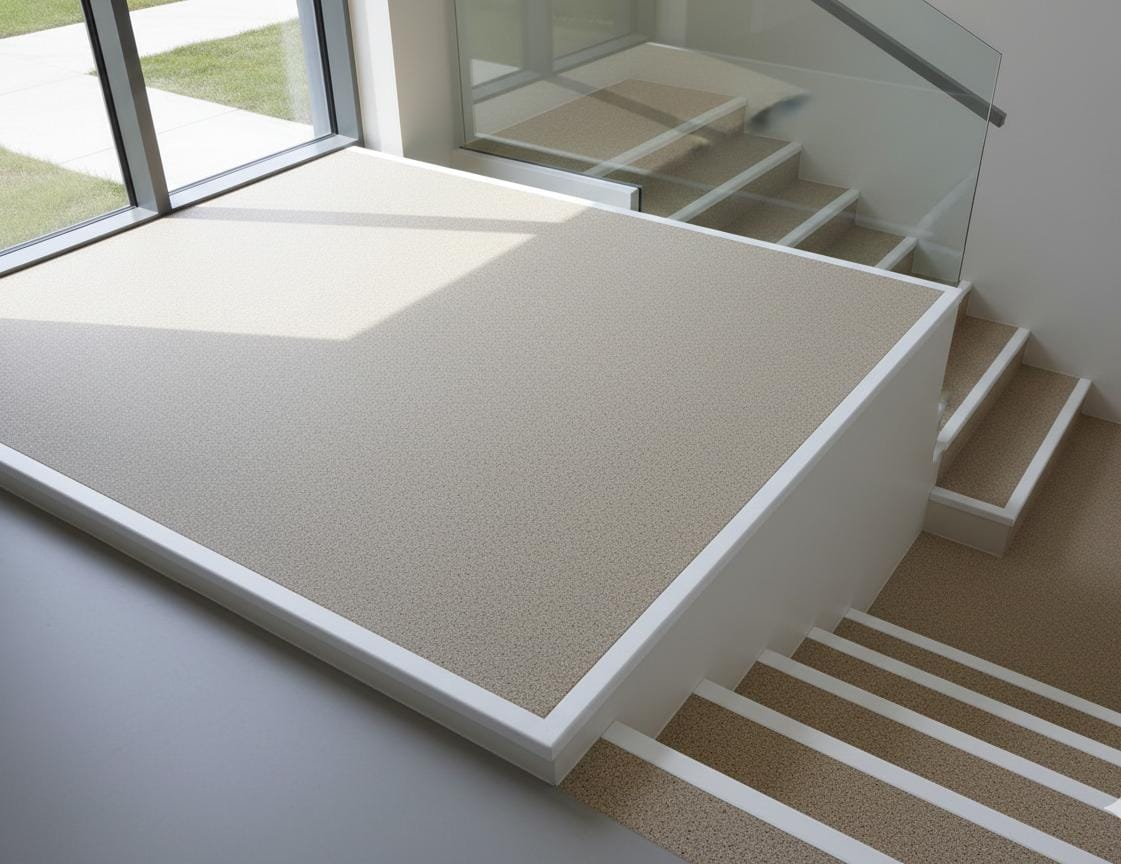
Anti-Slip GRP Stair Treads UK 2026: Expert Guide

Anti-slip GRP stair treads UK facilities are revolutionising workplace safety in 2026, delivering unmatched protection against slip hazards across England, Scotland, Wales, and Northern Ireland. As facilities managers, contractors, and procurement professionals seek durable, cost-effective safety solutions, professional-grade Glass Reinforced Plastic (GRP) stair nosing has emerged as the definitive choice for healthcare facilities, educational institutions, commercial properties, and industrial sites throughout the United Kingdom. Unlike traditional metal or rubber alternatives that degrade rapidly under UK weather conditions, premium anti-slip GRP stair treads maintain exceptional grip and structural integrity for decades, eliminating costly maintenance cycles whilst ensuring regulatory compliance. This comprehensive 2026 guide examines why heavy-duty GRP treads represent the optimal investment for UK facilities demanding superior slip resistance, weather durability, and lifecycle value in an increasingly safety-conscious regulatory environment.
Why Anti-Slip GRP Stair Treads Matter for UK Facilities in 2026
The importance of professional stair safety solutions has never been more critical for UK facilities. In 2026, workplace safety regulations continue to tighten, with facilities across England, Scotland, Wales, and Northern Ireland facing increased scrutiny over slip and trip hazards. Anti-slip GRP stair treads address this challenge by providing permanent, maintenance-free protection that exceeds current UK building regulations and health and safety standards.
Traditional stair safety solutions fail UK facilities in multiple ways. Metal treads corrode rapidly in the British climate, requiring constant painting and rust treatment. Rubber alternatives degrade from UV exposure within 3-7 years, necessitating disruptive replacements. Adhesive strips peel and lift within months, creating new hazards whilst demanding continuous replacement. These failures translate to escalating costs, operational disruption, and potential liability exposure.
Professional-grade GRP stair treads eliminate these problems through advanced composite engineering. The Glass Reinforced Plastic construction delivers exceptional slip resistance in wet, dry, oily, and icy conditions—critical for UK facilities facing year-round weather challenges. The material's inherent corrosion resistance means zero rust, zero degradation, and minimal maintenance over a 20+ year lifespan.
For facilities managers balancing safety requirements with budget constraints, GRP treads offer compelling lifecycle economics. Whilst initial investment exceeds basic alternatives, the total cost of ownership over 10 years is dramatically lower due to eliminated maintenance, extended lifespan, and avoided replacement cycles. This makes GRP the financially prudent choice for forward-thinking UK organisations in 2026.
Comprehensive Comparison: GRP vs. Alternative Stair Safety Solutions
Understanding how anti-slip GRP stair treads compare to alternatives is essential for informed procurement decisions. This detailed comparison examines performance across critical factors affecting UK facilities:
| Performance Factor | GRP Treads (Our Product) | Aluminium/Metal Treads | Rubber Treads | Adhesive Strips |
|---|---|---|---|---|
| Slip Resistance (All Conditions) | Excellent - Maintains grip in wet, icy, oily conditions | Good initially, degrades with corrosion | Good but reduces as material wears | Moderate, inconsistent performance |
| UK Weather Resistance | Outstanding - Zero degradation from rain, frost, UV | Poor - Rusts and corrodes rapidly | Moderate - UV causes brittleness | Poor - Peels and lifts in moisture |
| Expected Lifespan | 20+ years | 5-10 years with maintenance | 3-7 years | 1-3 years |
| Maintenance Requirements | Minimal - Occasional cleaning only | High - Painting, rust treatment, inspection | Moderate - Regular replacement needed | High - Constant monitoring and replacement |
| 10-Year Total Cost | Lowest - Single investment | High - Maintenance + partial replacement | High - Multiple full replacements | Very High - Continuous replacement |
| Chemical Resistance | Excellent - Resists cleaning agents, oils | Poor - Accelerates corrosion | Moderate - Some degradation | Poor - Adhesive fails |
| Installation Permanence | Permanent - Mechanical fixing | Permanent but heavy, complex | Semi-permanent | Temporary - Frequent failure |
The comparison clearly demonstrates why anti-slip GRP stair treads represent the superior choice for UK facilities in 2026. The combination of exceptional performance, minimal maintenance, and lowest total cost of ownership makes GRP the definitive solution for organisations prioritising both safety and fiscal responsibility.
How to Choose the Right Anti-Slip Stair Treads for Your UK Facility
Selecting optimal stair safety solutions requires careful consideration of your facility's specific requirements. Follow this expert framework to ensure you specify the right product:
1. Assess Your Environment and Exposure Conditions
Internal stairs in climate-controlled environments face different challenges than external staircases exposed to UK weather. GRP treads excel in both applications, but understanding your exposure helps determine quantity requirements and installation priorities. External stairs across England, Scotland, Wales, and Northern Ireland demand materials that withstand rain, frost, and temperature extremes—precisely where GRP outperforms alternatives.
2. Evaluate Traffic Levels and User Demographics
High-traffic facilities such as hospitals, schools, and commercial buildings require heavy-duty solutions that maintain performance under constant use. Consider whether users include vulnerable populations (elderly, visually impaired, mobility-challenged) who benefit from GRP's high-contrast visual safety features and consistent slip resistance.
3. Calculate Lifecycle Costs, Not Just Initial Price
Budget-conscious procurement must account for total cost of ownership over 10-20 years. Whilst GRP treads may have higher upfront costs than basic alternatives, the elimination of maintenance, painting, and replacement delivers dramatically lower lifecycle expenses. Request detailed cost projections including installation, maintenance, and replacement cycles.
4. Verify Regulatory Compliance Requirements
UK building regulations and health and safety standards mandate specific slip resistance and accessibility features. Ensure your chosen solution meets or exceeds these requirements and that suppliers provide documentation to support compliance audits. Professional GRP treads are manufactured to UK standards with certification available.
5. Consider Installation Logistics and Disruption
Facility operations often cannot accommodate extended installation periods. GRP treads offer efficient installation with minimal disruption compared to complex metal systems. Evaluate whether installation can occur during normal operations or requires facility closure.
6. Assess Chemical and Contamination Exposure
Industrial facilities, healthcare environments, and commercial kitchens expose stair treads to cleaning chemicals, oils, and other contaminants. GRP's exceptional chemical resistance maintains performance and appearance where other materials degrade rapidly.
Step-by-Step Installation Guide for Professional GRP Stair Treads
Proper installation is critical for optimal performance and longevity. Follow this comprehensive process for professional results:
Step 1: Pre-Installation Assessment and Planning
Conduct thorough site survey to verify stair dimensions, substrate condition, and access requirements. Measure each stair nosing precisely, accounting for any variations in step depth or width. Calculate exact quantities required, adding 5-10% contingency for cuts and adjustments. Verify substrate is structurally sound and capable of accepting mechanical fixings.
Step 2: Surface Preparation and Cleaning
Remove all existing treads, adhesives, paint, or contaminants from stair nosings. For concrete substrates, ensure surfaces are fully cured (minimum 28 days), dry, and free from laitance or dust. Metal stairs require thorough degreasing and removal of rust or loose coatings. Wooden stairs should be structurally sound with no rot or movement. Clean all surfaces with appropriate degreasing agents and allow to dry completely.
Step 3: Tread Positioning and Alignment
Position first tread to establish consistent overhang (typically 25-40mm depending on specification). Use spirit level to verify horizontal alignment. Mark fixing positions according to manufacturer specifications—typically at 150-200mm intervals along tread length. Ensure consistent positioning across all steps for professional appearance and optimal performance.
Step 4: Drilling and Fixing Preparation
Using marked positions as guide, drill pilot holes to specified depth for your substrate type. For concrete, use masonry bits and ensure adequate depth for anchor penetration. Metal substrates require appropriate drill bits and may need pre-tapping. Clean all drilled holes to remove debris that could compromise fixing security.
Step 5: Mechanical Fixing Installation
Install appropriate fixings for your substrate—typically stainless steel screws with anchors for concrete, self-tapping screws for metal, or wood screws for timber. Tighten fixings progressively along tread length to ensure even pressure and prevent distortion. Verify all fixings are flush with tread surface and fully secure with no movement.
Step 6: Quality Verification and Testing
Inspect each installed tread for secure fixing, correct alignment, and consistent overhang. Test for any movement or gaps between tread and substrate. Verify anti-slip surface is clean and free from installation debris. Check visual alignment across entire staircase for professional appearance.
Step 7: Final Inspection and Documentation
Conduct comprehensive safety inspection before allowing public access. Document installation with photographs for facility records and compliance purposes. Provide facility management with maintenance guidelines and warranty information. Schedule follow-up inspection after initial settling period (typically 30 days).
Cost Analysis: GRP Stair Treads Investment and ROI for UK Facilities
Understanding the true cost of stair safety solutions requires comprehensive lifecycle analysis. Here's how professional GRP stair treads deliver superior value:
Initial Investment Breakdown
- Material costs: GRP treads typically range £15-35 per linear metre depending on specification and quantity
- Installation labour: Professional installation averages £8-15 per linear metre for standard applications
- Fixings and consumables: Approximately £2-4 per linear metre for quality stainless steel fixings
- Total initial investment: £25-54 per linear metre installed
10-Year Lifecycle Cost Comparison (per 10 linear metres)
- GRP Treads: £500 initial + £50 cleaning = £550 total
- Metal Treads: £400 initial + £300 maintenance + £200 partial replacement = £900 total
- Rubber Treads: £300 initial + £450 (2 full replacements) = £750 total
- Adhesive Strips: £150 initial + £600 (4 replacements) = £750 total
Hidden Cost Factors Often Overlooked
- Operational disruption during maintenance and replacement cycles
- Labour costs for ongoing inspection and maintenance
- Potential liability exposure from inferior solutions that fail prematurely
- Reputational impact of visible deterioration in customer-facing areas
- Energy costs for facilities requiring climate control during extended installation
ROI Calculation for Typical UK Facility
A medium-sized facility with 50 linear metres of stairs investing in GRP treads versus metal alternatives saves approximately £3,500 over 10 years through eliminated maintenance and extended lifespan. For larger facilities across England, Scotland, Wales, and Northern Ireland, savings scale proportionally, often reaching £10,000-50,000 over a decade whilst delivering superior safety performance.
Budget Justification for Procurement Decisions
When presenting GRP tread specifications to budget holders, emphasise total cost of ownership, regulatory compliance benefits, reduced liability exposure, and operational continuity advantages. The business case for premium solutions becomes compelling when lifecycle costs and risk mitigation are properly quantified.
Common Mistakes to Avoid When Specifying Stair Safety Solutions
UK facilities frequently make costly errors when selecting and installing stair treads. Avoid these common pitfalls:
Mistake 1: Prioritising Initial Price Over Lifecycle Value
Selecting the cheapest option invariably leads to higher total costs through frequent replacement and maintenance. Budget-conscious procurement must evaluate 10-20 year costs, not just purchase price. Cheap adhesive strips requiring annual replacement cost far more than durable GRP treads over their lifespan.
Mistake 2: Ignoring UK Climate and Weather Exposure
Many facilities specify solutions designed for mild climates that fail rapidly under UK weather conditions. External stairs across England, Scotland, Wales, and Northern Ireland demand materials engineered for rain, frost, UV exposure, and temperature extremes. GRP's weather resistance is specifically suited to British conditions.
Mistake 3: Inadequate Surface Preparation
Poor substrate preparation is the leading cause of premature tread failure. Contaminated, damp, or structurally unsound surfaces compromise fixing security and longevity. Professional installation requires thorough cleaning, drying, and substrate assessment before tread installation.
Mistake 4: Using Inappropriate Fixing Methods
Inadequate or incorrect fixings lead to movement, noise, and eventual failure. Each substrate type (concrete, metal, timber) requires specific fixing systems. Stainless steel fixings are essential for external applications to prevent corrosion. Never rely solely on adhesive for permanent installations.
Mistake 5: Failing to Verify Regulatory Compliance
Non-compliant products expose facilities to liability and may require costly replacement. Always verify that specified treads meet UK building regulations and obtain documentation to support compliance audits. Professional suppliers provide certification and technical data sheets.
Mistake 6: Overlooking Maintenance Access and Requirements
Some tread systems require regular maintenance that proves impractical for facility operations. Specify solutions with realistic maintenance requirements that align with your facility's capabilities. GRP's minimal maintenance needs suit facilities with limited maintenance resources.
Mistake 7: Inconsistent Installation Standards
Variable installation quality across different staircases creates inconsistent performance and appearance. Establish clear installation specifications and quality standards. Use experienced contractors familiar with professional tread installation.
Expert Recommendations for Maximum Performance and Longevity
Optimise your investment in anti-slip GRP stair treads with these professional insights:
Specification Best Practices
- Prioritise GRP treads with aggressive anti-slip profiles for maximum grip in all conditions
- Specify high-contrast colour options for enhanced visibility and accessibility compliance
- Select appropriate tread depth based on traffic levels and user demographics
- Ensure specifications include stainless steel fixings for external applications
- Request technical data sheets and compliance certification from suppliers
Installation Excellence
- Engage contractors with demonstrated experience in professional tread installation
- Schedule installation during low-traffic periods to minimise disruption
- Implement quality control inspections at key installation stages
- Document installation with photographs for facility records
- Conduct post-installation inspection after 30-day settling period
Operational Integration
- Include GRP treads in facility safety inspection schedules (quarterly visual checks recommended)
- Train cleaning staff on appropriate cleaning methods to maintain anti-slip performance
- Establish clear protocols for reporting damage or wear
- Maintain installation documentation for compliance audits
- Plan for systematic expansion to additional staircases based on performance data
Supplier Selection Criteria
- Verify supplier expertise in UK safety regulations and building standards
- Confirm product certification and compliance documentation availability
- Assess technical support capabilities for specification assistance
- Evaluate delivery reliability and stock availability for project timelines
- Review warranty terms and after-sales support provisions
Maintenance Tips for Long-Term GRP Stair Tread Performance
Whilst GRP treads require minimal maintenance compared to alternatives, following these guidelines ensures optimal performance throughout their 20+ year lifespan:
Regular Cleaning Protocol
Clean treads quarterly (or more frequently in high-traffic areas) using mild detergent and water. Avoid harsh abrasives or aggressive chemicals that could damage the anti-slip surface texture. Use soft-bristle brushes for textured surfaces to remove accumulated dirt without compromising grip properties. Rinse thoroughly and allow to dry naturally.
Seasonal Inspection Schedule
Conduct visual inspections quarterly to identify any damage, wear, or fixing issues. Pay particular attention to high-traffic areas and external installations exposed to weather extremes. Check fixing security annually, especially on external stairs across England, Scotland, Wales, and Northern Ireland where freeze-thaw cycles may affect substrate integrity.
Winter Weather Management
Whilst GRP treads maintain excellent grip in icy conditions, remove excessive snow buildup to ensure optimal performance and visibility. The treads' inherent weather resistance eliminates concerns about freeze-thaw damage that plague metal and rubber alternatives. Avoid using metal shovels or sharp implements that could damage the anti-slip surface.
Damage Assessment and Response
Address any physical damage promptly to maintain safety standards. The robust GRP construction typically requires minimal intervention, but damaged sections should be assessed by qualified professionals. Unlike metal treads that corrode from minor damage, GRP maintains integrity even if surface scratches occur.
Long-Term Performance Monitoring
Document tread condition during inspections to track performance over time. This data supports lifecycle cost validation and informs future procurement decisions. GRP treads typically show minimal degradation even after decades of service, validating their superior lifecycle value.
Cleaning Product Selection
Use pH-neutral cleaning products suitable for composite materials. Avoid bleach-based cleaners or solvents that could affect surface properties. For facilities using automated cleaning equipment, verify that brushes and pads are appropriate for textured surfaces.
Frequently Asked Questions About Anti-Slip GRP Stair Treads UK
Q1: How long do professional GRP anti-slip stair treads last in UK conditions?
A: Professional-grade GRP treads typically deliver 20+ years of reliable service in UK facilities. The corrosion-resistant construction and UV-stable formulation ensure long-term performance without the degradation seen in metal or rubber alternatives. External installations across England, Scotland, Wales, and Northern Ireland exposed to harsh weather maintain their anti-slip properties and structural integrity throughout their lifespan.
Q2: Are GRP stair treads suitable for external stairs exposed to UK weather?
A: Absolutely. GRP treads are specifically engineered for demanding UK weather conditions. They withstand rain, ice, UV exposure, and temperature extremes without losing anti-slip properties or structural integrity. Unlike metal treads that rust or rubber that degrades from UV exposure, GRP maintains consistent performance regardless of weather exposure.
Q3: Do GRP treads require regular maintenance like metal alternatives?
A: No. Unlike metal treads requiring painting, rust treatment, and regular maintenance, GRP treads need only occasional cleaning to maintain optimal performance. This dramatically reduces lifecycle costs and facility management burden, making them ideal for organisations with limited maintenance resources.
Q4: How do GRP treads compare to adhesive anti-slip strips?
A: GRP treads offer vastly superior durability and performance. Whilst adhesive strips typically fail within 1-3 years and require constant replacement, heavy-duty GRP treads provide decades of reliable service with minimal maintenance. The total cost of ownership over 10 years is dramatically lower with GRP despite higher initial investment.
Q5: Can GRP treads be installed on existing stairs without major renovation?
A: Yes. GRP treads are designed for professional installation on existing concrete, metal, or wooden stairs. The versatile fixing system accommodates various substrate types, making them ideal for both new construction and refurbishment projects. Installation typically causes minimal disruption to facility operations.
Q6: Do these treads meet UK building regulations and safety standards?
A: Yes. Professional anti-slip GRP treads are manufactured to comply with UK building regulations and safety standards. Reputable suppliers provide documentation and certification to support compliance and procurement requirements, essential for facilities subject to health and safety audits.
Q7: What makes GRP superior to rubber for stair treads in 2026?
A: GRP offers superior weather resistance, longer lifespan (20+ years vs 3-7 years), better chemical resistance, and maintains anti-slip properties far longer than rubber. Rubber degrades from UV exposure and requires replacement every few years, whilst GRP delivers consistent performance for decades, making it the more sustainable and cost-effective choice.
Q8: Are GRP treads suitable for healthcare facilities with strict hygiene requirements?
A: Yes. GRP's excellent chemical resistance and easy-clean properties make it ideal for healthcare environments. The material resists degradation from cleaning chemicals and disinfectants whilst maintaining anti-slip performance. The non-porous surface prevents bacterial growth and supports infection control protocols.
Conclusion: Invest in Premium GRP Stair Safety for Your UK Facility
As we've explored throughout this comprehensive 2026 guide, anti-slip GRP stair treads represent the definitive solution for UK facilities demanding superior safety performance, exceptional durability, and optimal lifecycle value. From healthcare facilities in England to educational institutions in Scotland, commercial properties in Wales, and industrial sites in Northern Ireland, professional-grade GRP treads deliver unmatched protection against slip hazards whilst eliminating the maintenance burden and replacement cycles that plague inferior alternatives.
The evidence is compelling: GRP treads maintain exceptional slip resistance in all weather conditions, withstand the harsh UK climate without degradation, require minimal maintenance over their 20+ year lifespan, and deliver the lowest total cost of ownership compared to metal, rubber, or adhesive alternatives. For facilities managers and procurement professionals balancing safety requirements with budget constraints, GRP represents the financially prudent choice that never compromises on performance.
In 2026's increasingly safety-conscious regulatory environment, investing in premium stair protection isn't just about compliance—it's about demonstrating genuine commitment to protecting staff, visitors, and the public whilst making sound financial decisions that deliver value for decades. The superior performance, minimal maintenance, and exceptional longevity of professional GRP treads make them the clear choice for forward-thinking UK organisations.
Don't compromise on facility safety with inferior solutions that require constant maintenance and frequent replacement. Invest in professional-grade anti-slip GRP stair treads that deliver decades of reliable performance, regulatory compliance, and exceptional value. Our expert team provides comprehensive technical support, specification assistance, and fast UK delivery across England, Scotland, Wales, and Northern Ireland.
Protect your facility, staff, and visitors with premium anti-slip GRP stair treads. Order now for rapid UK delivery and experience the Price Cart UK difference in professional safety solutions. Contact our team today for quantity calculations, technical guidance, and expert recommendations tailored to your specific facility requirements.