
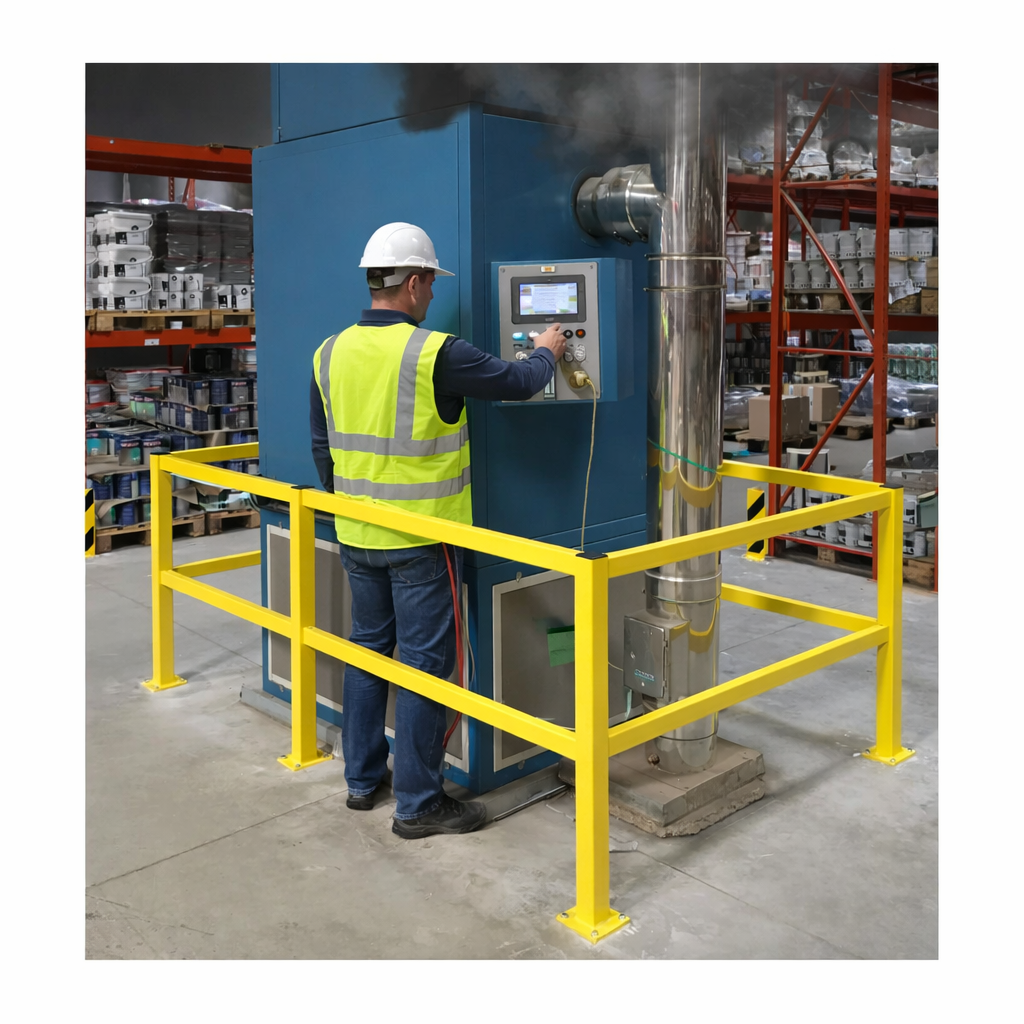
Industrial Steel Safety Barrier UK 2026: Expert Guide
Industrial steel safety barriers UK represent the gold standard for workplace protection in 2026, delivering uncompromising safety for facilities across England, Scotland, Wales, and Northern Ireland. As UK health and safety regulations continue to evolve, choosing the right industrial steel safety barrier system has never been more critical for warehouse managers, facilities directors, and safety officers. This comprehensive guide examines everything you need to know about heavy-duty machine guard rails, from HSE compliance requirements to installation best practices, helping you make informed decisions that protect your workforce and assets throughout 2026 and beyond. Whether you're safeguarding expensive machinery in Manchester, creating pedestrian zones in Glasgow warehouses, or protecting loading bays in Cardiff distribution centers, professional-grade steel safety barriers deliver the robust protection modern UK facilities demand.
Why Industrial Steel Safety Barriers Matter in UK Facilities 2026
The landscape of workplace safety in the UK has transformed dramatically as we move through 2026. With the Health and Safety Executive reporting increased scrutiny on industrial facilities and rising costs associated with workplace accidents, investing in proper safety infrastructure isn't just regulatory compliance—it's essential business protection. Industrial steel safety barriers serve as your first line of defense against costly equipment damage, workplace injuries, and operational disruptions.
UK facilities face unique challenges that make heavy-duty steel safety barriers indispensable. The combination of high-volume forklift traffic, expensive automated machinery, and strict HSE guidelines creates an environment where inadequate protection can result in six-figure losses from a single incident. Modern warehouses across England, Scotland, Wales, and Northern Ireland operate 24/7 with mixed vehicle and pedestrian traffic, making robust physical barriers essential rather than optional.
The financial impact extends beyond immediate accident costs. Insurance premiums, regulatory fines, operational downtime, and reputational damage compound the true cost of inadequate safety measures. Forward-thinking facilities in 2026 recognize that professional steel safety barrier systems deliver measurable ROI through accident prevention, reduced insurance claims, and enhanced operational efficiency. The investment in quality protection pays dividends year after year.
Comprehensive Comparison: Steel Safety Barriers vs Alternative Solutions
Understanding how different safety solutions compare helps UK facilities make informed investment decisions. While multiple options exist for workplace protection, performance differences become apparent when examining real-world durability, compliance, and long-term value.
| Feature | Industrial Steel Safety Barrier | Plastic Barriers | Bollards Only | Floor Marking |
|---|---|---|---|---|
| Impact Resistance | Excellent - Withstands 5-tonne forklift impacts | Poor - Cracks on moderate impact | Moderate - Point protection only | None - Visual guidance only |
| Service Life | 10+ years with minimal maintenance | 2-3 years before replacement needed | 5-7 years depending on traffic | 6-12 months before repainting |
| HSE Compliance 2026 | Full compliance - machine guarding certified | Limited - temporary use only | Partial - supplementary protection | Non-compliant for machinery protection |
| UK Weather Resistance | Excellent - corrosion-resistant coating | Degrades in UV and temperature extremes | Good with proper coating | Poor - constant maintenance required |
| Total Cost (5 years) | £203-343 per section (one-time) | £600+ (multiple replacements) | £400-500 (limited coverage) | £300+ (constant repainting) |
| Installation Permanence | Professional permanent installation | Temporary - easily displaced | Individual post installation | Quick application, poor protection |
The comparison clearly demonstrates why professional steel safety barriers dominate UK industrial facilities in 2026. While initial investment exceeds alternatives, the combination of superior protection, regulatory compliance, and decade-plus service life delivers unmatched value. Facilities across England, Scotland, Wales, and Northern Ireland consistently report that steel barriers eliminate the recurring costs and safety compromises associated with inferior solutions.
How to Choose the Right Industrial Steel Safety Barrier System
Selecting optimal safety barriers for your UK facility requires evaluating multiple factors beyond simple price comparison. The right system balances protection requirements, operational needs, and long-term value.
Assess Your Risk Zones: Begin by mapping high-risk areas throughout your facility. Identify locations where vehicle traffic intersects with pedestrian routes, expensive machinery requires protection, or loading operations create collision hazards. Facilities in England, Scotland, Wales, and Northern Ireland typically prioritize production areas, loading docks, and main traffic corridors.
Evaluate Traffic Patterns: Consider the types and weights of vehicles operating in protected zones. Standard forklifts, reach trucks, and pallet movers each present different impact scenarios. The industrial steel safety barrier system handles impacts from vehicles up to 5 tonnes, suitable for most UK warehouse operations.
Verify HSE Compliance Requirements: Ensure your chosen system meets current Health and Safety Executive guidelines for your specific industry. Manufacturing, food processing, and chemical facilities face different regulatory requirements. Professional steel barriers provide certified compliance across all UK industrial sectors in 2026.
Consider Future Flexibility: Operational needs evolve. Modular barrier systems allow reconfiguration as you reorganize layouts, expand operations, or modify traffic patterns. This adaptability protects your investment as your facility grows and changes over the years.
Calculate Total Cost of Ownership: Look beyond purchase price to installation costs, maintenance requirements, expected service life, and replacement frequency. Steel barriers' 10+ year lifespan and minimal maintenance deliver superior long-term value compared to alternatives requiring frequent replacement.
Evaluate Supplier Expertise: Choose suppliers with deep knowledge of UK safety regulations and proven experience supporting industrial facilities. Expert guidance ensures you select appropriate configurations and achieve full compliance from day one.
Step-by-Step Installation Guide for UK Facilities
Proper installation ensures your steel safety barriers deliver maximum protection and regulatory compliance. Follow this professional methodology for optimal results.
Step 1 - Comprehensive Site Survey: Walk your facility identifying all areas requiring protection. Measure spaces accurately, noting floor surface types, underground services, and clearance requirements. Document existing hazards and traffic patterns. This planning phase prevents costly modifications during installation.
Step 2 - Create Detailed Layout Plan: Design your barrier configuration on facility drawings. Ensure adequate clearances for vehicle movement while maximizing protected zones. Plan for future expansion by identifying logical extension points. Submit plans for management approval before proceeding.
Step 3 - Prepare Installation Areas: Clear zones of inventory, equipment, and debris. Mark mounting positions using provided templates. Verify floor surfaces meet requirements—concrete or asphalt recommended. Check for underground utilities using detection equipment before drilling.
Step 4 - Install Foundation Anchors: Drill mounting holes to specified depths using appropriate masonry bits. Clean holes thoroughly removing all dust and debris. Insert chemical anchors or mechanical bolts based on surface type. Allow chemical anchors full curing time per manufacturer specifications.
Step 5 - Assemble Barrier Sections: Position base plates over anchor points. Secure with heavy-duty fixings torqued to specifications. Install vertical posts ensuring perfect plumb using precision levels. Attach horizontal rails working systematically along barrier runs. The modular design simplifies assembly while ensuring structural integrity.
Step 6 - Conduct Quality Verification: Inspect all connections, welds, and fixings for proper installation. Test structural stability by applying moderate pressure at multiple points. Verify barrier heights meet UK safety requirements. Document installation with photographs for safety records and regulatory compliance.
Step 7 - Final Site Cleanup: Remove installation debris and tools. Clean barrier surfaces removing any installation marks. Update facility safety documentation reflecting new protective measures. Brief staff on new traffic patterns and protected zones.
Cost Analysis: Investment and Long-Term Value 2026
Understanding the complete financial picture helps justify safety investments to stakeholders and budget appropriately for facility protection.
Initial Investment Breakdown: Professional steel safety barriers for UK facilities range from £203 for 1000mm sections to £343 for 2000mm sections, with end posts at £285. A typical 20-meter warehouse protection run requires approximately £2,500-3,500 in materials. Installation costs vary by complexity but typically add £800-1,200 for professional fitting.
Comparative Annual Costs: Steel barriers require minimal ongoing investment—approximately £50-100 annually for inspection and cleaning across a standard installation. Plastic alternatives cost £200-400 yearly in replacements. Floor marking requires £150-250 annual repainting. Over five years, steel barriers save £1,000-2,000 compared to alternatives while delivering superior protection.
Accident Prevention Value: HSE data shows the average workplace accident involving machinery costs UK businesses £8,000-15,000 in direct costs, with serious incidents exceeding £50,000 when including downtime, investigations, and regulatory actions. A single prevented accident justifies the entire barrier investment. Facilities across England, Scotland, Wales, and Northern Ireland report measurable reductions in incident rates after installing professional steel safety barriers.
Insurance Impact: Many UK insurers offer premium reductions for facilities demonstrating robust safety measures. Documented safety improvements through professional barrier installation can reduce annual insurance costs by 5-15%, delivering ongoing savings that compound over years.
Equipment Protection ROI: Modern warehouse machinery represents significant capital investment. A single forklift collision can cause £10,000-50,000 in damage to automated systems, racking, or production equipment. Steel barriers prevent these catastrophic losses, protecting assets worth hundreds of thousands of pounds.
Common Mistakes to Avoid When Implementing Safety Barriers
Learning from others' errors saves time, money, and potential safety compromises. Avoid these frequent pitfalls when upgrading your facility's protection.
Choosing Price Over Quality: The cheapest option rarely delivers best value. Inferior barriers fail prematurely, require frequent replacement, and may not withstand real-world impacts. UK facilities consistently report that investing in professional-grade steel systems eliminates the false economy of budget alternatives.
Inadequate Coverage: Protecting only obvious high-risk zones while neglecting secondary hazards creates dangerous gaps. Comprehensive protection requires systematic evaluation of all vehicle-pedestrian interaction points throughout facilities in England, Scotland, Wales, and Northern Ireland.
Improper Installation: Shortcuts during installation compromise structural integrity. Insufficient anchor depth, improper torque specifications, or unsuitable floor surfaces lead to barrier failure during impacts. Professional installation ensures systems perform as engineered.
Ignoring Future Needs: Installing barriers without considering operational evolution creates costly limitations. Plan for expansion, layout changes, and increased traffic volumes. Modular systems provide the flexibility growing facilities require.
Neglecting Maintenance Schedules: Even low-maintenance steel barriers require periodic inspection. Failing to identify and address impact damage, loose fixings, or coating deterioration allows minor issues to become major problems.
Poor Traffic Flow Planning: Barriers that create bottlenecks or awkward navigation reduce operational efficiency and encourage risky shortcuts. Design installations that enhance rather than impede workflow.
Insufficient Documentation: Failing to maintain installation records, inspection logs, and maintenance history complicates regulatory compliance and makes future modifications difficult. Comprehensive documentation supports audits and demonstrates due diligence.
Expert Recommendations for Maximum Protection
Industry professionals and safety consultants across the UK consistently recommend specific approaches for optimal barrier system performance.
Prioritize High-Traffic Intersections: Focus initial installations on areas where vehicle and pedestrian routes cross. These zones present the highest accident risk and deliver maximum safety improvement per pound invested.
Implement Comprehensive Signage: Complement physical barriers with clear signage indicating traffic rules, speed limits, and pedestrian zones. Visual communication reinforces safe behaviors throughout your facility.
Establish Regular Inspection Protocols: Monthly visual inspections identify issues before they compromise protection. Assign responsibility to specific personnel and document findings in facility safety logs.
Invest in High-Visibility Coatings: The standard safety yellow powder coating on professional steel barriers ensures maximum visibility. Consider reflective striping for areas with variable lighting conditions common in UK warehouses.
Plan for Seasonal Considerations: UK facilities experience temperature variations, moisture, and occasional freezing conditions. Steel barriers' corrosion-resistant construction handles these environmental challenges better than alternatives, maintaining protection year-round across England, Scotland, Wales, and Northern Ireland.
Integrate with Overall Safety Strategy: Barriers work best as part of comprehensive safety programs including staff training, clear procedures, and ongoing risk assessment. Physical protection combined with safety culture delivers optimal results.
Document Everything: Maintain detailed records of installation dates, inspection findings, maintenance performed, and any impacts sustained. This documentation supports regulatory compliance and helps identify patterns requiring attention.
Maintenance Tips for Long-Term Performance
Proper maintenance ensures your steel safety barriers deliver decades of reliable protection with minimal ongoing investment.
Monthly Visual Inspections: Walk your facility examining all barrier sections for impact damage, loose fixings, or coating deterioration. Pay particular attention to high-traffic zones and areas with frequent vehicle movement. Document findings in your safety log with photographs of any concerns.
Quarterly Deep Cleaning: Remove accumulated dirt, oil, grease, and industrial residue using mild detergent and water. Avoid abrasive cleaners that damage powder coating. Thorough cleaning maintains visibility and allows better damage detection during inspections.
Post-Impact Assessment: After any collision, immediately inspect affected sections for structural compromise. Check for bent rails, loosened posts, damaged fixings, or coating breaches. Minor cosmetic damage may not require immediate action, but structural issues demand prompt professional evaluation.
Annual Comprehensive Audit: Conduct detailed yearly inspections verifying all anchor bolts and fixings remain secure. Retighten connections following manufacturer torque specifications. In high-impact areas, increase inspection frequency to quarterly for enhanced safety assurance.
Prompt Touch-Up Repairs: Address coating chips or scratches quickly to prevent corrosion initiation. Use manufacturer-approved touch-up paint matching the original safety yellow finish. Small preventive repairs extend barrier life significantly.
Maintain Detailed Service Records: Document all inspections, repairs, and replacements in permanent facility records. This documentation supports HSE compliance, helps identify patterns requiring layout modifications, and demonstrates due diligence during audits.
Professional Structural Assessments: Every 3-5 years, engage qualified engineers to assess overall system integrity, particularly in facilities with heavy traffic or frequent impacts. Professional evaluation identifies issues invisible during routine inspections.
Frequently Asked Questions About Industrial Steel Safety Barriers UK
What impact forces can industrial steel safety barriers withstand in UK facilities?
Professional-grade steel safety barriers are engineered to withstand impacts from industrial vehicles up to 5 tonnes, including standard forklifts, reach trucks, and pallet movers common in UK warehouses. The reinforced construction distributes impact forces across the entire barrier system rather than concentrating stress at single points, providing superior protection compared to individual bollards or plastic alternatives used across England, Scotland, Wales, and Northern Ireland.
Are these barrier systems compliant with 2026 UK Health and Safety regulations?
Yes, industrial steel safety barrier systems fully comply with current Health and Safety Executive (HSE) guidelines and UK workplace safety regulations effective in 2026. They meet stringent requirements for machine guarding, pedestrian segregation, and hazard zone demarcation across all UK industrial sectors including manufacturing, warehousing, distribution, and food processing facilities.
How long does professional installation take for a typical UK warehouse?
Installation duration varies based on barrier length, floor surface conditions, and facility complexity. A typical 20-meter protection run can be professionally installed in 4-6 hours on prepared concrete surfaces. The modular design minimizes operational disruption, allowing installation during off-peak hours, weekends, or in phases that maintain continuous facility operations throughout England, Scotland, Wales, and Northern Ireland.
Can barrier systems be reconfigured if we reorganize our facility layout?
Absolutely. The modular design allows complete reconfiguration to adapt to evolving operational needs. Sections can be relocated, extended, or reconfigured without purchasing entirely new systems, maximizing investment value as your facility grows or changes. This flexibility proves particularly valuable for UK facilities experiencing expansion or operational optimization.
What ongoing maintenance do steel safety barriers require?
Maintenance requirements are minimal compared to alternative solutions. Monthly visual inspections, quarterly cleaning with mild detergent, and annual fixing verification keep barrier systems performing optimally. The corrosion-resistant powder coating eliminates regular repainting required by standard painted steel, reducing total cost of ownership significantly over the 10+ year service life.
Do you provide delivery throughout the entire UK including remote areas?
Yes, comprehensive delivery coverage extends across the entire United Kingdom including England, Scotland, Wales, and Northern Ireland. The logistics network ensures reliable delivery to facilities nationwide, from major metropolitan areas like London, Manchester, Birmingham, and Glasgow to remote industrial locations in the Scottish Highlands, Welsh valleys, and Northern Ireland countryside.
What's the expected service life of industrial steel safety barriers?
With proper installation and minimal maintenance, heavy-duty steel safety barriers deliver 10+ years of reliable service in demanding industrial environments. The premium powder coating and corrosion-resistant construction ensure long-term performance even in harsh conditions with exposure to moisture, temperature variations, chemicals, and the challenging UK climate.
How do steel barriers compare to plastic alternatives for UK facilities?
Steel barriers significantly outperform plastic alternatives in every critical metric. While plastic barriers cost less initially, they crack easily on impact, degrade in UV exposure, require replacement every 2-3 years, and provide limited HSE compliance. Steel barriers withstand heavy impacts, last 10+ years, require minimal maintenance, and deliver full regulatory compliance—making them the clear choice for professional UK facilities prioritizing long-term value and genuine protection.
Why UK Facilities Choose Price Cart UK for Safety Solutions 2026
Price Cart UK has established itself as the trusted partner for professional safety solutions across British industry throughout 2026. We understand the unique challenges facing UK facilities—from stringent HSE compliance requirements to the demanding conditions of 24/7 operations across England, Scotland, Wales, and Northern Ireland.
Our industrial steel safety barrier systems represent our unwavering commitment to delivering premium protection that never compromises on quality. Every barrier undergoes rigorous quality verification before dispatch, ensuring you receive products that meet our exacting standards and your facility's critical safety requirements.
We work exclusively with manufacturers who share our dedication to engineering excellence and workplace safety. When you choose Price Cart UK, you're investing in proven protection backed by expert knowledge, responsive customer support, and deep understanding of UK safety regulations. From initial consultation through installation guidance and ongoing support, we're your partner in creating safer workplaces that protect your most valuable assets—your people.
Conclusion: Secure Your UK Facility with Professional Protection
As we progress through 2026, the importance of robust workplace safety infrastructure has never been clearer for UK facilities. Industrial steel safety barriers represent a proven investment in accident prevention, regulatory compliance, and long-term operational efficiency across England, Scotland, Wales, and Northern Ireland.
The comprehensive analysis presented in this expert guide demonstrates that professional-grade steel barrier systems deliver unmatched value through superior impact resistance, decade-plus service life, minimal maintenance requirements, and full HSE compliance. While alternatives may appear attractive based on initial cost, the total cost of ownership calculation consistently favors quality steel barriers that protect your workforce, equipment, and bottom line year after year.
Don't compromise on workplace safety. Take action today to protect your facility with professional-grade industrial steel safety barriers engineered for the demanding requirements of modern UK operations. Join hundreds of facilities across the United Kingdom that trust Price Cart UK for premium safety solutions that deliver genuine protection and lasting value. Order your industrial steel safety barrier system now and secure the robust defense your facility deserves in 2026 and beyond.