
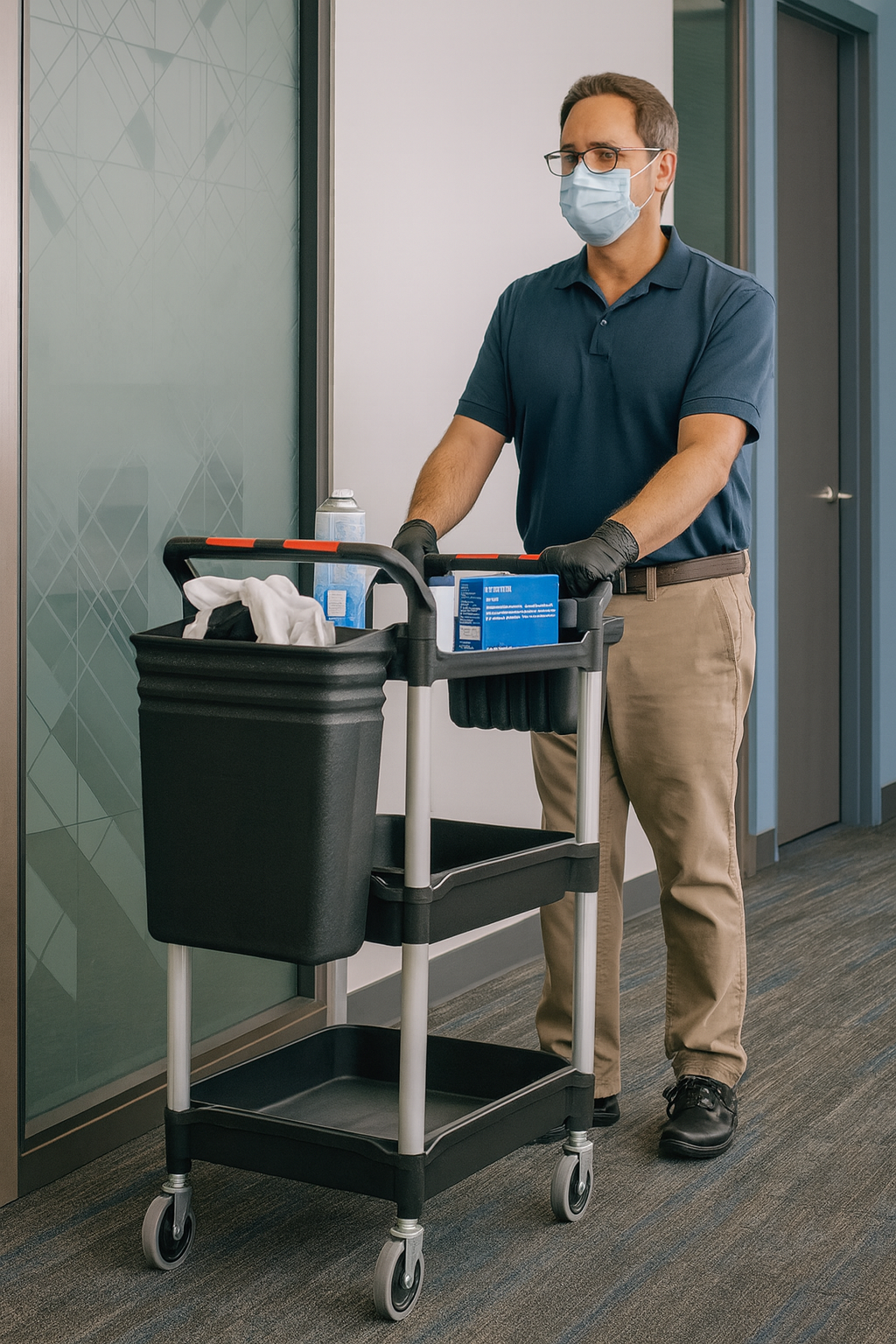
Janitorial Cleaning Cart UK 2026: Expert Guide to Professional Custodial Trolleys

Janitorial cleaning carts in the UK have become indispensable equipment for facilities managers, cleaning contractors, and maintenance teams across England, Scotland, Wales, and Northern Ireland in 2026. As commercial cleaning standards continue to evolve and operational efficiency becomes paramount, selecting the right professional custodial service trolley can transform your cleaning operations, reduce labour costs, and improve workplace safety. This comprehensive guide examines everything UK facilities need to know about janitorial cleaning carts, from essential features and comparison criteria to maintenance protocols and expert recommendations that ensure maximum return on investment throughout 2026 and beyond.
Why Janitorial Cleaning Carts Matter for UK Facilities in 2026
The landscape of commercial cleaning in the UK has transformed dramatically, with 2026 bringing heightened expectations for hygiene standards, operational efficiency, and workplace safety. A heavy-duty janitorial cleaning cart serves as the mobile command centre for cleaning professionals, directly impacting productivity, staff wellbeing, and service quality across healthcare facilities, educational institutions, commercial offices, and industrial environments.
Modern UK facilities face unique challenges that make professional cleaning equipment essential. Victorian-era buildings with narrow corridors, multi-storey complexes with varied flooring surfaces, and stringent infection control requirements in healthcare settings all demand equipment specifically designed for British operational contexts. The right cleaning cart reduces walking distances by up to 40%, minimises operator fatigue during extended shifts, and ensures compliance with Health and Safety Executive guidelines for manual handling.
Investment in quality custodial equipment delivers measurable returns. Facilities managers across the UK report that professional-grade cleaning carts reduce cleaning times by 25-35%, decrease supply waste through better organisation, and lower staff turnover by improving working conditions. In 2026's competitive labour market, where recruiting and retaining skilled cleaning staff presents ongoing challenges, equipment that makes jobs easier and safer provides significant competitive advantage.
Essential Features of Professional Janitorial Cleaning Carts UK
When evaluating janitorial cleaning carts for UK facilities, several critical features separate professional-grade equipment from budget alternatives:
- Heavy-duty construction: Commercial-grade materials with reinforced joints that withstand years of daily use across demanding environments
- Premium swivel casters: Smooth-rolling wheels that transition effortlessly between carpet, tile, vinyl, and concrete without damaging surfaces
- Multi-tier utility shelves: Strategically positioned storage that keeps cleaning chemicals, microfibre cloths, and tools within arm's reach
- Integrated waste collection: Built-in bins that eliminate constant trips to disposal points, dramatically improving workflow efficiency
- Chemical-resistant surfaces: Materials that withstand exposure to professional-grade disinfectants and cleaning solutions without degrading
- Ergonomic design: Thoughtful handle positioning and balanced weight distribution that reduce operator strain during extended shifts
- Compact footprint: Intelligent sizing that maximises capacity whilst fitting through standard UK doorways and storing efficiently
- Easy-clean surfaces: Smooth, non-porous materials without hard-to-reach crevices that support infection control protocols
Janitorial Cleaning Cart Comparison: UK Market Analysis 2026
Understanding how different cleaning cart options compare helps UK facilities make informed purchasing decisions. This comparison examines key factors across professional, standard, and budget categories:
| Feature | Heavy-Duty Professional Cart | Standard Budget Cart | Basic Utility Trolley |
|---|---|---|---|
| Frame Construction | Reinforced commercial-grade materials, 5-10 year lifespan | Lightweight plastic prone to cracking, 12-24 month lifespan | Basic metal without reinforcement, 2-3 year lifespan |
| Caster Quality | Premium swivel casters, smooth rolling on all UK floor types | Fixed or low-quality wheels, difficult manoeuvrability | Standard casters, limited performance on carpet |
| Storage Capacity | Multi-tier shelves + integrated waste bin, optimised workflow | Single shelf, no waste collection, frequent restocking needed | Basic shelving only, minimal organisation |
| Total Cost (5 Years) | £450-650 (single purchase, minimal maintenance) | £600-900 (3-4 replacements required) | £500-700 (2 replacements, moderate maintenance) |
The data clearly demonstrates that whilst professional heavy-duty cleaning carts may require higher initial investment, their superior lifecycle value makes them the most economical choice for UK facilities committed to long-term operational excellence.
How to Choose the Right Janitorial Cleaning Cart for Your UK Facility
Selecting the optimal cleaning cart requires careful assessment of your facility's specific requirements, operational context, and budget parameters. Follow this systematic approach to ensure you invest in equipment that delivers maximum value:
Assess Your Facility Type and Size: Healthcare facilities require carts with superior chemical resistance and easy-clean surfaces for infection control. Educational institutions benefit from high-capacity models that reduce restocking frequency. Commercial offices need professional aesthetics for daytime cleaning in occupied spaces. Industrial environments demand maximum durability for demanding conditions.
Evaluate Floor Surface Diversity: UK buildings often feature multiple flooring types within single facilities. Ensure your cart's casters perform equally well on carpet, tile, vinyl, and concrete. Test manoeuvrability on your actual floor surfaces before committing to large purchases.
Consider Doorway and Corridor Dimensions: Measure your narrowest doorways, tightest corners, and lift dimensions. Professional carts designed for UK facilities typically accommodate standard 762mm doorways, but verify compatibility with your specific building layout, particularly in older structures.
Calculate Total Cost of Ownership: Look beyond purchase price to consider replacement frequency, maintenance requirements, and productivity impact. A £500 cart requiring replacement every 18 months costs significantly more over five years than a £650 cart lasting a decade.
Prioritise Ergonomics and Safety: Equipment that reduces operator fatigue improves productivity, decreases workplace injuries, and enhances staff retention. Evaluate handle height, weight distribution, and ease of loading for your team's specific needs.
Verify Chemical Compatibility: Ensure cart materials resist the specific cleaning chemicals, disinfectants, and sanitisers used in your facility. Healthcare environments using hospital-grade disinfectants require particularly robust chemical resistance.
Step-by-Step Implementation Guide for UK Facilities
Successfully integrating new janitorial cleaning carts into your operations requires systematic planning and staff engagement. Follow these proven steps for smooth implementation across your UK facility:
Step 1: Conduct Needs Assessment
Survey cleaning staff to identify current pain points, workflow inefficiencies, and equipment frustrations. Document specific challenges like inadequate storage, poor manoeuvrability, or frequent breakdowns that new equipment should address.
Step 2: Establish Selection Criteria
Create a weighted scoring matrix based on your facility's priorities. Typical criteria include durability (25%), manoeuvrability (20%), storage capacity (20%), chemical resistance (15%), ergonomics (10%), and cost (10%).
Step 3: Request Demonstrations
Arrange hands-on trials with shortlisted carts in your actual facility environment. Have cleaning staff test equipment on your floor surfaces, through your doorways, and with your typical supply loads.
Step 4: Calculate ROI and Secure Budget
Quantify expected benefits including time savings, reduced replacement costs, and decreased injury rates. Present a comprehensive business case to stakeholders highlighting both financial returns and operational improvements.
Step 5: Plan Rollout Strategy
For large facilities, implement new carts in phases rather than replacing all equipment simultaneously. Start with high-traffic areas or departments with greatest need, gather feedback, and refine processes before full deployment.
Step 6: Develop Training Programme
Create comprehensive training covering proper loading techniques, safe pushing methods, efficient workflow patterns, and daily maintenance procedures. Include both initial training and refresher sessions for new staff.
Step 7: Monitor Performance Metrics
Track key indicators including cleaning times, supply consumption, equipment downtime, and staff feedback. Use data to optimise workflows and demonstrate ROI to stakeholders.
Step 8: Establish Maintenance Protocols
Implement daily, weekly, and monthly maintenance schedules to maximise equipment lifespan. Assign responsibility for inspections, cleaning, and minor repairs to prevent small issues becoming major failures.
Cost Analysis: Investment vs. Value in UK Janitorial Equipment 2026
Understanding the true cost of janitorial cleaning carts requires examining total cost of ownership rather than focusing solely on purchase price. UK facilities managers must consider multiple financial factors when evaluating equipment investments:
Initial Purchase Costs: Professional heavy-duty cleaning carts typically range from £400-650 depending on features and capacity. Standard budget alternatives cost £150-250, whilst basic utility trolleys fall between £200-350. However, purchase price represents only the beginning of the cost story.
Replacement Frequency: Budget carts averaging 12-24 month lifespans require 3-4 replacements over five years, totalling £450-1,000 in purchase costs alone. Professional carts lasting 5-10 years eliminate these recurring expenses, delivering superior value despite higher initial investment.
Productivity Impact: Efficient equipment reduces cleaning times by 25-35%, translating to substantial labour cost savings. For a facility spending £50,000 annually on cleaning labour, a 30% efficiency gain delivers £15,000 in annual savings—far exceeding equipment costs.
Maintenance and Repair: Budget equipment requires frequent repairs including caster replacements (£30-50), shelf repairs (£20-40), and structural fixes (£50-100). Professional carts need minimal maintenance beyond routine cleaning and occasional lubrication.
Injury and Downtime Costs: Poor equipment contributes to workplace injuries, sick leave, and potential compensation claims. Ergonomic professional carts reduce these risks, protecting both staff wellbeing and organisational finances.
Supply Waste Reduction: Organised storage prevents chemical spills, product damage, and supply loss. Facilities report 15-20% reductions in cleaning supply costs through better organisation and reduced waste.
Common Mistakes When Purchasing Janitorial Cleaning Carts UK
UK facilities managers frequently encounter pitfalls when selecting cleaning equipment. Avoid these common mistakes to ensure successful investments:
- Prioritising purchase price over lifecycle value: Focusing exclusively on initial cost leads to frequent replacements, higher total expenditure, and operational disruptions from equipment failures
- Ignoring UK-specific requirements: Purchasing equipment designed for different markets may not accommodate British doorway dimensions, building layouts, or regulatory standards
- Overlooking staff input: Failing to consult cleaning teams who use equipment daily results in poor adoption, continued inefficiencies, and wasted investment
- Neglecting chemical compatibility: Assuming all carts resist professional cleaning chemicals leads to premature degradation, safety hazards, and unexpected replacement costs
- Underestimating capacity requirements: Selecting undersized carts forces frequent restocking trips, negating efficiency benefits and frustrating cleaning staff
- Skipping hands-on testing: Making decisions based solely on specifications without testing equipment in your actual facility environment often reveals incompatibilities too late
- Forgetting about storage space: Purchasing carts that don't fit existing custodial closets creates storage challenges and potential safety hazards
- Ignoring maintenance requirements: Failing to establish maintenance protocols accelerates equipment degradation and shortens useful life
Expert Recommendations for UK Facilities Managers 2026
Drawing on extensive experience across healthcare, education, commercial, and industrial sectors throughout England, Scotland, Wales, and Northern Ireland, these expert recommendations guide UK facilities toward optimal cleaning cart investments:
Invest in Quality from the Start: Professional-grade equipment delivers superior long-term value despite higher initial costs. Budget constraints are understandable, but lifecycle analysis consistently demonstrates that quality equipment costs less over time whilst delivering better performance.
Standardise Equipment Across Your Organisation: Using consistent cart models simplifies training, streamlines maintenance, enables parts sharing, and creates operational efficiencies across multiple sites or departments.
Prioritise Ergonomics and Staff Wellbeing: Equipment that reduces physical strain improves productivity, decreases injuries, and enhances staff retention—critical factors in 2026's challenging labour market for cleaning professionals.
Plan for Growth and Changing Needs: Select equipment with flexibility to accommodate evolving cleaning protocols, new product types, and changing facility requirements without requiring complete replacement.
Establish Comprehensive Maintenance Programmes: Proactive maintenance extends equipment life, prevents unexpected failures, and ensures consistent performance. Assign clear responsibilities and create documented procedures.
Leverage Supplier Expertise: Work with suppliers who understand UK facilities, regulatory requirements, and operational challenges. Technical support, replacement parts availability, and application guidance add significant value beyond the product itself.
Monitor and Measure Performance: Track metrics including cleaning times, supply consumption, equipment downtime, and staff satisfaction. Data-driven insights enable continuous improvement and justify future investments to stakeholders.
Maintenance Tips for Maximum Janitorial Cart Lifespan
Proper maintenance protocols ensure your professional janitorial cleaning cart delivers years of reliable service across your UK facility. Implement these systematic maintenance practices:
Daily Maintenance Tasks:
- Wipe down all surfaces with appropriate disinfectant at shift end
- Remove debris from casters and check for wrapped hair or string
- Empty and thoroughly clean waste bins to prevent odours
- Inspect for loose components or visible damage
- Ensure all shelves and bins are properly secured
Weekly Maintenance Tasks:
- Deep clean all surfaces including hard-to-reach areas
- Test caster swivel action and rolling smoothness
- Remove accumulated debris from caster axles
- Tighten any loose fasteners before they cause structural issues
- Check chemical-resistant surfaces for any degradation signs
Monthly Maintenance Tasks:
- Perform comprehensive inspection of frame integrity
- Lubricate caster swivels if they become stiff or noisy
- Assess shelf condition and replace if cracked or damaged
- Review load distribution patterns and adjust if necessary
- Document any recurring issues for supplier consultation
Quarterly Maintenance Tasks:
- Conduct detailed condition assessment relative to facility needs
- Replace worn casters that no longer roll smoothly
- Address any structural concerns before they compromise safety
- Evaluate whether workflow changes require configuration adjustments
- Update maintenance documentation and training materials
Annual Maintenance Tasks:
- Complete comprehensive equipment audit
- Compare current condition against original specifications
- Plan for eventual replacement based on usage intensity
- Review total cost of ownership and ROI achievement
- Update procurement plans for future equipment needs
Applications Across UK Facility Types
Professional janitorial cleaning carts serve diverse applications across the UK's varied facility landscape. Understanding sector-specific requirements ensures optimal equipment selection:
Healthcare Facilities: Hospitals, clinics, care homes, and medical centres throughout the NHS and private sector require carts with superior chemical resistance, easy-clean surfaces for infection control, and professional appearance suitable for patient areas. Smooth, quiet casters enable cleaning during visiting hours without disturbing patients.
Educational Institutions: Universities, colleges, schools, and training centres across England, Scotland, Wales, and Northern Ireland benefit from high-capacity carts that reduce restocking frequency across expansive campuses. Durability withstands intensive daily use during term time, whilst compact storage suits holiday periods.
Commercial Office Buildings: Corporate headquarters, business parks, and multi-tenant complexes need professional-appearing equipment for daytime cleaning in occupied spaces. Quiet operation and organised appearance maintain professional environments whilst enabling efficient maintenance.
Retail Environments: Shopping centres, department stores, and retail parks require carts that work around customers without disruption. Smooth manoeuvrability and professional aesthetics enable cleaning during trading hours without impacting customer experience.
Hospitality Venues: Hotels, conference centres, and event spaces demand versatile equipment handling diverse cleaning challenges from guest corridors to function rooms. Quick reconfiguration between different cleaning tasks maximises operational flexibility.
Industrial and Warehouse Facilities: Manufacturing plants, distribution centres, and logistics facilities need maximum durability for demanding environments. Heavy-duty construction withstands industrial cleaning challenges across expansive floor areas with varied surface types.
Frequently Asked Questions About Janitorial Cleaning Carts UK
Q: What weight capacity should I look for in a professional janitorial cleaning cart for UK facilities?
A: Professional cleaning carts designed for commercial UK use typically support 50-100kg of fully loaded cleaning supplies, equipment, and waste. The reinforced frame and premium casters distribute weight effectively, ensuring stable operation even when carrying substantial loads. Always verify capacity specifications match your facility's typical supply loads, and avoid overloading which compromises safety and accelerates wear.
Q: Will cleaning cart casters damage our floors in our listed building?
A: Quality casters specifically designed for commercial use won't damage floors when properly maintained. Premium swivel casters feature non-marking materials that protect tile, vinyl, carpet, and even historic flooring in listed buildings. Regular debris removal from caster wheels prevents scratching, and proper weight distribution avoids concentrated pressure points that could damage sensitive surfaces.
Q: How do I justify the higher cost of professional cleaning carts to budget-conscious stakeholders?
A: Present a comprehensive total cost of ownership analysis showing that professional carts costing £500-650 with 5-10 year lifespans cost significantly less than budget alternatives requiring replacement every 12-24 months. Include productivity gains (25-35% time savings), reduced injury rates, lower supply waste, and improved staff retention. Quantify these benefits in financial terms to demonstrate ROI typically achieved within 12-18 months.
Q: Can one cleaning cart model work across our multi-site UK operation with different building types?
A: Yes, professional-grade carts designed for UK facilities accommodate diverse building types from Victorian-era structures to modern complexes. The compact footprint fits standard British doorways (762mm), whilst premium casters handle varied flooring surfaces. Standardising on a single quality model simplifies training, maintenance, and parts inventory across multiple sites whilst ensuring consistent performance.
Q: What's the typical lifespan of a heavy-duty janitorial cleaning cart in daily commercial use?
A: Professional heavy-duty cleaning carts typically deliver 5-10 years of reliable service in daily commercial use, depending on usage intensity and maintenance quality. Healthcare facilities with multiple daily shifts may see 5-7 years, whilst office environments with single-shift cleaning often achieve 8-10 years. Proper maintenance significantly extends lifespan, whilst budget alternatives typically fail within 12-24 months.
Q: Do janitorial cleaning carts require special training for cleaning staff?
A: Whilst cleaning carts are intuitive to use, proper training optimises safety and efficiency. Training should cover correct loading techniques (heavier items on lower shelves), safe pushing methods (using legs rather than back), efficient workflow patterns, and daily maintenance procedures. Most facilities complete initial training in 30-45 minutes, with refresher sessions for new staff ensuring consistent best practices.
Q: How do I maintain infection control standards when using cleaning carts in healthcare settings?
A: Select carts with smooth, non-porous surfaces that allow thorough cleaning and disinfection. Implement daily cleaning protocols using hospital-grade disinfectants, paying particular attention to high-touch areas like handles. Ensure chemical-resistant materials withstand repeated exposure to strong disinfectants without degrading. Avoid carts with hard-to-reach crevices where pathogens could harbour, and establish clear cleaning schedules that align with your infection prevention protocols.
Q: What replacement parts should we stock for our cleaning cart fleet?
A: For facilities operating multiple carts, maintain a small inventory of commonly needed replacement parts including casters (the most frequently replaced component), shelf clips or brackets, and any removable bins or containers. Work with your supplier to identify parts with highest failure rates for your specific usage patterns. Many professional carts feature standardised components that simplify parts management and reduce inventory requirements.
Conclusion: Investing in Professional Janitorial Equipment for UK Success in 2026
As UK facilities navigate the evolving landscape of commercial cleaning in 2026, professional janitorial cleaning carts represent strategic investments that deliver measurable returns through improved efficiency, enhanced safety, and superior operational performance. The comprehensive analysis presented in this guide demonstrates that whilst budget alternatives may tempt cost-conscious decision-makers, the total cost of ownership, productivity impact, and staff wellbeing benefits of professional-grade equipment make it the economically sound choice for facilities committed to long-term excellence.
From healthcare facilities maintaining stringent infection control standards to educational institutions managing expansive campuses, commercial offices requiring professional aesthetics, and industrial environments demanding maximum durability, the right heavy-duty janitorial cleaning cart transforms cleaning operations across every sector of the UK economy.
The evidence is clear: facilities that invest in quality custodial equipment experience 25-35% improvements in cleaning efficiency, significant reductions in workplace injuries, enhanced staff retention in competitive labour markets, and lower total costs over equipment lifecycles. These benefits compound year after year, creating sustainable competitive advantages that budget equipment simply cannot deliver.
For UK facilities managers, cleaning contractors, and maintenance teams ready to elevate their operations in 2026, the path forward is straightforward. Assess your specific requirements using the frameworks provided in this guide, prioritise lifecycle value over purchase price, engage your cleaning staff in the selection process, and partner with suppliers who understand British facilities and regulatory requirements.
Don't allow your cleaning operations to be constrained by inadequate equipment that frustrates staff, wastes time, and requires constant replacement. Transform your facility's cleaning performance with professional-grade janitorial cleaning carts engineered for the demands of UK commercial environments. Your team deserves equipment that makes their jobs easier, safer, and more efficient—and your facility deserves the superior cleanliness standards that only quality equipment can deliver.
Ready to upgrade your cleaning operations? Explore our heavy-duty janitorial cleaning cart designed specifically for UK facilities, featuring reinforced construction, premium casters, multi-tier storage, and integrated waste collection. Experience fast UK delivery to facilities across England, Scotland, Wales, and Northern Ireland, backed by comprehensive support and genuine commitment to your operational success.