
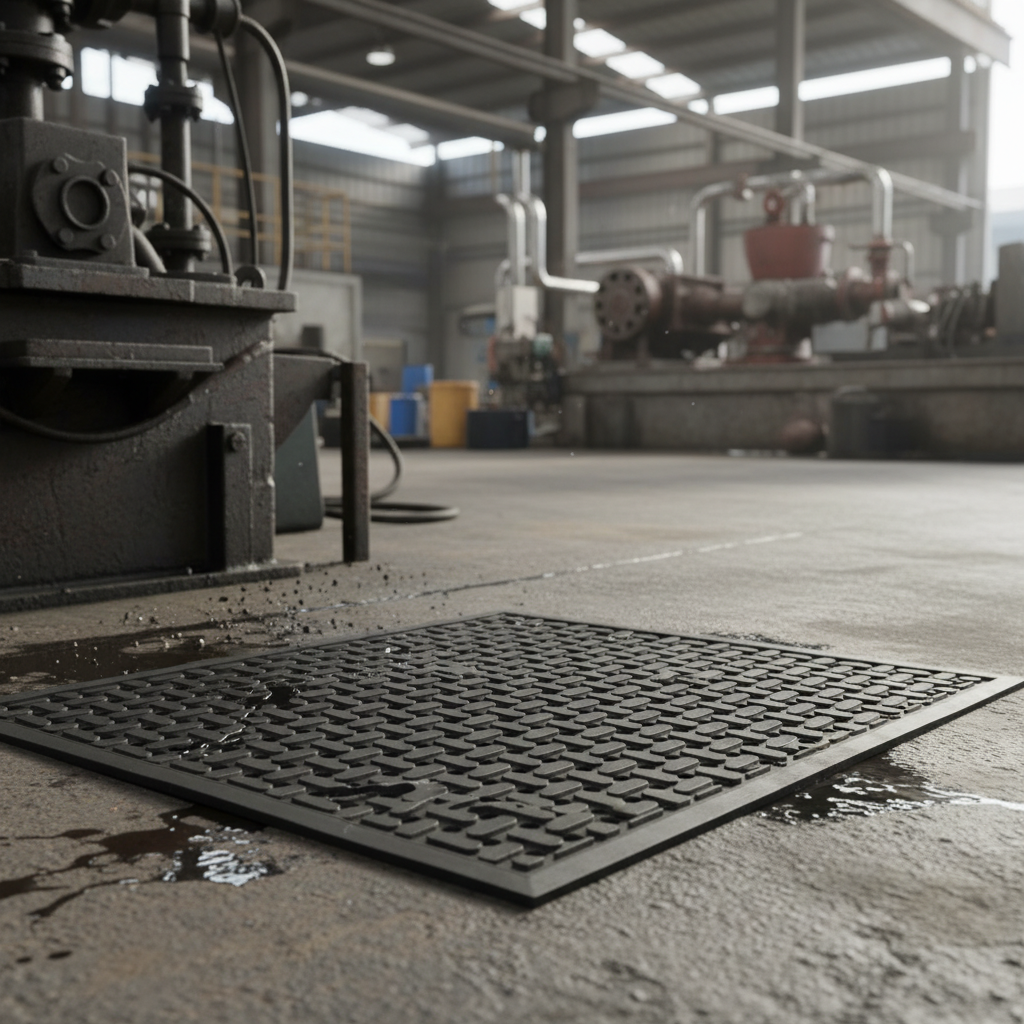
Oil Resistant Drainage Mat UK 2026: Ultimate Industrial Safety Guide
Oil resistant drainage mats UK have become essential safety equipment for industrial facilities, commercial kitchens, and manufacturing plants across England, Scotland, Wales, and Northern Ireland in 2026. As workplace safety regulations tighten and businesses prioritise employee wellbeing, investing in premium oil resistant drainage mats has shifted from optional to essential. This comprehensive guide examines everything UK facility managers, health and safety officers, and business owners need to know about selecting, installing, and maintaining industrial drainage matting that delivers measurable safety improvements and long-term value.
Whether you're managing an automotive workshop in Manchester, a commercial kitchen in Edinburgh, a manufacturing facility in Cardiff, or a warehouse in Belfast, understanding the technical specifications, performance characteristics, and total cost of ownership for oil resistant drainage mats will help you make informed decisions that protect your workforce whilst meeting UK compliance standards in 2026.
Why Oil Resistant Drainage Mats Matter for UK Workplaces in 2026
The Health and Safety Executive reports that slips, trips, and falls remain the most common cause of workplace injuries across the UK, accounting for over 30% of all non-fatal incidents reported in 2025. In environments where oils, greases, coolants, and other liquids are present, the risk multiplies exponentially. Traditional flooring solutions simply cannot address the dual challenges of liquid contamination and worker fatigue that characterise modern industrial operations.
Premium oil resistant drainage mats engineered from nitrile rubber provide a comprehensive solution that addresses multiple workplace hazards simultaneously. The advanced drainage design channels liquids away from walking surfaces, the anti-fatigue properties reduce musculoskeletal strain during extended standing periods, and the chemical-resistant construction withstands harsh industrial environments without degradation.
For UK businesses operating under the Workplace (Health, Safety and Welfare) Regulations 1992 and the Health and Safety at Work Act 1974, implementing effective floor safety measures isn't merely good practice—it's a legal obligation. The financial implications extend beyond compliance, with workplace injury costs including lost productivity, insurance premiums, potential litigation, and reputational damage that can devastate businesses of any size.
Understanding Oil Resistant Drainage Mat Technology
Not all industrial mats deliver equivalent performance. The material composition, drainage architecture, and construction quality determine whether a mat provides genuine safety benefits or becomes a liability. In 2026, the most effective solutions utilise nitrile rubber compounds specifically formulated for oil and chemical resistance.
Nitrile rubber contains acrylonitrile polymers that create molecular resistance to petroleum-based products, unlike natural rubber or PVC alternatives that degrade when exposed to oils and solvents. This chemical stability ensures the mat maintains its structural integrity, slip resistance, and cushioning properties throughout its service life, even in the harshest industrial environments across the UK.
The drainage system represents equally critical engineering. Precision-engineered holes and raised surface patterns create gravity-fed channels that continuously remove liquids from the walking surface. This prevents the dangerous pooling that transforms standard mats into slip hazards, maintaining safety even during the wettest conditions in commercial kitchens, automotive workshops, and manufacturing facilities.
Comprehensive Comparison: Choosing the Right Mat for Your UK Facility
| Feature | Heavy-Duty Nitrile Drainage Mat | Standard PVC Mat | Basic Rubber Mat | Foam Anti-Fatigue Mat |
|---|---|---|---|---|
| Oil Resistance | Excellent (nitrile compound) | Poor | Fair to Good | Poor |
| Drainage System | Advanced multi-hole design | None or minimal | Basic pattern only | None |
| Anti-Fatigue Properties | Superior cushioning | Minimal | Moderate | Good (dry only) |
| Chemical Resistance | Excellent (wide range) | Limited | Moderate | Poor |
| Expected Lifespan (UK Industrial Use) | 5-7 years | 1-2 years | 2-3 years | 1-2 years |
| Temperature Range | -20°C to +70°C | Limited | Moderate | Limited |
| Slip Resistance (Wet/Oily) | Excellent | Poor | Good | Very Poor |
| Cleaning & Maintenance | Very easy (pressure wash) | Moderate | Moderate | Difficult |
| UK Compliance Documentation | Fully certified | Varies | Varies | Limited |
| Total Cost of Ownership (5 years) | Low | High (frequent replacement) | Moderate | High |
As this comparison demonstrates, heavy-duty nitrile drainage mats deliver superior performance across every critical metric. Whilst the initial investment may exceed basic alternatives, the extended lifespan, reduced maintenance requirements, and enhanced safety outcomes provide exceptional value for UK businesses committed to workplace excellence.
How to Choose the Perfect Oil Resistant Drainage Mat for Your Application
Selecting the optimal mat configuration requires careful assessment of your specific operational requirements, environmental conditions, and usage patterns. Consider these essential factors when evaluating options for your UK facility in 2026:
1. Environmental Conditions: Assess the types and volumes of liquids present in your workspace. Automotive workshops require maximum oil resistance, whilst commercial kitchens need solutions that handle fats, oils, and water simultaneously. Manufacturing facilities may encounter coolants, hydraulic fluids, and chemical solutions that demand broad-spectrum resistance.
2. Traffic Intensity: High-traffic areas with constant foot traffic, rolling equipment, or heavy machinery require reinforced construction that resists compression and maintains performance under demanding conditions. Lower-traffic workstations may accommodate lighter-duty specifications whilst still delivering essential safety benefits.
3. Standing Duration: Workers who stand for extended periods benefit most from superior anti-fatigue properties. The cushioning characteristics of premium nitrile rubber reduce musculoskeletal strain, improving comfort and productivity during long shifts common in UK industrial operations.
4. Temperature Exposure: Cold storage facilities, heated production areas, and outdoor loading docks experience temperature extremes that affect mat performance. Verify that your selected mat maintains flexibility and slip resistance across the temperature range present in your specific application.
5. Cleaning Requirements: Food preparation areas, healthcare facilities, and pharmaceutical operations demand easy-to-clean, non-porous surfaces that resist bacterial growth. The cleaning method compatibility—whether pressure washing, chemical sanitisers, or steam cleaning—must align with your hygiene protocols.
6. Compliance Obligations: Ensure your mat selection includes appropriate documentation to support UK health and safety audits, insurance requirements, and industry-specific regulations. Certified products simplify compliance whilst protecting your business from liability.
Step-by-Step Installation Guide for Maximum Performance
Proper installation directly impacts mat performance, longevity, and safety outcomes. Follow this professional installation protocol to ensure optimal results in your UK facility:
Step 1: Surface Preparation
Thoroughly clean the installation area, removing all debris, oil residue, grease, and contaminants. The subfloor must be dry, level, and structurally sound. Address any cracks, uneven areas, or moisture issues before proceeding, as these conditions compromise mat performance and create safety hazards.
Step 2: Workspace Measurement
Accurately measure the coverage area, considering high-traffic patterns, workstation locations, and areas where employees stand for extended periods. Account for equipment placement, doorways, and workflow patterns to ensure comprehensive coverage without creating trip hazards or obstructing operations.
Step 3: Mat Acclimatisation
If the mat has been stored in significantly different temperature conditions, allow it to acclimatise to the installation environment for 24 hours. This prevents dimensional changes that could create gaps or buckling after installation, particularly important in UK facilities with variable heating.
Step 4: Positioning and Alignment
Place the drainage mat in the designated area, ensuring drainage holes are unobstructed and positioned to allow proper liquid flow. For multiple mat configurations, align edges carefully to prevent trip hazards whilst maintaining continuous coverage.
Step 5: Securing (If Required)
High-traffic areas or locations with moving equipment may require mat anchoring to prevent shifting. Use appropriate securing systems designed for industrial flooring—avoid methods that compromise drainage capabilities or create new hazards. Many premium mats feature sufficient weight and grip to remain stable without additional securing.
Step 6: Safety Verification
Conduct a thorough safety inspection, walking across the mat to check for movement, gaps, raised edges, or other potential hazards. Verify that transitions between mat and floor are smooth and that no trip points exist. Document the installation date for maintenance scheduling and compliance records.
Step 7: Staff Briefing
Inform employees about the mat's purpose, proper use, and any specific safety considerations. Ensure cleaning personnel understand appropriate maintenance procedures to preserve mat performance and longevity. Clear communication maximises safety benefits and prevents misuse that could compromise effectiveness.
Cost Analysis: Understanding Total Investment and ROI
Evaluating mat costs requires looking beyond initial purchase price to total cost of ownership over the product's service life. For UK businesses, this comprehensive analysis reveals the superior value of premium solutions:
Initial Investment: Premium oil resistant drainage mats typically range from £400-£800 per mat depending on size and specifications, representing a moderate upfront investment for professional-grade safety equipment. Standard PVC or basic rubber alternatives may cost £100-£250, appearing more economical initially.
Replacement Frequency: Heavy-duty nitrile mats deliver 5-7 years of service in demanding industrial applications, whilst cheaper alternatives require replacement every 1-2 years. Over a 6-year period, you'll purchase one premium mat versus 3-6 basic mats, with the associated labour costs for repeated installation and disposal.
Maintenance Costs: The non-porous, chemical-resistant surface of nitrile mats cleans easily with standard equipment and solutions, requiring minimal maintenance labour. Porous alternatives trap contaminants, demand specialised cleaning, and degrade from repeated exposure to cleaning chemicals, increasing ongoing costs.
Injury Prevention Value: The Health and Safety Executive estimates the average workplace slip, trip, or fall costs UK businesses £8,000-£15,000 when accounting for lost productivity, investigation time, potential compensation, and insurance impacts. Preventing even one incident justifies the investment in premium safety equipment.
Productivity Gains: Anti-fatigue properties reduce worker discomfort by up to 50%, translating to measurable productivity improvements, reduced absenteeism, and enhanced employee satisfaction. These benefits compound over time, delivering returns that far exceed the mat's purchase price.
Total Cost of Ownership Example: A £600 premium mat lasting 6 years costs £100 annually, whilst £200 basic mats replaced every 18 months cost £133 annually—plus the hidden costs of increased injury risk, reduced productivity, and frequent installation disruption. The premium solution delivers superior performance at lower total cost.
Common Mistakes to Avoid When Implementing Drainage Mats
Even the highest-quality mat underperforms if implemented incorrectly. Avoid these frequent errors that compromise safety and value in UK facilities:
Mistake 1: Prioritising Initial Price Over Total Value
Selecting the cheapest option typically results in frequent replacements, higher maintenance costs, and inferior safety performance. Calculate total cost of ownership rather than focusing solely on purchase price to make economically sound decisions.
Mistake 2: Incorrect Size or Coverage
Undersized mats leave hazardous gaps where liquids accumulate, whilst oversized mats create trip hazards and waste resources. Accurate measurement and professional guidance ensure optimal coverage for your specific workspace configuration.
Mistake 3: Neglecting Subfloor Preparation
Installing mats over damaged, uneven, or contaminated subfloors compromises performance and creates new safety hazards. Proper surface preparation is essential for achieving the mat's designed safety and longevity benefits.
Mistake 4: Using Incompatible Cleaning Products
Harsh chemicals, petroleum solvents, or abrasive cleaning methods can degrade even premium mats over time. Follow manufacturer guidelines for cleaning solutions and methods to preserve mat integrity and extend service life.
Mistake 5: Ignoring Maintenance Schedules
Allowing debris to accumulate in drainage holes, failing to address edge damage, or neglecting regular inspections reduces mat effectiveness and creates liability. Implement documented maintenance protocols to maximise your investment.
Mistake 6: Inadequate Staff Training
Employees who don't understand the mat's purpose or proper use may misuse or damage the equipment. Brief training ensures everyone understands how the mat contributes to workplace safety and their role in maintaining its effectiveness.
Expert Recommendations for UK Industrial Applications
Drawing on extensive experience supplying safety equipment to NHS facilities, universities, manufacturing plants, and commercial operations across England, Scotland, Wales, and Northern Ireland, these expert recommendations optimise mat performance:
For Commercial Kitchens: Prioritise mats with maximum drainage capacity and anti-bacterial properties. The high-volume liquid exposure in professional kitchens demands superior drainage design, whilst food safety regulations require easy-to-clean, non-porous surfaces. Position mats at prep stations, cooking areas, and dishwashing zones where staff stand for extended periods.
For Automotive Workshops: Select mats with exceptional oil resistance and heavy-duty construction to withstand rolling equipment and constant petroleum product exposure. The nitrile compound's chemical stability ensures long-term performance in these demanding environments. Consider modular configurations that adapt to varying bay layouts.
For Manufacturing Facilities: Implement comprehensive coverage along assembly lines, machine stations, and high-traffic aisles. The anti-fatigue properties significantly impact productivity during long shifts, whilst the slip resistance addresses the varied liquid hazards present in industrial production. Coordinate mat placement with workflow patterns for maximum effectiveness.
For Warehouses and Distribution Centres: Focus on high-traffic areas including loading docks, packing stations, and equipment operation zones. The robust construction handles forklift traffic and heavy loads, whilst the drainage system addresses moisture from weather exposure and equipment cleaning.
For Healthcare and Laboratory Settings: Chemical resistance and easy cleaning are paramount in these environments. The non-porous surface prevents contamination whilst supporting stringent hygiene protocols. Ensure selected mats include appropriate compliance documentation for healthcare facility audits.
Maintenance Tips for Extended Mat Life and Performance
Proper maintenance preserves your investment whilst ensuring consistent safety performance throughout the mat's service life. Implement these professional maintenance practices in your UK facility:
Daily Cleaning Protocol: Remove loose debris with a broom or vacuum at the end of each shift. For light soiling, wipe down with a damp mop using mild detergent solution. The non-absorbent nitrile surface prevents liquid penetration, making daily maintenance quick and efficient even in busy operations.
Weekly Deep Cleaning: Lift the mat and clean both the mat surface and the floor beneath to prevent contaminant buildup. Use a pressure washer or hose to flush debris from drainage holes, ensuring optimal liquid flow. For stubborn oil or grease accumulation, apply a degreasing solution compatible with nitrile rubber, scrub with a stiff brush, and rinse thoroughly.
Monthly Inspection Routine: Examine the mat for signs of wear, damage, or compression that could compromise performance. Check edges for curling or tears that might create trip hazards. Verify that drainage holes remain clear and functional. Address any issues promptly to maintain safety standards and extend mat life.
Quarterly Professional Assessment: Conduct comprehensive evaluation of mat performance, including slip resistance testing if required by your safety protocols. Document findings for compliance records and schedule replacement if the mat shows significant wear or reduced performance. This proactive approach prevents safety incidents and ensures continuous protection.
Approved Cleaning Solutions: Use pH-neutral detergents, food-safe sanitisers, or manufacturer-recommended cleaning products. Avoid petroleum-based solvents, strong acids, harsh alkaline cleaners, or abrasive scrubbing pads that could damage the nitrile compound or textured surface. Always test new products on a small area first.
Proper Storage Practices: If temporary removal is necessary, clean the mat thoroughly and allow complete drying. Store flat or loosely rolled in a cool, dry location away from direct sunlight and temperature extremes. Avoid placing heavy objects on stored mats that could cause permanent deformation affecting future performance.
UK Compliance and Safety Standards for 2026
Operating within UK regulatory frameworks requires understanding the specific standards and obligations that govern workplace safety equipment. In 2026, these key regulations apply to industrial matting:
Health and Safety at Work Act 1974: This foundational legislation establishes employer duty of care obligations, requiring businesses to provide safe working environments and appropriate safety equipment. Implementing effective floor safety measures demonstrates compliance with these fundamental requirements.
Workplace (Health, Safety and Welfare) Regulations 1992: These regulations specifically address floor conditions, requiring that floors are suitable for their purpose, properly maintained, and free from hazards. Oil resistant drainage mats help fulfil these obligations in environments where liquid contamination creates risks.
Management of Health and Safety at Work Regulations 1999: These regulations mandate risk assessment and implementation of control measures. Documented mat selection, installation, and maintenance procedures demonstrate systematic risk management that satisfies regulatory requirements.
Personal Protective Equipment at Work Regulations 1992: Whilst primarily addressing wearable PPE, these regulations establish principles about equipment selection, maintenance, and training that apply to workplace safety equipment including industrial matting.
Documentation Requirements: Maintain records of mat specifications, compliance certificates, installation dates, maintenance schedules, and inspection findings. This documentation supports health and safety audits, insurance requirements, and demonstrates due diligence in the event of incidents.
Frequently Asked Questions About Oil Resistant Drainage Mats UK
Q1: What makes nitrile rubber superior to other materials for oil resistance in UK industrial environments?
A: Nitrile rubber contains acrylonitrile polymers that provide exceptional molecular resistance to oils, fuels, and petroleum-based chemicals. Unlike natural rubber or PVC that degrade with oil exposure, nitrile maintains structural integrity, slip resistance, and cushioning properties even with continuous contamination. This chemical stability makes it the professional choice for automotive workshops, manufacturing facilities, and industrial operations across England, Scotland, Wales, and Northern Ireland where petroleum products are present.
Q2: How does the drainage system work in wet or oily conditions?
A: The precision-engineered drainage holes and raised surface pattern create gravity-fed channels that allow liquids to flow through the mat rather than pooling on the surface. This continuous drainage removes oils, water, coolants, and other fluids from the walking surface, maintaining slip resistance even in the wettest conditions. The design prevents the dangerous liquid accumulation that transforms traditional mats into hazards, providing consistent safety performance throughout the workday.
Q3: Can oil resistant drainage mats withstand heavy equipment and forklift traffic in UK warehouses?
A: Yes, heavy-duty nitrile drainage mats are engineered specifically for high-traffic industrial environments. The reinforced construction resists compression, tearing, and punctures from rolling equipment, heavy machinery, and constant foot traffic. However, for areas with extreme point loads or very heavy equipment, consult technical specifications to ensure optimal mat selection for your specific application and loading conditions.
Q4: Are these mats suitable for food preparation areas and commercial kitchens across the UK?
A: Absolutely. The non-porous nitrile surface resists bacterial growth and cleans easily with food-safe sanitising solutions, making it ideal for commercial kitchens, food processing facilities, and catering operations. The drainage design prevents liquid accumulation that could harbour bacteria, supporting HACCP and food safety protocols required in UK food service operations. The anti-fatigue properties also reduce chef and kitchen staff discomfort during long shifts.
Q5: How long can I expect an oil resistant drainage mat to last in a busy UK industrial environment?
A: With proper maintenance, heavy-duty nitrile drainage mats typically provide 5-7 years of service in demanding industrial applications, significantly outlasting standard PVC or basic rubber alternatives. Actual lifespan depends on usage intensity, maintenance practices, and environmental conditions. Regular cleaning and periodic inspections maximise mat longevity, ensuring you receive full value from your investment whilst maintaining consistent safety performance.
Q6: Do oil resistant drainage mats meet UK health and safety regulations for 2026?
A: Yes, premium drainage mats are manufactured to comply with UK and European safety standards, including requirements under the Health and Safety at Work Act 1974 and the Workplace (Health, Safety and Welfare) Regulations 1992. Reputable suppliers provide compliance documentation and certificates to support your safety audits and regulatory inspections. The mat's slip-resistant properties and ergonomic benefits help you fulfil duty of care obligations to employees.
Q7: Can I cut the mat to fit specific workspace dimensions in my UK facility?
A: Whilst mats can be trimmed to fit specific areas, professional cutting is recommended to maintain edge integrity and prevent fraying. Improper cutting may compromise structural performance and create trip hazards. Contact technical support for guidance on custom sizing, or consider modular mat options that allow flexible configuration without cutting, providing safer and more adaptable solutions.
Q8: What's the difference between oil resistant drainage mats and standard anti-fatigue mats?
A: Oil resistant drainage mats combine multiple safety features—chemical resistance, drainage capability, and anti-fatigue properties—in a single solution. Standard anti-fatigue mats typically use foam construction that degrades rapidly when exposed to oils and provides no drainage, becoming slip hazards in wet conditions. The nitrile construction and drainage design make oil resistant mats suitable for harsh industrial environments where standard anti-fatigue mats fail quickly.
Conclusion: Invest in Workplace Safety Excellence Today
As UK businesses navigate increasingly stringent safety regulations and heightened employee expectations in 2026, implementing comprehensive floor safety solutions has shifted from optional to essential. Oil resistant drainage mats deliver measurable safety improvements, productivity gains, and long-term value that far exceed their modest investment.
The evidence is compelling: superior oil and chemical resistance, advanced drainage design, anti-fatigue properties, heavy-duty construction, and extended service life combine to create a safety solution that protects your most valuable asset—your people. From commercial kitchens in London to manufacturing facilities in Birmingham, automotive workshops in Glasgow to warehouses in Cardiff, UK businesses are discovering that premium drainage matting delivers returns that extend far beyond compliance.
Don't compromise workplace safety with inferior solutions that fail when you need them most. The total cost of ownership analysis clearly demonstrates that premium nitrile drainage mats provide superior value through extended lifespan, reduced maintenance requirements, and enhanced safety outcomes. When you factor in injury prevention, productivity improvements, and compliance benefits, the investment becomes not just justified but essential.
Join the thousands of UK businesses that have transformed their workplace safety with professional-grade drainage matting. Whether you're equipping a single workstation or outfitting an entire facility across England, Scotland, Wales, or Northern Ireland, the right mat configuration delivers immediate and lasting benefits.
Ready to enhance workplace safety, reduce injury risks, and improve employee wellbeing? Explore our heavy-duty oil resistant drainage mat today for fast UK delivery and expert technical support. Your team's safety and your business's success deserve nothing less than the best industrial safety solutions available in 2026.
For technical guidance on selecting the perfect mat configuration for your specific application, or to discuss bulk orders for multi-site operations, contact our experienced team who understand the unique challenges facing UK industrial facilities. We're committed to helping you create safer, more productive workplaces across every region of the United Kingdom.