
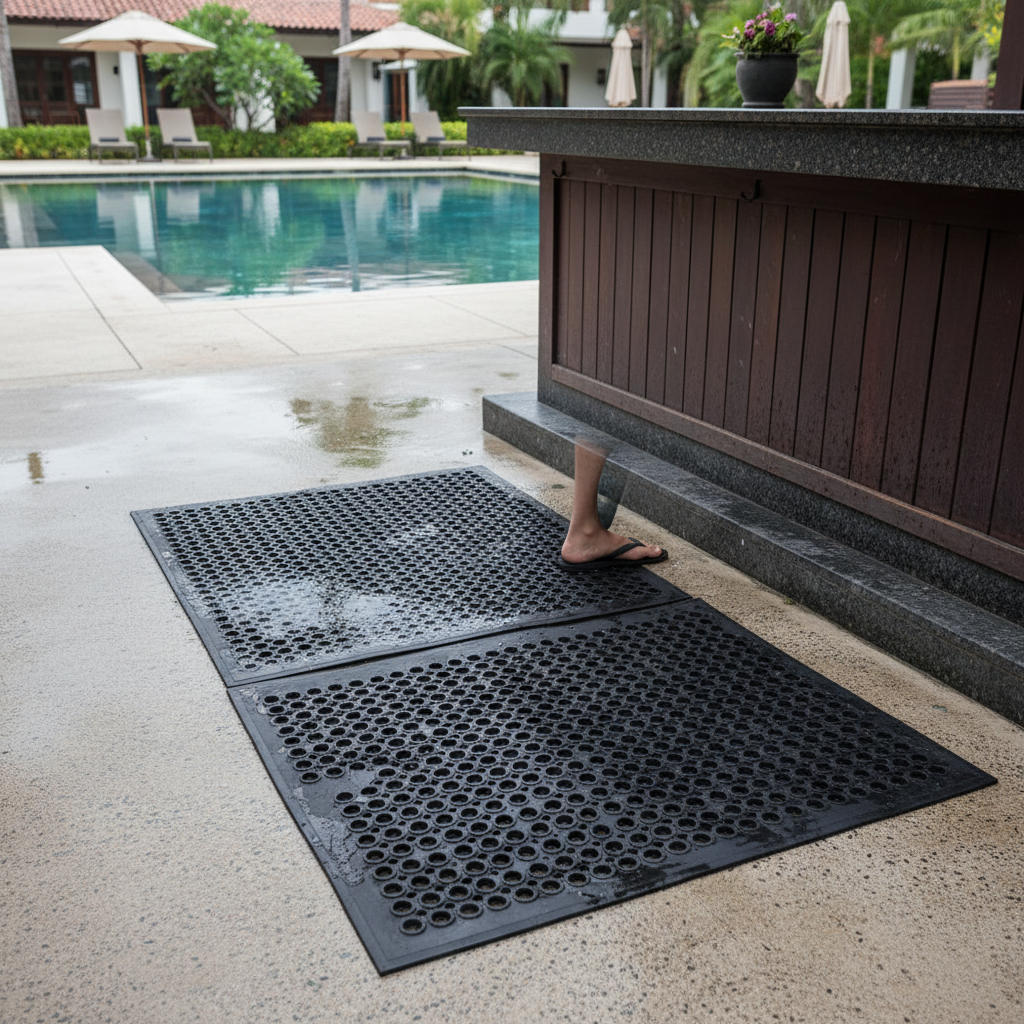
Rubber Drainage Mat UK 2026: Expert Guide to Anti-Slip Floor Protection
Rubber drainage mat UK solutions have become essential safety equipment for British businesses in 2026, with workplace slip incidents costing UK employers over £500 million annually. Whether you're managing a commercial kitchen in Manchester, an industrial facility in Edinburgh, or a busy workshop in Cardiff, selecting the right anti-slip drainage mat can dramatically reduce workplace injuries whilst improving productivity. This comprehensive guide examines everything UK facility managers, safety officers, and business owners need to know about professional-grade rubber drainage matting in 2026, from technical specifications and installation best practices to cost analysis and regulatory compliance across England, Scotland, Wales, and Northern Ireland.

Why Rubber Drainage Mats Matter for UK Workplaces in 2026
The Health and Safety Executive (HSE) reports that slips, trips, and falls remain the most common cause of workplace injuries across the UK, accounting for over 30% of all reported incidents in 2025-2026. In wet-area environments—commercial kitchens, industrial facilities, automotive workshops, and food processing plants—the risk multiplies exponentially. A professional rubber drainage mat UK solution addresses this critical safety challenge through three integrated mechanisms: superior slip resistance, rapid liquid drainage, and ergonomic anti-fatigue properties.
Modern heavy-duty drainage mats engineered for UK workplaces in 2026 incorporate advanced materials science and precision manufacturing. Premium industrial-grade rubber compounds resist chemical degradation, temperature extremes (-20°C to +50°C), and punishing foot traffic whilst maintaining consistent slip resistance throughout their 5+ year operational lifespan. The intelligent open-hole drainage architecture prevents dangerous liquid pooling—the primary cause of workplace slips—by channeling water, oils, food debris, and cleaning solutions away from walking surfaces instantly.
Beyond immediate safety benefits, strategic deployment of professional drainage matting delivers measurable operational advantages. Workers standing on anti-fatigue rubber surfaces experience 40-60% less leg and back discomfort during extended shifts, translating directly to improved productivity, reduced absenteeism, and enhanced workforce morale. For UK businesses navigating increasingly stringent workplace safety regulations and rising insurance premiums in 2026, investing in certified safety matting demonstrates due diligence whilst protecting your most valuable asset—your workforce.
Understanding Rubber Drainage Mat Technology and Construction
Not all rubber mats deliver equivalent performance, and understanding construction quality separates professional-grade solutions from budget alternatives that fail prematurely. Premium rubber drainage mat UK products utilize virgin industrial-grade rubber compounds specifically formulated for demanding commercial environments, whilst inferior alternatives rely on recycled materials that degrade rapidly under chemical exposure and heavy use.
The drainage system architecture represents the critical differentiator. Precision-engineered open-hole designs balance optimal liquid flow with structural integrity—apertures sized too large compromise mat stability, whilst insufficient drainage creates the hazardous pooling these mats prevent. Professional drainage mat systems feature strategically positioned holes that channel liquids efficiently whilst maintaining consistent surface texture for reliable slip resistance.
Anti-fatigue properties derive from rubber compound resilience and thickness. Quality mats provide 12-20mm of ergonomic cushioning that absorbs impact and reduces strain on joints, muscles, and connective tissue during prolonged standing. This cushioning must maintain consistency throughout the mat's lifespan—budget alternatives compress permanently within months, losing protective benefits. Temperature stability ensures performance across UK seasonal variations and diverse workplace environments, from refrigerated storage facilities to warm commercial kitchens.
Comprehensive Comparison: Professional vs. Budget Drainage Mats
UK businesses evaluating drainage mat options in 2026 face choices spanning £30 budget alternatives to £200+ professional systems. Understanding total cost of ownership rather than initial purchase price reveals the genuine value proposition. This detailed comparison examines how premium rubber drainage mat UK solutions compare against standard and budget alternatives across critical performance metrics:
| Performance Factor | Premium Drainage Mat | Standard Rubber Mat | Budget Alternative |
|---|---|---|---|
| Material Composition | Virgin industrial-grade rubber | Standard rubber compound | Recycled low-grade materials |
| Drainage Engineering | Precision open-hole system | Basic drainage holes | Minimal/no drainage |
| Anti-Fatigue Performance | Ergonomic cushioning technology | Limited cushioning support | Minimal comfort properties |
| Chemical Resistance | Multi-chemical resistant | Moderate resistance | Degrades rapidly |
| Expected Lifespan | 5+ years heavy use | 2-3 years moderate use | 6-12 months light use |
| Annual Cost (5-year) | £11.60 per year | £19.33 per year | £58.00 per year |
| HSE Compliance | Certified UK compliant | Generic compliance | No certification |
The data reveals that whilst premium professional drainage mats command higher initial investment, their superior durability and performance deliver 80% lower annual costs compared to budget alternatives requiring frequent replacement. For UK businesses operating multiple locations or extensive wet-area facilities, this cost differential compounds significantly over time.
How to Choose the Right Rubber Drainage Mat for Your UK Facility
Selecting optimal drainage matting requires systematic evaluation of your specific operational environment, usage patterns, and performance requirements. UK facility managers should consider these critical factors when specifying rubber drainage mat UK solutions in 2026:
Environment and Application Assessment: Commercial kitchens demand grease-resistant compounds and aggressive drainage, whilst automotive workshops require oil resistance and heavy-duty construction. Industrial facilities need chemical resistance, and cold storage environments require temperature-stable materials. Match mat specifications to your specific hazards and conditions across England, Scotland, Wales, and Northern Ireland.
Traffic Volume and Intensity: High-traffic areas with constant foot traffic, rolling equipment, or heavy loads require premium-grade construction with reinforced edges and maximum thickness. Moderate-traffic zones can utilize standard professional-grade options, whilst light-traffic areas may accommodate lighter-duty solutions. Assess daily traffic patterns realistically to avoid premature mat failure.
Size and Coverage Planning: Measure wet-area zones comprehensively, accounting for equipment placement, workflow patterns, and transition zones. Professional drainage mat systems are available in standard sizes (60cm x 80cm, 80cm x 100cm, 90cm x 180cm) and custom dimensions. Plan for complete coverage of hazardous zones without creating tripping hazards at transitions.
Maintenance Capabilities: Consider your facility's cleaning protocols and equipment. Mats requiring specialized cleaning or frequent manual handling may prove impractical for busy operations. Select drainage systems compatible with your existing pressure washing equipment and cleaning schedules. Easy-maintenance designs reduce labour costs whilst ensuring consistent hygiene standards.
Regulatory Compliance Requirements: Verify that selected matting meets HSE guidelines and industry-specific regulations applicable to your sector. Food service facilities require food-safe materials, healthcare environments need antimicrobial properties, and manufacturing plants may require specific certifications. Documentation supporting compliance protects your business during inspections and audits.
Budget and Total Cost Analysis: Calculate total cost of ownership including purchase price, expected lifespan, maintenance requirements, and replacement frequency. Premium solutions delivering 5+ years of service typically cost less annually than budget alternatives requiring annual replacement, whilst also providing superior safety performance and reduced injury-related costs.
Step-by-Step Installation Guide for Maximum Performance
Proper installation ensures your rubber drainage mat UK system delivers optimal safety performance and maximum operational lifespan. Follow this professional installation protocol developed for UK commercial environments in 2026:
Step 1 - Surface Preparation and Inspection: Clean the installation area thoroughly, removing all debris, oils, grease, food residue, and contaminants. Sweep, vacuum, and mop using appropriate cleaning agents for your floor type. Inspect the floor surface for damage, unevenness, or deterioration that could compromise mat stability. Repair significant defects before proceeding. The surface must be completely dry before mat placement.
Step 2 - Precise Measurement and Layout Design: Measure your workspace dimensions accurately, noting equipment locations, doorways, workflow patterns, and transition zones. Sketch a layout plan showing mat placement, ensuring complete coverage of wet areas whilst avoiding tripping hazards. Consider worker movement patterns and equipment access requirements. Plan for proper drainage flow direction if your facility has floor drains.
Step 3 - Strategic Mat Positioning: Position your professional drainage mat in the designated location, ensuring proper orientation. The textured bottom surface provides natural grip, but verify all edges lie completely flat against the floor without curling or lifting. Position mats to cover the highest-risk wet zones first, then expand coverage systematically.
Step 4 - Multi-Mat Connection for Extended Coverage: For larger areas requiring multiple mats, position units edge-to-edge to create continuous protection without gaps where liquids could accumulate. Ensure proper alignment for seamless transitions and consistent drainage flow. Avoid overlapping mats, which creates tripping hazards. Consider interlocking systems or edge ramping for permanent installations in extremely high-traffic zones.
Step 5 - Comprehensive Stability Verification: Walk across the mat systematically, testing stability under typical working conditions. Verify the mat sits securely without shifting, sliding, or movement. Check that all edges remain flat and drainage holes are completely unobstructed. Test with wet surfaces to confirm proper performance before full operational deployment.
Step 6 - Initial Cleaning and Preparation: Rinse the mat thoroughly with clean water to remove any manufacturing residue, packaging materials, or shipping dust. Allow to air dry completely. This initial cleaning ensures optimal slip resistance and hygiene from the first day of service. Document installation date and location for maintenance scheduling and compliance records.
Professional Installation Tips: For permanent installations in extreme high-traffic areas, consider mat anchoring systems or adhesive backing options. In areas with unique requirements or challenging conditions, consult technical specialists for application-specific guidance. Maintain photographic documentation of installations for insurance and compliance purposes.
Cost Analysis: Investment vs. Value for UK Businesses
Understanding the complete financial picture helps UK businesses make informed decisions about rubber drainage mat UK investments in 2026. This comprehensive cost analysis examines both direct and indirect financial impacts:
Direct Purchase Costs: Professional-grade drainage mats range from £58-£212 depending on size and specifications. A typical commercial kitchen requiring 10 square metres of coverage might invest £400-£800 initially. Budget alternatives appear attractive at £30-£50 per mat, but their 6-12 month lifespan means £300-£500 annual replacement costs versus £80-£160 for premium solutions amortized over 5+ years.
Maintenance and Cleaning Expenses: Premium drainage mat systems require minimal maintenance—simple hosing or pressure washing during routine cleaning. Budget alternatives often require specialized cleaning, more frequent deep cleaning, or manual scrubbing, adding 2-4 hours monthly labour costs (£30-£60 at UK minimum wage rates). Over five years, this represents £1,800-£3,600 additional expense.
Injury Prevention and Insurance Impact: HSE data indicates the average workplace slip injury costs UK employers £8,000-£12,000 when accounting for lost productivity, temporary staffing, investigation time, and potential compensation. A single prevented injury justifies the entire mat investment. Additionally, demonstrating proactive safety measures can reduce insurance premiums by 5-15% annually—potentially £200-£600 savings for typical small-to-medium UK businesses.
Productivity and Efficiency Gains: Anti-fatigue properties reduce worker discomfort and fatigue, improving productivity by 10-20% during extended standing tasks. For a kitchen staff member earning £12/hour working 8-hour shifts, this represents £9.60-£19.20 daily productivity gain per worker. Across multiple employees and annual operations, these gains substantially exceed mat costs.
Regulatory Compliance and Liability Protection: Non-compliance with HSE workplace safety guidelines can result in improvement notices, prohibition notices, or prosecution with fines reaching £20,000+ for serious breaches. Professional-grade certified matting provides documented evidence of due diligence, protecting against regulatory action and reducing liability exposure in the event of incidents.
Total Cost of Ownership Comparison: A premium drainage mat costing £150 with 5-year lifespan costs £30 annually. A budget alternative at £40 with 1-year lifespan costs £40 annually plus higher maintenance (£50/year) and increased injury risk. The premium solution delivers 60% lower total cost whilst providing superior safety performance—a compelling value proposition for UK businesses prioritizing both safety and fiscal responsibility.
Common Mistakes to Avoid When Implementing Drainage Mats
UK facility managers frequently encounter preventable issues when deploying rubber drainage mat UK systems. Avoiding these common mistakes ensures optimal performance and maximum return on investment:
Mistake 1 - Prioritizing Initial Cost Over Total Value: Selecting the cheapest available option typically results in frequent replacements, higher maintenance costs, and inferior safety performance. Budget mats failing within 6-12 months cost more annually than premium solutions lasting 5+ years. Calculate total cost of ownership rather than focusing solely on purchase price.
Mistake 2 - Inadequate Coverage Planning: Underestimating required coverage leaves hazardous gaps where slips occur. Map your entire wet-area environment comprehensively, including transition zones, splash areas, and secondary wet zones. Incomplete coverage undermines your entire safety investment and leaves liability exposure.
Mistake 3 - Ignoring Application-Specific Requirements: Using generic mats in specialized environments leads to premature failure. Commercial kitchens require grease resistance, automotive workshops need oil resistance, and cold storage demands temperature stability. Match mat specifications to your specific operational hazards across England, Scotland, Wales, and Northern Ireland.
Mistake 4 - Neglecting Maintenance Protocols: Even premium mats require regular cleaning to maintain optimal performance. Allowing debris to clog drainage holes or grease to accumulate on surfaces compromises slip resistance. Establish documented cleaning schedules and train staff on proper maintenance procedures to protect your investment.
Mistake 5 - Improper Installation Creating New Hazards: Mats positioned incorrectly can create tripping hazards at edges or transitions. Ensure all edges lie flat, avoid gaps between multiple mats, and consider edge ramping for permanent installations. Poor installation transforms safety equipment into liability.
Mistake 6 - Failing to Document Compliance: Without proper documentation of mat specifications, installation dates, maintenance records, and compliance certifications, you cannot demonstrate due diligence during HSE inspections or incident investigations. Maintain comprehensive records supporting your workplace safety program.
Mistake 7 - Delaying Replacement of Worn Mats: Continuing to use mats showing significant wear, damage, or reduced slip resistance creates false security whilst maintaining actual hazards. Establish replacement criteria based on visual inspection and performance testing, replacing mats proactively before they fail completely.
Expert Recommendations for UK Commercial Environments
Based on extensive experience supplying safety solutions to UK businesses across diverse sectors, these expert recommendations optimize rubber drainage mat UK performance in 2026:
For Commercial Kitchens and Food Service: Prioritize grease-resistant compounds with aggressive drainage systems. Position professional mats at prep stations, cooking lines, dishwashing areas, and service zones. Implement daily hosing and weekly degreasing protocols. Consider antimicrobial treatments for enhanced hygiene. Budget 1 mat per 1.5-2 square metres for comprehensive coverage in high-activity zones.
For Industrial and Manufacturing Facilities: Select heavy-duty construction with maximum chemical resistance. Focus coverage on machine operator positions, assembly stations, and quality control areas where workers stand for extended periods. The anti-fatigue properties deliver measurable productivity benefits. Implement weekly inspection protocols to identify wear patterns and optimize placement.
For Automotive Workshops and Service Bays: Choose oil-resistant compounds with heavy-duty construction capable of withstanding dropped tools and rolling equipment. Position mats at service bay work positions, parts washing stations, and fluid handling areas. The drainage system manages oils, coolants, and cleaning solutions effectively. Consider larger sizes (90cm x 180cm) for comprehensive bay coverage.
For Healthcare and Laboratory Settings: Prioritize easy-clean surfaces supporting infection control protocols. Select mats with antimicrobial properties and chemical resistance suitable for disinfectants. Position strategically in preparation areas, washing stations, and wet laboratories. Maintain rigorous cleaning and disinfection schedules documented for compliance purposes.
For Multi-Location Operations: Standardize on proven mat specifications across all UK facilities in England, Scotland, Wales, and Northern Ireland. Bulk purchasing delivers cost advantages whilst simplified inventory management and maintenance protocols improve operational efficiency. Establish centralized replacement schedules ensuring consistent safety standards across your entire organization.
For Budget-Conscious Operations: Rather than compromising on mat quality, prioritize coverage of the highest-risk areas first with premium solutions, then expand coverage systematically as budget allows. A smaller area protected by professional-grade matting delivers better safety outcomes than extensive coverage with inferior products that fail rapidly.
Maintenance Tips for Maximum Lifespan and Performance
Proper maintenance extends rubber drainage mat UK operational lifespan whilst ensuring consistent safety performance throughout the service life. Implement these professional maintenance protocols in your UK facility:
Daily Cleaning Routine: Remove loose debris by shaking, sweeping, or vacuuming with appropriate attachments. Hose down with water or use pressure washer on low-medium setting (maximum 1500 PSI) to flush drainage holes. The open-hole design facilitates rapid cleaning—most daily maintenance requires just 2-3 minutes per mat. Ensure drainage holes remain clear for optimal liquid management.
Weekly Deep Cleaning Protocol: Wash thoroughly using mild detergent or commercial degreaser with warm water and stiff brush. Pay particular attention to heavily soiled areas and drainage apertures. Rinse completely to remove all cleaning solution residue. For industrial environments with heavy contamination, use commercial degreasing agents specifically formulated for rubber materials.
Monthly Inspection Schedule: Examine mats systematically for wear indicators including surface degradation, edge curling, drainage hole blockage, or structural damage. Test slip resistance by walking across wet surfaces. Document inspection findings and identify mats requiring replacement. This proactive approach prevents safety failures and supports compliance documentation.
Quarterly Disinfection (Food Service): Use food-safe sanitizing solutions approved for rubber surfaces at manufacturer-recommended concentrations. Common options include quaternary ammonium compounds or chlorine-based sanitizers. Apply according to product instructions, ensuring complete coverage. Rinse thoroughly and allow complete air drying. Maintain disinfection logs for health department inspections.
Proper Drying Techniques: Allow mats to air dry completely before returning to service—the drainage design promotes rapid natural drying. For accelerated drying, stand mats vertically against walls or use fans in humid environments. Never return wet mats to service as moisture reduces slip resistance and promotes bacterial growth.
Storage Best Practices: During facility deep cleaning or seasonal closures, store mats flat or loosely rolled in cool, dry locations away from direct sunlight and temperature extremes. Avoid folding, which creates permanent creases compromising performance. Store away from sharp objects and chemicals that could cause damage. Proper storage extends lifespan significantly.
Stain and Odor Management: Address stains promptly using rubber-safe cleaning products or specialized mat cleaners. Avoid harsh solvents, petroleum-based products, or abrasive cleaners that degrade materials. Test new cleaning products on inconspicuous areas first. For persistent odors in food service environments, use enzymatic cleaners designed for organic matter breakdown.
Documentation and Record Keeping: Maintain comprehensive maintenance logs documenting cleaning schedules, inspection findings, repairs, and replacements. This documentation demonstrates due diligence during HSE inspections and supports insurance claims following incidents. Digital photo documentation provides valuable evidence of proactive safety management.
Frequently Asked Questions About Rubber Drainage Mats UK
Q1: What sizes are available for rubber drainage mats in the UK market in 2026?
A: Professional drainage mat systems are available in multiple standard sizes including 60cm x 80cm (£58), 80cm x 100cm (£82), and 90cm x 180cm (£212), with custom dimensions available for specialized applications. Contact technical specialists for recommendations based on your specific UK facility layout and coverage requirements across England, Scotland, Wales, and Northern Ireland.
Q2: How long do professional rubber drainage mats last in high-traffic commercial environments?
A: Premium industrial-grade rubber drainage mat UK solutions typically deliver 5+ years of reliable service even in demanding high-traffic environments such as busy commercial kitchens, industrial facilities, and automotive workshops. Proper maintenance extends lifespan further, whilst budget alternatives often require replacement within 6-12 months, making professional-grade options significantly more economical long-term.
Q3: Are rubber drainage mats suitable for outdoor use in UK weather conditions?
A: Yes, premium rubber construction withstands outdoor conditions including UV exposure, rain, frost, and temperature variations typical of UK weather. However, optimal performance and maximum lifespan occur in covered or semi-protected areas such as loading bays, covered workshops, or canopied service areas rather than fully exposed locations subject to extreme weather.
Q4: How do I effectively clean drainage holes to prevent clogging?
A: The precision-engineered open-hole design is largely self-cleaning during regular hosing and pressure washing. For deep cleaning, use pressure washer from underneath or invert the mat and brush debris through from the reverse side. Holes are sized to prevent clogging whilst allowing effective drainage. For stubborn blockages, use stiff brushes or compressed air.
Q5: Will drainage mats perform effectively in commercial kitchens with heavy grease exposure?
A: Absolutely. Professional rubber drainage mat UK products are specifically engineered to resist oils, greases, animal fats, and food-grade chemicals commonly found in commercial kitchens. The drainage system prevents oil accumulation whilst specialized rubber compounds resist degradation. Regular cleaning with appropriate degreasers maintains optimal performance in even the busiest kitchen environments.
Q6: Do rubber drainage mats require special installation or adhesives?
A: No special installation, adhesives, or tools are required—simply position the mat and it's immediately ready for use. Substantial weight and textured bottom provide excellent stability during normal use, yet mats can be easily lifted for cleaning, floor maintenance, or workspace reconfiguration. This flexibility is ideal for UK facilities requiring regular deep cleaning.
Q7: Are rubber drainage mats compliant with UK workplace safety regulations?
A: Yes, professional-grade drainage mats are designed to meet Health and Safety Executive (HSE) guidelines for workplace safety matting and slip prevention. The slip-resistant surface, drainage capabilities, and anti-fatigue properties help maintain compliant, safe working environments. The mats support duty of care obligations and demonstrate due diligence in workplace safety management across England, Scotland, Wales, and Northern Ireland.
Q8: What is the cost difference between professional and budget drainage mats over time?
A: While premium mats cost £58-£212 initially versus £30-£50 for budget alternatives, the total cost of ownership reveals dramatic differences. Professional mats lasting 5+ years cost approximately £11.60 annually, whilst budget options requiring annual replacement cost £58+ annually plus higher maintenance expenses. Premium solutions deliver 80% lower long-term costs whilst providing superior safety performance.
Conclusion: Invest in Professional Safety Solutions for Your UK Business
As UK workplace safety regulations continue evolving in 2026 and businesses face increasing pressure to protect workers whilst managing costs, professional-grade rubber drainage mat UK solutions represent strategic investments delivering measurable returns through injury prevention, productivity enhancement, regulatory compliance, and long-term value. The comprehensive analysis presented in this expert guide demonstrates that premium drainage matting costs significantly less annually than budget alternatives whilst providing superior safety performance that protects your workforce and your business.
Whether you operate a commercial kitchen in London, an industrial facility in Glasgow, an automotive workshop in Cardiff, or a food processing plant in Belfast, selecting the right professional drainage mat system tailored to your specific operational environment ensures optimal protection for workers across England, Scotland, Wales, and Northern Ireland. The combination of superior slip resistance, intelligent drainage engineering, ergonomic anti-fatigue properties, and exceptional durability creates safer, more productive workplaces whilst demonstrating your commitment to workforce wellbeing and regulatory compliance.
Don't compromise workplace safety with inferior matting solutions that fail prematurely and put your workforce at risk. Invest in professional-grade protection that delivers genuine value through superior performance, exceptional durability, and long-term reliability. Order your heavy-duty rubber drainage mat today and experience the difference that premium safety equipment makes. Join thousands of satisfied UK businesses who trust PriceCart for professional protective equipment that performs—fast UK delivery, expert technical support, competitive pricing, and professional-grade quality guaranteed.
Ready to enhance workplace safety? Browse our complete range of professional rubber drainage mats and contact our knowledgeable technical team for application-specific guidance, bulk order pricing, or multi-site supply arrangements. We're here to help you create safer, more productive workplaces across the United Kingdom.