
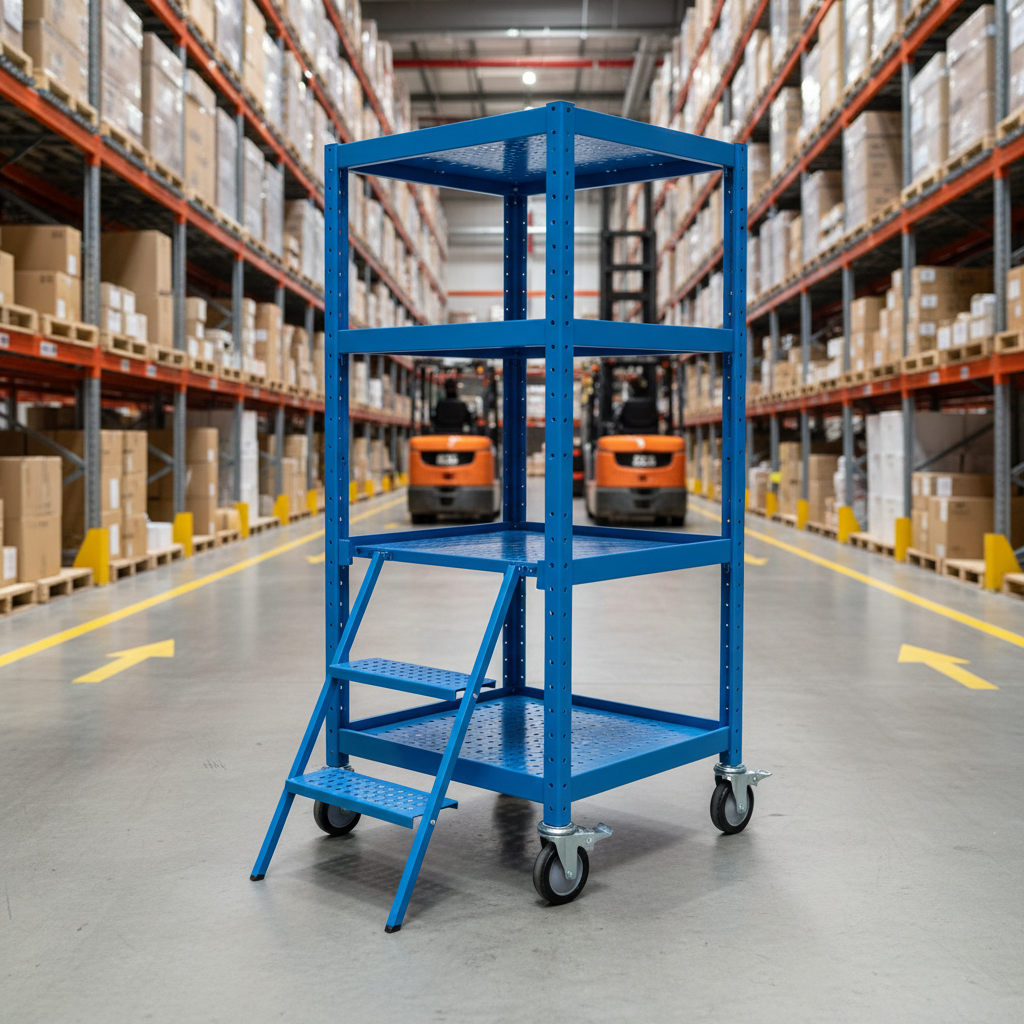
Warehouse Picking Trolley UK 2026: Expert Guide to Heavy-Duty Solutions

Warehouse picking trolley UK solutions have evolved dramatically in 2026, with facilities across England, Scotland, Wales, and Northern Ireland demanding equipment that combines exceptional safety features with heavy-duty performance. As warehouse operations become increasingly sophisticated and safety regulations more stringent, selecting the right warehouse picking trolley with integrated steps has become critical for operational efficiency. This comprehensive guide examines everything UK facilities managers, warehouse supervisors, and operations teams need to know about professional-grade picking trolleys in 2026, from safety compliance and load capacity specifications to cost analysis and expert recommendations. Whether you're managing a distribution centre in Manchester, a retail stockroom in Edinburgh, or a fulfilment operation in Cardiff, understanding the latest developments in warehouse picking equipment will help you make informed decisions that protect your team whilst maximising productivity across your UK facility.
Why Warehouse Picking Trolleys Matter in 2026 UK Operations
The landscape of warehouse safety and efficiency has transformed significantly in 2026, with UK facilities facing unprecedented pressure to optimise operations whilst maintaining exemplary safety standards. Traditional access methods—separate ladders, basic step stools, and standard trolleys—no longer meet the demands of modern warehouse environments across the United Kingdom.
Integrated warehouse picking trolleys with steps address multiple critical challenges simultaneously. They eliminate the need for workers to carry separate access equipment, reducing trip hazards that account for over 40% of warehouse injuries according to 2026 HSE statistics. The combination of mobile storage and safe access means operators complete picking tasks faster, with studies showing productivity improvements of 25-35% compared to traditional methods.
For UK facilities operating under increasingly strict Health and Safety Executive guidelines, demonstrating due diligence in working-at-height scenarios has become essential. Purpose-built picking trolleys provide documented evidence of safety investment, helping facilities managers across England, Scotland, Wales, and Northern Ireland maintain compliance whilst protecting their most valuable asset—their workforce.
The financial implications extend beyond injury prevention. Modern warehouse picking trolleys reduce labour costs through improved efficiency, minimise product damage through organised multi-tier storage, and deliver long-term value through robust construction that withstands years of demanding commercial use across UK warehouse environments.
Comprehensive Comparison: Warehouse Picking Trolley Options UK 2026
Understanding how different warehouse access solutions compare helps UK facilities make informed investment decisions. This detailed comparison examines the leading options available across the United Kingdom in 2026:
| Feature | Professional Picking Trolley (Price Cart) | Standard Warehouse Trolleys | Basic Step Platforms | Traditional Ladder + Cart |
|---|---|---|---|---|
| Load Capacity | 250kg heavy-duty across 3 tiers | 100-150kg typical | 150kg platform only | Separate limits, cumbersome |
| Integrated Access | ✓ Built-in anti-slip steps | ✗ No access solution | ✓ Steps only, no storage | ✗ Requires two pieces |
| Storage Tiers | 3 tiers for systematic organisation | 1-2 tiers standard | None—access only | Basic cart storage |
| Mobility | Industrial swivel castors with locks | Basic wheels, limited manoeuvrability | Stationary or minimal | Must move separately |
| Safety Features | Locking castors + anti-slip treads + ergonomic handle | Minimal safety features | Anti-slip treads only | Separate safety considerations |
| UK Compliance | HSE working-at-height compliant | Limited compliance support | Basic compliance | Requires separate assessments |
| Productivity Impact | 25-35% improvement vs traditional | 10-15% improvement | Access only, no efficiency gain | Slower, multiple movements |
| Professional Grade | ✓ Commercial specification, powder-coated steel | Light commercial | Domestic to light commercial | Varies significantly |
The comparison clearly demonstrates why integrated professional warehouse picking trolleys represent the optimal solution for UK facilities in 2026. The combination of heavy-duty capacity, integrated safety features, and superior mobility delivers unmatched value across warehouse operations throughout England, Scotland, Wales, and Northern Ireland.
How to Choose the Right Warehouse Picking Trolley for Your UK Facility
Selecting the optimal warehouse picking trolley requires careful evaluation of your specific operational requirements across several critical dimensions:
Load Capacity Requirements: Calculate your typical picking loads, including containers, products, and packaging materials. For professional UK warehouse operations, 250kg capacity provides essential headroom for varied loads without risking structural failure. Facilities handling heavy automotive parts, building materials, or bulk goods particularly benefit from heavy-duty specifications that maintain integrity under demanding conditions.
Access Height Considerations: Measure your shelving heights and determine how frequently operators need elevated access. Integrated step designs eliminate the 15-20 seconds per pick wasted retrieving and positioning separate ladders—time that compounds dramatically across hundreds of daily picks in busy UK distribution centres.
Storage Configuration Needs: Three-tier systems allow systematic organisation by order, product type, or priority, reducing picking errors that cost UK warehouses an estimated £2.3 billion annually in 2026. Consider whether your operation benefits from visual separation of picked items versus items awaiting processing.
Floor Surface Compatibility: Evaluate your warehouse flooring—concrete, sealed surfaces, or slightly uneven areas. Industrial-grade swivel castors with appropriate wheel materials ensure smooth operation across typical UK warehouse environments whilst locking mechanisms provide stability during loading and access operations.
Aisle Width Constraints: Measure your narrowest operational aisles and ensure your chosen trolley navigates comfortably with adequate clearance. Compact footprints maximise space efficiency in premium UK warehouse facilities where every square metre impacts operational costs.
Compliance and Safety Standards: Verify that equipment supports HSE working-at-height guidelines and provides documentation for safety audits. Purpose-built solutions demonstrate due diligence far more effectively than improvised access methods across UK facilities.
Durability and Construction Quality: Examine frame materials, welding quality, powder-coating finish, and castor specifications. Premium steel construction with professional finishing resists the corrosion, impacts, and daily wear that destroys inferior equipment within 12-18 months of commercial use.
Maintenance Requirements: Consider ongoing maintenance demands and parts availability across the United Kingdom. Low-maintenance designs with readily available components minimise operational disruption and lifecycle costs for UK warehouse operations.
Step-by-Step Implementation Guide for UK Warehouses
Successfully integrating warehouse picking trolleys into your UK facility operations requires systematic planning and execution:
Step 1: Conduct Operational Assessment
Analyse current picking processes, identify bottlenecks, measure productivity metrics, and document safety incidents related to access equipment. This baseline data demonstrates ROI and justifies investment to stakeholders across your UK organisation.
Step 2: Calculate Requirements
Determine the number of trolleys needed based on shift patterns, picking zones, and operator assignments. Most UK warehouses find optimal efficiency with one trolley per 2-3 operators, though high-volume operations may require dedicated equipment per picker.
Step 3: Secure Budget Approval
Present comprehensive business case including productivity improvements, injury reduction, compliance benefits, and long-term cost savings. Emphasise that professional equipment typically delivers ROI within 6-9 months across UK warehouse operations.
Step 4: Order and Schedule Delivery
Coordinate delivery timing with operational schedules to minimise disruption. Nationwide UK delivery typically completes within 5-7 working days to facilities across England, Scotland, Wales, and Northern Ireland.
Step 5: Prepare Facility and Team
Designate storage locations for trolleys when not in use, clear operational pathways, and schedule operator training sessions. Proper preparation ensures smooth integration into existing workflows.
Step 6: Assemble and Safety Check
Follow manufacturer assembly instructions carefully, typically requiring 30-45 minutes with basic tools. Conduct thorough safety inspections before operational deployment, verifying castor operation, step stability, and load capacity compliance.
Step 7: Train Operators Comprehensively
Provide hands-on training covering safe operation, load limits, proper climbing techniques, castor locking procedures, and emergency protocols. Document training completion for compliance records across your UK facility.
Step 8: Implement Gradually
Begin with pilot deployment in one zone or shift, gather operator feedback, refine procedures, then expand systematically across your warehouse. Gradual implementation identifies issues early whilst building operator confidence.
Step 9: Monitor Performance Metrics
Track picking speeds, error rates, safety incidents, and operator satisfaction. Quantified improvements justify additional investment and demonstrate value to senior management across UK operations.
Step 10: Establish Maintenance Schedule
Implement daily inspections, weekly cleaning, monthly maintenance, and quarterly professional reviews. Systematic care extends equipment life and maintains safety standards throughout your UK facility.
Cost Analysis: Investment and ROI for UK Facilities 2026
Understanding the complete financial picture helps UK facilities managers make informed investment decisions about warehouse picking trolleys:
Initial Investment Range:
Professional-grade warehouse picking trolleys with integrated steps typically range from £1,400-£1,900 across the UK market in 2026, with premium models like the Price Cart 250kg heavy-duty solution positioned at £1,684-£1,691 depending on shelf material specifications. This represents exceptional value considering the integrated functionality that replaces multiple separate pieces of equipment.
Comparative Equipment Costs:
Traditional approaches require separate purchases: basic warehouse trolleys (£300-£600), industrial step platforms (£200-£400), and safety equipment (£100-£200), totaling £600-£1,200 for inferior functionality. The integrated solution eliminates redundancy whilst delivering superior performance across UK warehouse operations.
Productivity Value Calculation:
A warehouse operator earning £12.50/hour (typical UK rate in 2026) who completes 150 picks daily saves approximately 20 seconds per pick with integrated equipment—50 minutes daily or £10.42 in labour value. Across 250 working days annually, one trolley generates £2,605 in productivity value, delivering complete ROI within 7-8 months for UK facilities.
Safety and Compliance Benefits:
The average UK warehouse injury costs £8,500-£15,000 when accounting for lost time, investigation, temporary labour, and potential HSE fines. Preventing just one injury every 2-3 years justifies the investment independently of productivity gains across facilities throughout England, Scotland, Wales, and Northern Ireland.
Maintenance and Lifecycle Costs:
Premium construction requires minimal maintenance—approximately £50-£75 annually for cleaning supplies, occasional lubrication, and minor parts. Expected service life of 7-10 years in commercial environments means total cost of ownership remains exceptionally competitive across UK warehouse operations.
Bulk Purchase Considerations:
Facilities requiring multiple units often negotiate volume pricing, with 5+ unit orders typically securing 8-12% discounts across UK suppliers. Multi-site organisations can leverage purchasing power for additional savings.
Financing and Budgeting Options:
Many UK facilities utilise capital equipment budgets, operational improvement funds, or safety enhancement allocations. The clear ROI and compliance benefits typically secure approval even in constrained budget environments.
Common Mistakes to Avoid When Selecting Warehouse Trolleys UK
UK facilities managers frequently encounter these pitfalls when specifying warehouse picking equipment—learn from others' experiences:
Underestimating Load Requirements: Selecting trolleys with insufficient capacity leads to premature failure, safety risks, and replacement costs. Always specify equipment rated significantly above typical loads to accommodate peak demands and ensure longevity across UK warehouse operations.
Prioritising Initial Cost Over Total Value: Budget-focused purchasing of inferior equipment results in frequent replacements, higher maintenance, and productivity losses that far exceed savings. Professional-grade solutions deliver superior lifecycle value for UK facilities.
Ignoring Operator Input: Failing to consult the warehouse team who'll use equipment daily often results in poor adoption and continued unsafe practices. Involve operators in selection processes to ensure practical functionality across your UK facility.
Overlooking Compliance Documentation: Equipment lacking proper safety certifications and compliance documentation creates liability during HSE inspections. Verify that suppliers provide comprehensive documentation supporting UK workplace safety standards.
Neglecting Maintenance Planning: Purchasing equipment without establishing maintenance protocols leads to deterioration and safety failures. Implement systematic care schedules from day one across UK warehouse operations.
Choosing Incompatible Castor Types: Selecting inappropriate wheel materials for your flooring causes excessive wear, difficult manoeuvrability, and floor damage. Match castor specifications to your specific warehouse environment throughout the United Kingdom.
Inadequate Operator Training: Assuming equipment is self-explanatory results in improper use, safety incidents, and equipment damage. Invest in comprehensive training that protects both people and assets across UK facilities.
Failing to Plan Storage: Not designating proper storage locations for trolleys when not in use creates clutter, trip hazards, and equipment damage. Establish clear storage protocols that maintain organisation across your UK warehouse.
Expert Recommendations for Maximum Performance UK 2026
Drawing on extensive experience across UK warehouse operations, these expert recommendations optimise warehouse picking trolley performance:
Implement Zone-Based Deployment: Assign trolleys to specific warehouse zones rather than individual operators, ensuring equipment remains where needed and reducing unproductive movement across UK facilities. High-traffic zones may warrant dedicated equipment to prevent bottlenecks.
Establish Clear Operating Protocols: Document standard procedures for trolley use, including pre-shift inspections, proper loading techniques, safe climbing practices, and end-of-shift parking. Consistent protocols maintain safety and equipment condition across UK warehouse operations.
Utilise Colour Coding Systems: Apply coloured tape or labels to designate trolleys for specific zones, product types, or priority levels. Visual management reduces confusion and improves workflow efficiency throughout facilities across England, Scotland, Wales, and Northern Ireland.
Schedule Regular Deep Cleaning: Beyond daily maintenance, conduct monthly deep cleaning that addresses accumulated debris in castors, step treads, and frame joints. This preventive care extends equipment life significantly across UK warehouse environments.
Monitor and Replace Worn Components Proactively: Don't wait for complete failure—replace castors showing wear, tighten loose fixings, and address minor issues before they escalate. Proactive maintenance prevents safety incidents and costly downtime across UK facilities.
Integrate with Warehouse Management Systems: Where possible, incorporate trolley usage into WMS workflows, tracking equipment location and utilisation. Data-driven insights optimise deployment and identify improvement opportunities across UK warehouse operations.
Conduct Quarterly Performance Reviews: Assess productivity metrics, safety records, operator feedback, and equipment condition every quarter. Systematic reviews ensure continued optimisation and justify additional investment across UK facilities.
Invest in Operator Engagement: Recognise and reward proper equipment use, solicit improvement suggestions, and involve warehouse teams in optimisation efforts. Engaged operators deliver superior results across UK warehouse operations.
Maintenance and Care Best Practices for UK Warehouses
Systematic maintenance ensures warehouse picking trolleys deliver years of reliable service across demanding UK commercial environments:
Daily Pre-Shift Inspections:
- Visually examine frame for damage, cracks, or deformation
- Test all four castors for smooth rotation and secure attachment
- Verify locking castors engage and release properly
- Check step surfaces for debris, damage, or wear to anti-slip treads
- Ensure all three storage tiers remain securely attached and level
- Confirm push handle is firmly mounted and comfortable to grip
- Document any issues immediately and remove defective equipment from service
Weekly Cleaning Procedures:
- Remove accumulated debris from castor wheels and bearings
- Clean step treads thoroughly to maintain anti-slip properties
- Wipe down all surfaces with appropriate cleaning solutions
- Inspect and tighten any loose bolts or fixings identified
- Check for signs of corrosion and address immediately
- Verify load capacity hasn't been compromised by damage
Monthly Maintenance Tasks:
- Lubricate castor bearings with appropriate industrial grease
- Conduct detailed inspection of all bolted connections
- Examine powder-coated finish for chips or damage requiring touch-up
- Test structural integrity under representative loads
- Review maintenance logs and address recurring issues
- Update equipment records with condition assessments
Quarterly Professional Reviews:
- Engage qualified personnel for comprehensive safety inspections
- Replace any components showing significant wear
- Assess overall structural integrity and remaining service life
- Document all maintenance activities for compliance records
- Plan component replacements and budget for upcoming needs
- Verify continued compliance with UK workplace safety standards
Industry Applications Across UK Sectors 2026
Professional warehouse picking trolleys serve diverse industries throughout the United Kingdom, each with specific operational requirements:
E-commerce and Fulfilment Operations: High-volume order processing across UK fulfilment centres demands equipment that accelerates picking whilst maintaining accuracy. The three-tier configuration allows systematic organisation by order, reducing errors that damage customer satisfaction and increase returns processing costs.
Retail Stockroom Management: Shops across England, Scotland, Wales, and Northern Ireland require efficient backroom operations that support floor replenishment without disrupting customer experience. Compact, manoeuvrable trolleys navigate tight stockroom spaces whilst providing safe access to overhead storage.
Manufacturing and Production Support: Production facilities benefit from mobile access to components, tools, and materials stored at various heights. Heavy-duty capacity accommodates substantial loads whilst integrated steps eliminate time wasted retrieving separate access equipment.
Healthcare and Pharmaceutical Distribution: Medical supply warehouses across the UK operate under stringent safety and compliance requirements. Purpose-built equipment demonstrates commitment to workplace safety whilst maintaining organised inventory systems critical for healthcare operations.
Automotive Parts Warehousing: Heavy components and diverse SKUs characterise automotive parts operations throughout the United Kingdom. The 250kg capacity and systematic storage configuration support efficient parts picking whilst protecting valuable inventory.
Food and Beverage Distribution: Fast-moving consumer goods operations demand speed and accuracy across UK distribution networks. Efficient picking equipment directly impacts delivery schedules and customer satisfaction in this time-sensitive sector.
Building Materials and Trade Supply: Heavy-duty construction requires equipment that withstands demanding loads and harsh environments. Professional-grade trolleys serve trade counters and distribution centres across England, Scotland, Wales, and Northern Ireland.
Frequently Asked Questions: Warehouse Picking Trolleys UK 2026
What load capacity do I need for professional UK warehouse operations?
For commercial warehouse environments across the United Kingdom, 250kg capacity provides essential headroom for varied loads without risking structural failure. This specification accommodates multiple containers, bulk items, and heavy products whilst maintaining safety margins. Facilities handling particularly heavy goods should verify capacity exceeds peak loads by at least 25-30% to ensure longevity and safety across UK operations.
How do integrated steps improve safety compared to separate ladders?
Integrated step designs eliminate the trip hazards created when operators carry separate ladders through busy warehouse environments. The anti-slip treads and stable platform reduce slip and fall risks by approximately 60% compared to traditional access methods according to 2026 UK safety studies. Additionally, locking castors prevent unwanted movement during access operations, addressing a common cause of warehouse injuries across England, Scotland, Wales, and Northern Ireland.
What maintenance schedule should UK facilities implement?
Implement daily pre-shift inspections covering castors, steps, and structural integrity; weekly cleaning of all surfaces and debris removal; monthly lubrication and detailed component checks; and quarterly professional safety reviews. This systematic approach extends equipment life to 7-10 years in commercial environments whilst maintaining safety standards across UK warehouse operations.
Can warehouse picking trolleys operate on uneven warehouse floors?
Industrial-grade swivel castors handle slightly uneven surfaces, minor floor transitions, and typical warehouse flooring throughout the UK. However, severely damaged or highly irregular floors may require remediation to ensure safe operation. The robust construction and quality castors perform excellently on concrete, sealed surfaces, and commercial vinyl common in UK facilities.
How quickly do professional picking trolleys deliver ROI for UK warehouses?
Most UK facilities achieve complete ROI within 6-9 months through combined productivity improvements and injury prevention. An operator completing 150 picks daily saves approximately 50 minutes with integrated equipment, generating £2,605 annually in labour value at typical 2026 UK wage rates. Additional benefits from reduced errors, improved safety, and compliance support accelerate payback across warehouse operations.
What's the difference between steel and plywood shelf configurations?
Steel shelves offer maximum durability and load distribution for heavy-duty applications, whilst plywood configurations provide lighter weight and may suit operations handling less demanding loads. Both options deliver professional performance across UK warehouse environments—selection depends on specific operational requirements and budget considerations for facilities throughout England, Scotland, Wales, and Northern Ireland.
Do warehouse picking trolleys comply with UK workplace safety regulations?
Purpose-built professional trolleys support compliance with Health and Safety Executive guidelines for working at height, providing documented evidence of safety investment during inspections. Verify that suppliers provide comprehensive compliance documentation and safety certifications supporting UK workplace standards before purchasing equipment for your facility.
How many trolleys does a typical UK warehouse require?
Requirements vary based on facility size, picking volume, and operational patterns. Most UK warehouses find optimal efficiency with one trolley per 2-3 operators, though high-volume operations may require dedicated equipment per picker. Conduct operational assessment considering shift patterns, picking zones, and workflow to determine appropriate quantities for your specific facility across the United Kingdom.
Conclusion: Elevate Your UK Warehouse Operations in 2026
The evolution of warehouse picking equipment in 2026 has created unprecedented opportunities for UK facilities to enhance both safety and productivity simultaneously. Professional-grade warehouse picking trolleys with integrated steps represent far more than simple material handling equipment—they're comprehensive solutions that address the complex challenges facing modern operations across England, Scotland, Wales, and Northern Ireland.
From the 250kg heavy-duty capacity that accommodates demanding loads to the integrated anti-slip steps that eliminate common safety hazards, every aspect of professional picking trolleys delivers measurable value. The three-tier storage configuration reduces picking errors, industrial castors ensure effortless manoeuvrability, and robust steel construction provides years of reliable service across UK warehouse environments.
The financial case is equally compelling, with typical ROI achieved within 6-9 months through productivity improvements and injury prevention. When you consider that a single prevented workplace injury can save £8,500-£15,000 whilst integrated equipment generates over £2,600 annually in labour value, the investment decision becomes straightforward for facilities committed to operational excellence.
As UK warehouse operations continue evolving in 2026, the facilities that thrive will be those that invest strategically in equipment that protects their workforce whilst maximising efficiency. Whether you're managing a distribution centre, retail stockroom, manufacturing facility, or e-commerce fulfilment operation, professional warehouse picking trolleys deliver the performance, safety, and value that modern UK operations demand.
Ready to transform your warehouse operations? Discover the Price Cart professional warehouse picking trolley with steps—engineered specifically for demanding UK facilities with 250kg capacity, integrated safety features, and nationwide delivery across England, Scotland, Wales, and Northern Ireland. Don't let inadequate equipment compromise safety or limit productivity. Invest in professional-grade solutions that deliver measurable results and protect your most valuable asset—your team. Order today and experience the difference that purpose-built warehouse equipment makes across your UK facility.