
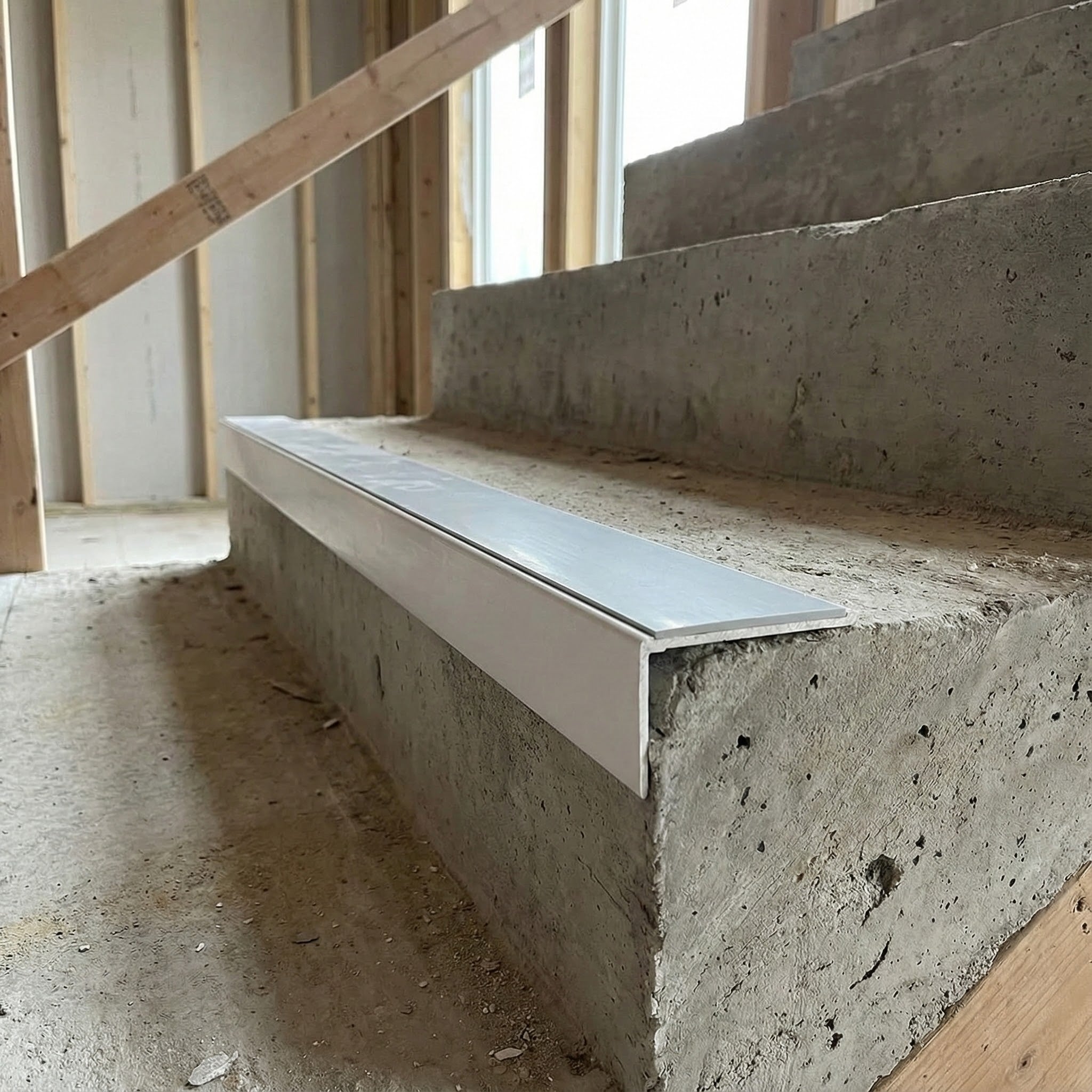
Aluminium Non-Slip Stair Nosing UK 2026: Expert Safety Guide
Aluminium non-slip stair nosing UK installations have become the definitive safety standard across England, Scotland, Wales, and Northern Ireland in 2026. As property managers, facilities directors, and safety officers face increasingly stringent regulations and liability concerns, premium heavy-duty stair nosing solutions deliver the robust protection, compliance assurance, and long-term value that British commercial, industrial, and residential properties demand. This comprehensive expert guide examines why professional-grade aluminium stair nosing represents the optimal investment for UK properties, how to select the right specification for your application, and the proven installation and maintenance practices that ensure decades of reliable performance.
Whether you're upgrading a commercial office building in Manchester, securing an industrial warehouse in Glasgow, protecting a school in Cardiff, or enhancing safety in a Belfast care home, understanding the technical specifications, performance characteristics, and lifecycle economics of premium aluminium stair nosing enables informed decisions that protect occupants whilst maximising return on investment. The UK market in 2026 offers numerous options, but only professional-grade anodised aluminium solutions with integrated high-grip inserts deliver the combination of durability, slip resistance, and compliance that demanding British applications require.
Why Aluminium Non-Slip Stair Nosing Matters for UK Properties in 2026
The importance of professional stair safety solutions has intensified dramatically across the United Kingdom in 2026, driven by evolving Health & Safety Executive guidelines, increased liability litigation, and heightened awareness of duty of care obligations. Slip, trip, and fall incidents on stairs remain among the most common workplace and public space accidents throughout England, Scotland, Wales, and Northern Ireland, generating substantial costs through injury claims, insurance premium increases, regulatory penalties, and reputational damage.
Premium aluminium non-slip stair nosing addresses these critical safety challenges through multiple protective mechanisms. The integrated high-grip PVC insert creates exceptional traction that dramatically reduces slip hazards even when stairs are wet, contaminated with debris, or subjected to intensive traffic. The contrasting edge provides clear visual definition that helps users identify step boundaries, particularly benefiting elderly individuals, those with visual impairments, and anyone navigating unfamiliar environments in low-light conditions.
Beyond immediate safety benefits, professional stair nosing protects the structural integrity of stair edges, preventing the costly deterioration that occurs when unprotected concrete, timber, or stone treads suffer repeated impact damage. This protective function extends staircase lifespan significantly, avoiding expensive reconstruction projects whilst maintaining professional appearance standards essential for commercial properties across the UK.
For property owners and facilities managers throughout England, Scotland, Wales, and Northern Ireland, the regulatory compliance dimension proves equally critical. Building regulations, accessibility requirements, and insurance policy conditions increasingly mandate specific slip resistance coefficients and edge protection standards. Installing certified heavy-duty aluminium stair nosing demonstrates proactive risk management, fulfils duty of care obligations, and provides documented evidence of safety investment that proves invaluable during regulatory inspections or liability investigations.
Comprehensive Comparison: Aluminium vs Alternative Stair Nosing Solutions
Understanding the performance characteristics, lifecycle costs, and practical limitations of different stair nosing materials enables informed specification decisions for UK properties in 2026. This detailed comparison examines how premium aluminium solutions compare against rubber, basic aluminium, and timber alternatives across critical performance factors.
| Performance Factor | Premium Aluminium Nosing | Standard Rubber Nosing | Basic Aluminium Nosing | Timber Nosing |
|---|---|---|---|---|
| Material Construction | Anodised aluminium with high-grip PVC insert | Standard rubber compound | Non-anodised aluminium | Treated hardwood |
| Slip Resistance Rating | Excellent - superior grip in all conditions | Good - adequate when new | Poor - minimal traction | Moderate - variable performance |
| Expected Lifespan | 20+ years in commercial use | 3-5 years before replacement | 10-15 years with visible wear | 5-8 years with regular maintenance |
| UK Climate Durability | Excellent - engineered for British conditions | Poor - moisture damage common | Good - adequate protection | Poor - warps in damp environments |
| Maintenance Requirements | Minimal - periodic cleaning only | High - frequent replacement needed | Moderate - occasional treatment | High - regular sealing required |
| Total Lifecycle Cost | Low - minimal replacement costs | High - constant replacement expenses | Moderate - occasional replacement | High - maintenance and replacement |
| Professional Appearance | Premium finish maintains aesthetics | Utilitarian - degrades visibly | Basic finish - shows wear patterns | Variable - requires refinishing |
| Installation Efficiency | Rapid - pre-drilled mounting holes | Moderate - adhesive application | Moderate - manual drilling required | Slow - precision cutting needed |
This comprehensive comparison demonstrates why premium anodised aluminium stair nosing has become the preferred specification for demanding UK applications in 2026. Whilst initial investment exceeds basic alternatives, the superior lifespan, minimal maintenance requirements, and consistent performance deliver substantially lower total cost of ownership across the product's 20+ year service life.
How to Choose the Right Stair Nosing for Your UK Property
Selecting appropriate stair nosing specifications requires careful consideration of multiple factors specific to your property type, traffic patterns, environmental conditions, and regulatory requirements across England, Scotland, Wales, and Northern Ireland. This systematic selection framework ensures optimal performance and value.
Traffic Volume and Intensity Assessment
Light residential applications with minimal daily traffic can accommodate lighter-duty solutions, but commercial offices, retail environments, educational institutions, healthcare facilities, and industrial settings throughout the UK demand heavy-duty specifications that withstand intensive use. Premium 56×32mm aluminium profiles with robust PVC inserts deliver the structural strength and wear resistance essential for high-traffic British commercial properties.
Environmental Conditions Evaluation
Indoor climate-controlled environments present less demanding conditions than outdoor installations, damp basements, coastal locations, or industrial facilities with chemical exposure. For challenging UK environments, anodised aluminium construction provides superior corrosion resistance that maintains structural integrity and professional appearance through decades of exposure to moisture, salt spray, cleaning chemicals, and temperature fluctuations common across British properties.
Aesthetic and Design Considerations
The neutral aluminium finish complements virtually any architectural style, from contemporary commercial developments to heritage buildings requiring sensitive safety upgrades. The sleek 56×32mm profile provides comprehensive edge protection without overwhelming visual impact, maintaining the professional appearance essential for customer-facing retail premises, corporate offices, and upscale residential developments throughout England, Scotland, Wales, and Northern Ireland.
Regulatory Compliance Requirements
Building regulations, accessibility standards, and insurance policy conditions vary across different property classifications and local authorities throughout the UK. Verify that your selected stair nosing meets the specific slip resistance coefficients, visibility requirements, and durability standards applicable to your property type and location. Professional-grade solutions engineered for UK compliance eliminate regulatory uncertainty and provide documented evidence of safety investment.
Budget and Lifecycle Cost Analysis
Whilst premium aluminium nosing requires higher initial investment than basic alternatives, the 20+ year lifespan and minimal maintenance requirements deliver superior lifecycle value. Calculate total cost of ownership including installation, maintenance, and replacement expenses over a 20-year period to understand the true economic advantage of professional-grade solutions for UK commercial and residential properties.
Step-by-Step Professional Installation Guide
Proper installation ensures optimal performance, longevity, and safety compliance for aluminium stair nosing across UK properties. Follow this comprehensive procedure for professional results.
Step 1: Preparation and Planning
Gather essential tools including precision tape measure, hacksaw or aluminium cutting tool, electric drill with appropriate bits, spirit level, screwdriver, safety glasses, and work gloves. Ensure stair surfaces are clean, dry, and structurally sound before commencing installation. Remove any loose material, dust, or contamination that could compromise fixing security.
Step 2: Accurate Measurement and Cutting
Measure each stair tread width precisely from wall to wall or balustrade to balustrade. Mark the aluminium nosing to exact length using a carpenter's pencil and straight edge. Cut cleanly with a fine-tooth blade, maintaining a square edge perpendicular to the length. File any rough edges smooth to achieve a professional finish and prevent handling injuries.
Step 3: Positioning and Marking
Place the cut nosing flush with the front edge of the stair tread, ensuring the high-grip PVC insert overhangs the riser by approximately 10-15mm for optimal edge protection and visibility. Use a spirit level to confirm perfect horizontal alignment across the entire length. Mark fixing hole positions through the pre-drilled holes onto the tread surface using a pencil or bradawl.
Step 4: Drilling Pilot Holes
Remove the nosing and drill pilot holes at each marked position, selecting drill bit size appropriate to your fixing type. For concrete or masonry substrates common in UK commercial buildings, use masonry drill bits and drill to depth accommodating both wall plug and screw length. For timber substrates, drill pilot holes slightly smaller than screw diameter to ensure secure grip. Vacuum away all drilling debris.
Step 5: Secure Fixing Installation
For masonry installations, insert wall plugs into drilled holes, ensuring they sit flush with the surface. Reposition the aluminium nosing precisely over pilot holes, aligning pre-drilled holes with prepared fixings. Insert screws through nosing holes and tighten progressively from centre outwards to prevent warping. Tighten all fixings securely but avoid over-tightening that may distort the aluminium profile.
Step 6: Final Inspection and Quality Verification
Check all fixings are fully tightened and the nosing is firmly attached with no movement when pressure is applied. Verify the nosing sits flush and level across its entire length. Confirm the PVC insert is properly seated in the aluminium channel with no gaps or displacement. Test the installation by applying firm downward pressure at multiple points to ensure secure attachment.
Detailed Cost Analysis for UK Properties in 2026
Understanding the complete financial picture enables informed investment decisions for stair safety upgrades across England, Scotland, Wales, and Northern Ireland. This comprehensive cost analysis examines initial investment, installation expenses, maintenance costs, and long-term value.
Initial Material Investment
Premium 56×32mm anodised aluminium stair nosing with integrated high-grip PVC insert typically costs £15-25 per linear metre for UK commercial-grade specifications in 2026. A standard commercial staircase with 12 steps at 1.2 metres width requires approximately 14.4 linear metres, representing material investment of £216-360. This initial cost exceeds basic rubber alternatives but delivers substantially superior performance and longevity.
Professional Installation Costs
Professional installation by qualified contractors across the UK typically costs £8-15 per linear metre depending on substrate type, access complexity, and project scale. For the example 14.4-metre installation, professional fitting adds £115-216 to project costs. Competent property managers can reduce expenses through self-installation, though commercial properties may require certified professional installation for insurance and regulatory compliance.
Long-Term Maintenance Expenses
Premium anodised aluminium nosing requires minimal ongoing maintenance beyond periodic cleaning with standard products, representing negligible annual costs. Over a 20-year service life, maintenance expenses remain under £50 total. In contrast, rubber alternatives requiring replacement every 3-5 years generate recurring material and installation costs totalling £800-1,200 over the same period.
Total Lifecycle Cost Comparison
Premium aluminium nosing: Initial investment £331-576, maintenance £50, 20-year total £381-626. Rubber nosing: Initial investment £150-250, replacement costs £600-950, 20-year total £750-1,200. The professional aluminium solution delivers 40-50% lower total cost of ownership whilst providing superior performance, demonstrating exceptional value for UK commercial and residential properties.
Risk Mitigation and Insurance Benefits
Beyond direct costs, professional stair nosing reduces liability exposure, potentially lowering insurance premiums and avoiding costly accident claims. A single slip-and-fall claim can cost £10,000-50,000+ in legal fees, compensation, and reputational damage. The modest investment in premium safety solutions provides substantial risk mitigation value for property owners and facilities managers throughout England, Scotland, Wales, and Northern Ireland.
Common Mistakes to Avoid During Selection and Installation
Understanding frequent errors enables UK property managers to avoid costly problems and ensure optimal performance from stair nosing installations across commercial, industrial, and residential applications.
Mistake 1: Prioritising Initial Cost Over Lifecycle Value
Selecting the cheapest available option typically results in frequent replacement, ongoing maintenance expenses, and inferior safety performance. Calculate total cost of ownership over 20 years rather than focusing solely on initial purchase price. Premium solutions deliver superior long-term value for demanding UK applications.
Mistake 2: Inadequate Substrate Preparation
Installing nosing on dirty, damp, or structurally compromised surfaces leads to fixing failure and premature deterioration. Always ensure stair treads are clean, dry, and sound before installation. Address any structural issues before fitting safety products to ensure long-term attachment security and performance.
Mistake 3: Incorrect Fixing Selection
Using inappropriate fixings for substrate type causes installation failure and safety hazards. Match fixing type precisely to substrate material - concrete screws and wall plugs for masonry, wood screws for timber, self-tapping screws for metal. Consult fixing manufacturers' specifications for load-bearing capacity and installation requirements.
Mistake 4: Inconsistent Installation Standards
Varying overhang measurements, misaligned nosing, or irregular spacing creates unprofessional appearance and potential trip hazards. Maintain consistent installation standards across all stairs, using templates and measurement guides to ensure uniform appearance and optimal safety performance throughout the staircase.
Mistake 5: Neglecting Regulatory Compliance Verification
Assuming all products meet UK building regulations without verification can result in non-compliance issues during inspections. Always confirm that selected nosing meets specific slip resistance coefficients, visibility requirements, and durability standards applicable to your property classification and location across England, Scotland, Wales, and Northern Ireland.
Mistake 6: Overlooking Environmental Factors
Specifying indoor-rated products for outdoor applications or failing to account for chemical exposure in industrial settings leads to premature failure. Carefully evaluate environmental conditions including moisture exposure, temperature fluctuations, chemical contact, and UV exposure when selecting stair nosing specifications for UK properties.
Expert Recommendations for Optimal Performance
Professional insights from facilities managers, safety officers, and installation specialists across the UK provide valuable guidance for maximising the performance, longevity, and value of aluminium stair nosing installations throughout England, Scotland, Wales, and Northern Ireland.
Specification Recommendations
- Prioritise anodised aluminium construction for superior corrosion resistance in UK climate conditions
- Select 56×32mm profiles for optimal edge protection and structural strength in commercial applications
- Specify high-grip PVC inserts for maximum slip resistance in wet or contaminated conditions
- Choose pre-drilled mounting holes for installation efficiency and consistent fixing placement
- Verify compliance with UK building regulations and accessibility standards before purchase
Installation Best Practices
- Install only on clean, dry, structurally sound surfaces free from contamination
- Maintain consistent 10-15mm overhang across all stairs for uniform appearance and protection
- Use spirit levels to ensure perfect horizontal alignment preventing water pooling
- Tighten fixings progressively from centre outwards to prevent profile warping
- Consider supplementing mechanical fixings with construction adhesive in high-vibration environments
- Conduct thorough final inspection verifying secure attachment and proper PVC insert seating
Maintenance and Lifecycle Management
- Implement six-monthly visual and physical inspections to identify potential issues early
- Clean regularly with mild detergent and damp cloth to maintain professional appearance
- Avoid abrasive cleaners or wire brushes that may damage anodised finish or PVC insert
- Monitor high-traffic areas for PVC insert wear patterns indicating replacement needs
- Keep detailed installation records including product specifications and installation dates
- Plan for PVC insert replacement after 10-15 years in intensive applications whilst retaining aluminium base
Comprehensive Maintenance Tips for Long-Term Performance
Proper maintenance ensures decades of reliable service from premium aluminium stair nosing across UK commercial, industrial, and residential properties. Follow these professional maintenance practices for optimal long-term performance.
Regular Cleaning Procedures
Maintain professional appearance through periodic cleaning with damp cloth or mop and mild detergent solution. The anodised aluminium surface resists staining and responds well to standard commercial or household cleaning products used throughout UK properties. The high-grip PVC insert integrates seamlessly with regular floor cleaning procedures. Avoid abrasive cleaners, wire brushes, or scouring pads that may scratch the anodised finish or damage the PVC insert surface texture.
Periodic Inspection Schedule
Conduct comprehensive visual and physical inspections every six months to verify ongoing performance and safety compliance. Check that all fixings remain tight and the nosing is securely attached without movement or looseness. Inspect the PVC insert for wear patterns in high-traffic areas, noting any significant degradation requiring attention. Examine the aluminium profile for damage from impacts or unusual wear. Early detection enables simple preventive maintenance before problems develop into safety concerns.
Seasonal Considerations for UK Climate
British weather patterns create specific maintenance requirements across England, Scotland, Wales, and Northern Ireland. After winter periods, inspect outdoor installations for frost damage or salt deposit accumulation in coastal areas. Clean away any debris, leaves, or organic material that may have accumulated in the PVC insert texture. Verify that drainage around stairs remains effective to prevent water pooling that could compromise slip resistance.
Long-Term Care and Component Replacement
The premium anodised aluminium finish requires no special treatment, protective coatings, or refinishing throughout its 20+ year service life. The protective oxide layer maintains corrosion resistance and professional appearance indefinitely under normal UK environmental conditions. If the PVC insert shows significant wear after many years of intensive heavy-traffic use, replacement inserts are available, allowing you to extend installation life indefinitely without replacing the entire aluminium profile. This modular approach maximises lifecycle value and minimises long-term costs for UK commercial properties.
Frequently Asked Questions About Aluminium Stair Nosing
What makes anodised aluminium superior to standard aluminium for UK stair nosing applications?
Anodised aluminium undergoes a specialised electrochemical process creating a durable protective oxide layer integrated into the metal surface rather than simply coating it. This anodising process significantly enhances corrosion resistance, scratch resistance, and wear resistance compared to standard untreated aluminium. For UK properties where moisture, damp conditions, and regular cleaning are common across England, Scotland, Wales, and Northern Ireland, anodised finishes provide superior long-term performance and maintain professional appearance far longer than non-anodised alternatives. The anodised layer also provides better adhesion for the PVC insert, ensuring long-term retention of the slip-resistant component.
Can heavy-duty aluminium stair nosing withstand outdoor installation in British weather conditions?
Yes, premium anodised aluminium construction and high-grip PVC inserts are specifically engineered to withstand UK outdoor conditions including rain, frost, snow, temperature fluctuations, and UV exposure. The corrosion-resistant anodised finish performs reliably in exposed locations across England, Scotland, Wales, and Northern Ireland, including coastal areas with salt spray exposure. For maximum longevity in harsh coastal environments, periodic cleaning to remove salt deposits is recommended. The PVC insert maintains slip-resistant properties through freeze-thaw cycles and wet conditions common in British weather patterns throughout 2026.
How do I calculate the quantity required for my commercial staircase project?
Measure the width of each individual stair tread requiring nosing protection, measuring from wall to wall or between balustrades. Standard lengths can be cut to size during installation, so calculate total linear metres required across all stairs. Add 10% to your total measurement to account for cutting waste, measurement variations, and potential installation errors. For complex installations with multiple stair widths, varying configurations, or large commercial projects across the UK, measure each stair individually and create a detailed schedule. Experienced suppliers can assist with quantity calculations and provide professional advice for large-scale projects throughout England, Scotland, Wales, and Northern Ireland.
Is professional installation mandatory or can property managers install this themselves?
Competent DIY enthusiasts, property managers, and maintenance personnel with basic tools and construction experience can successfully install stair nosing following comprehensive instructions. The straight edge design, pre-drilled mounting holes, and lightweight aluminium construction simplify the installation process significantly. However, for commercial properties requiring building regulations compliance certification, large-scale installations across multiple floors, or situations where professional liability insurance is required, engaging a qualified professional installer or contractor is recommended. Professional installation ensures optimal performance and may be required for insurance or regulatory purposes in commercial applications across the UK.
Does this stair nosing meet UK building regulations and safety standards for commercial use?
Professional-grade aluminium non-slip stair nosing is engineered to meet UK building regulations for slip resistance, stair safety, and accessibility across England, Scotland, Wales, and Northern Ireland. The high-grip PVC insert provides the slip resistance coefficient required by UK safety standards and Health & Safety Executive guidelines, whilst the contrasting edge aids visibility as recommended in accessibility regulations including the Equality Act 2010. The robust construction meets durability requirements for commercial applications. Always consult your local building control officer or approved inspector for specific project requirements, as regulations may vary based on building use classification and local authority interpretations throughout the UK in 2026.
What is the realistic expected lifespan in demanding commercial and industrial environments?
In typical commercial applications with moderate to high foot traffic including offices, retail premises, schools, and hospitals across the UK, expect 20+ years of reliable service from premium anodised aluminium profiles with minimal maintenance. In extremely demanding industrial environments with heavy equipment traffic, chemical exposure, or intensive use such as manufacturing plants, warehouses, and distribution centres, the aluminium profile will still deliver 15-20 years of performance. The high-grip PVC insert may require replacement after 10-15 years in the most intensive applications, but the aluminium base continues performing for decades. This exceptional longevity makes it a highly cost-effective investment compared to rubber or timber alternatives requiring replacement every 3-5 years across England, Scotland, Wales, and Northern Ireland.
Can this stair nosing be retrofitted to existing stairs without major renovation work?
Absolutely. The retrofit-friendly design installs directly onto existing stair treads with minimal disruption to building operations. No structural modifications, stair reconstruction, or major renovation work is required – simply secure the nosing with appropriate fixings matched to your substrate type whether concrete, timber, or metal. This makes it ideal for upgrading safety in occupied buildings across England, Scotland, Wales, and Northern Ireland without extensive downtime, tenant displacement, or renovation costs. Installation can typically be completed outside normal business hours to minimise disruption in commercial environments, allowing you to enhance safety without impacting operations throughout UK properties in 2026.
What warranty coverage is typically provided for premium aluminium stair nosing?
Reputable UK suppliers typically provide manufacturer warranties covering material defects and structural integrity for periods ranging from 5-10 years depending on product grade and application type. These warranties demonstrate manufacturer confidence in product quality and provide protection against premature failure. Always verify specific warranty terms, coverage limitations, and claim procedures before purchase. Professional-grade products backed by comprehensive warranties offer additional peace of mind for commercial property investments across England, Scotland, Wales, and Northern Ireland.
Conclusion: Invest in Professional Safety Solutions for Your UK Property
As we've explored throughout this comprehensive expert guide, aluminium non-slip stair nosing UK installations represent the definitive safety standard for commercial, industrial, and residential properties across England, Scotland, Wales, and Northern Ireland in 2026. The combination of superior slip resistance, exceptional durability, minimal maintenance requirements, and full regulatory compliance makes premium anodised aluminium solutions the intelligent investment for property owners and facilities managers who refuse to compromise on safety or long-term value.
The detailed comparison analysis demonstrates that whilst initial investment exceeds basic alternatives, the 20+ year service life and negligible maintenance costs deliver substantially lower total cost of ownership. The comprehensive installation guidance ensures professional results whether you engage qualified contractors or undertake installation with competent in-house personnel. The maintenance recommendations provide the framework for decades of reliable performance protecting occupants and preserving property value throughout the UK.
Don't compromise on safety or accept inferior alternatives that require constant replacement and deliver substandard protection. Upgrade your stairs with professional-grade aluminium non-slip nosing that delivers decades of reliable protection, superior slip resistance, and compliance with UK safety regulations. Whether you're managing a commercial property portfolio, operating an industrial facility, maintaining an educational institution, or enhancing safety in your residential property across England, Scotland, Wales, and Northern Ireland, this premium solution provides the durability, performance, and peace of mind you need in 2026 and beyond.
Ready to enhance safety across your UK property? Explore our Premium Aluminium Non-Slip Stair Nosing 56×32mm and benefit from fast UK delivery, expert customer support, competitive pricing, and the confidence that comes with choosing professional-grade safety equipment from a trusted supplier serving England, Scotland, Wales, and Northern Ireland.