
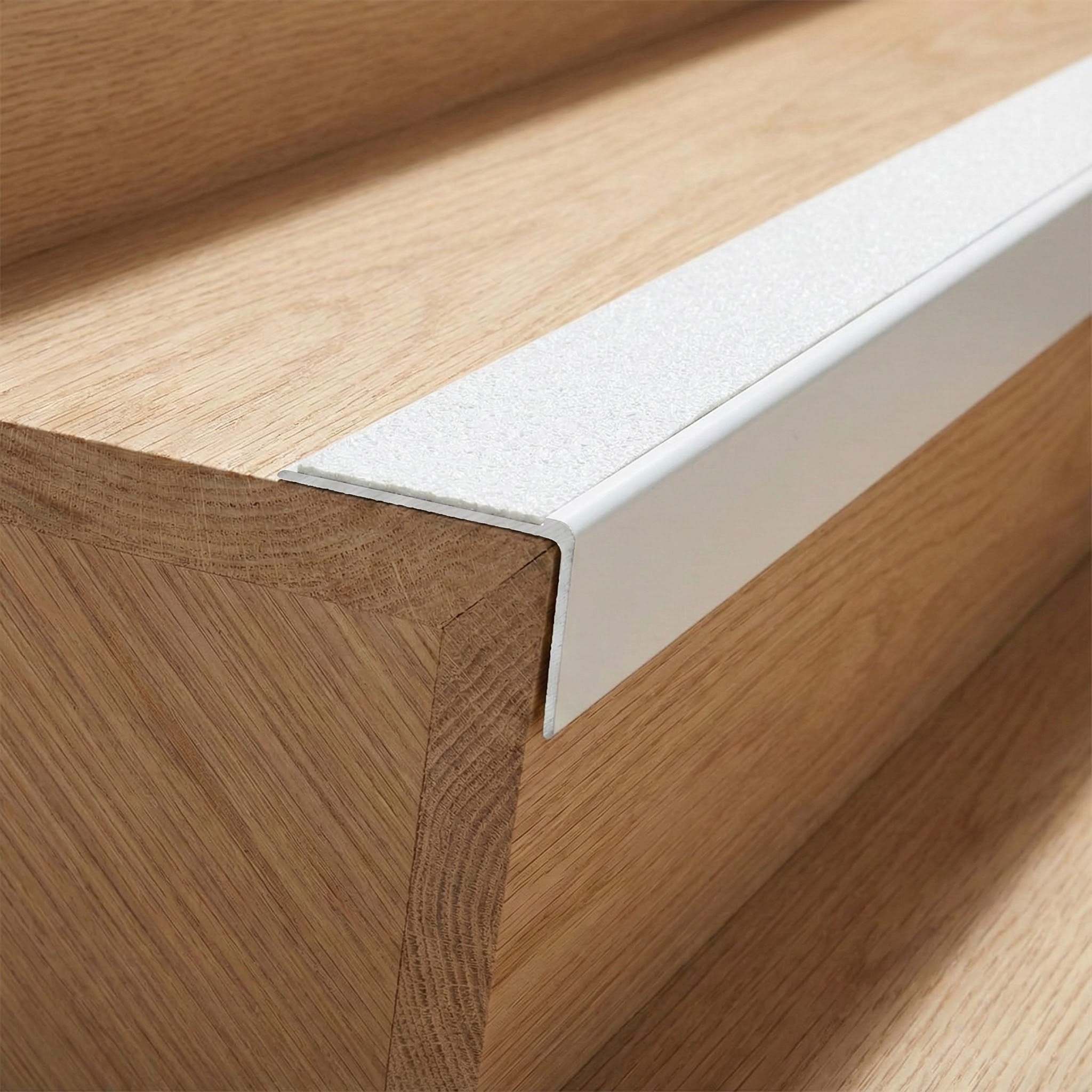
Aluminium Rakeback Stair Nosing UK 2026: Expert Guide to Heavy-Duty Edge Protection

Aluminium rakeback stair nosing UK installations represent the gold standard for professional edge protection across commercial and residential properties in 2026. As facilities managers, contractors, and safety professionals throughout England, Scotland, Wales, and Northern Ireland prioritize occupant safety and regulatory compliance, the demand for premium aluminium rakeback stair nosing 57×32mm continues to accelerate. This comprehensive guide examines why this heavy-duty edge protection system delivers superior performance, lifecycle value, and compliance-ready solutions for UK environments in 2026.
Whether you're upgrading NHS facilities, educational institutions, warehouses, or commercial buildings across the UK, understanding the technical specifications, installation requirements, and long-term benefits of professional-grade stair nosing ensures informed decision-making and optimal safety outcomes. This expert resource provides the definitive analysis facilities professionals need to specify, install, and maintain aluminium rakeback stair nosing throughout 2026 and beyond.
Why Aluminium Rakeback Stair Nosing Matters for UK Facilities in 2026
Stair-related incidents continue to represent a significant proportion of workplace and public space accidents across the United Kingdom. The Health & Safety Executive reports thousands of stair-related injuries annually, with many attributable to inadequate edge protection, worn surfaces, or non-compliant installations. In 2026, regulatory scrutiny intensifies as building control authorities and insurance providers demand demonstrable safety measures.
Aluminium rakeback stair nosing addresses these critical safety challenges through engineered solutions that combine robust construction, superior slip resistance, and extended service life. Unlike basic alternatives, the rakeback profile extends protection beyond the stair edge, safeguarding vulnerable corners from impact damage whilst creating smooth transitions that minimize trip hazards.
For UK facilities in 2026, the business case extends beyond safety compliance. Premium stair nosing reduces maintenance costs, extends infrastructure lifespan, and demonstrates duty of care—factors increasingly important for property valuations, insurance premiums, and corporate responsibility reporting. Facilities across England, Scotland, Wales, and Northern Ireland recognize that professional-grade edge protection represents investment rather than expense.
Understanding Aluminium Rakeback Stair Nosing: Technical Specifications
The 57×32mm profile dimension represents careful engineering optimization for UK stair specifications. The 57mm width provides comprehensive edge coverage suitable for standard tread depths, whilst the 32mm height ensures proper visibility and tactile warning for building users—critical for accessibility compliance under UK Building Regulations Approved Document M.
Key technical features distinguishing professional aluminium rakeback stair nosing include:
- High-grade aluminium alloy construction: Delivers exceptional strength-to-weight ratio, resisting deformation under constant traffic and impact loads
- Integrated PVC insert channel: Accommodates replaceable slip-resistant insert, maintaining traction performance throughout service life
- Rakeback profile geometry: Extends protection to riser face, preventing corner damage and creating professional aesthetic
- Corrosion-resistant finish: Maintains structural integrity and appearance in moisture-prone UK environments
- Pre-drilled fixing options: Facilitates accurate installation and secure substrate attachment
- Modular length availability: Enables precise fitting to varied stair widths with minimal waste
These specifications ensure aluminium rakeback stair nosing UK installations meet the demanding performance requirements of healthcare facilities, educational institutions, commercial buildings, and industrial environments throughout 2026.
Comprehensive Comparison: Aluminium Rakeback Stair Nosing vs. Alternative Solutions
Facilities professionals evaluating edge protection options in 2026 face numerous alternatives, each with distinct performance characteristics, lifecycle costs, and application suitability. This detailed comparison examines how aluminium rakeback stair nosing performs against common alternatives across critical decision factors.
| Feature | Aluminium Rakeback Nosing | Rubber Nosing | Timber Nosing | Basic Aluminium Flat |
|---|---|---|---|---|
| Service Life (UK Environments) | 20+ years | 3-5 years | 5-8 years | 10-15 years |
| Slip Resistance Performance | Superior PVC insert maintains traction | Good initially, degrades rapidly | Poor in wet conditions | Variable, no dedicated insert |
| Edge Protection Coverage | Comprehensive rakeback design | Minimal riser protection | Minimal riser protection | Front edge only |
| Maintenance Requirements | Minimal cleaning only | Frequent replacement cycles | Regular treatment & refinishing | Minimal cleaning only |
| Impact Resistance | Exceptional—withstands trolleys, equipment | Moderate—tears under heavy loads | Limited—chips and splinters | Good—but vulnerable corners |
| Moisture/Corrosion Resistance | Excellent for UK climates | N/A (non-metallic) | Poor—requires sealing | Good with proper finish |
| Professional Appearance | Premium finish, modern aesthetic | Utilitarian, industrial look | Traditional, variable quality | Basic, functional appearance |
| Installation Complexity | Straightforward with standard tools | Simple adhesive application | Moderate—requires carpentry skills | Straightforward with standard tools |
| Total Cost of Ownership (10 years) | Excellent value—single installation | High—multiple replacements required | Moderate—ongoing maintenance costs | Good—minimal replacement |
| UK Building Regulations Compliance | Supports Approved Doc M & K, BS 8300 | Variable—depends on specification | Challenging for accessibility standards | Partial—lacks comprehensive protection |
This comparison demonstrates why aluminium rakeback stair nosing consistently outperforms alternatives across the performance metrics that matter most to UK facilities in 2026. The superior durability, comprehensive protection, and minimal maintenance requirements deliver exceptional lifecycle value despite higher initial investment.
How to Choose the Right Stair Nosing for Your UK Facility
Selecting appropriate edge protection requires systematic evaluation of your facility's specific requirements, operational environment, and long-term objectives. Follow this expert framework to ensure optimal specification:
1. Assess Traffic Volume and User Demographics
High-traffic environments including hospitals, schools, and commercial buildings across England, Scotland, Wales, and Northern Ireland demand heavy-duty solutions. Consider whether users include elderly individuals, those with mobility challenges, or children—populations requiring enhanced slip resistance and visual contrast.
2. Evaluate Environmental Conditions
UK facilities face moisture, temperature fluctuations, and cleaning chemical exposure. Aluminium rakeback stair nosing excels in these conditions, maintaining performance where timber warps and rubber degrades. Assess whether your stairs experience outdoor exposure, frequent wet cleaning, or industrial contaminants.
3. Determine Compliance Requirements
Review applicable UK Building Regulations, particularly Approved Documents M (Access) and K (Protection from falling), plus BS 8300 accessibility standards. Ensure your chosen nosing provides the visual contrast, slip resistance, and tactile warning required for your building classification.
4. Calculate Total Cost of Ownership
Look beyond initial purchase price to include installation labor, maintenance requirements, replacement cycles, and operational disruption. Premium aluminium rakeback stair nosing typically delivers superior 10-year value despite higher upfront investment.
5. Consider Aesthetic and Brand Requirements
Professional facilities require edge protection that complements architectural specifications and projects quality. The sleek finish of aluminium rakeback stair nosing UK installations enhances property presentation whilst demonstrating safety commitment.
6. Verify Substrate Compatibility
Confirm your stair construction—concrete, timber, or composite—and ensure appropriate fixing methods. The 57×32mm profile suits most UK stair specifications, but verify dimensional compatibility before procurement.
Step-by-Step Installation Guide for Aluminium Rakeback Stair Nosing
Professional installation ensures optimal performance, compliance, and service life. Follow this comprehensive process for successful aluminium rakeback stair nosing UK installations in 2026:
Pre-Installation Phase
- Conduct Site Survey: Measure all stair flights accurately, noting width variations, landing configurations, and substrate conditions. Calculate required nosing lengths with allowance for cuts and wastage.
- Prepare Substrate: Clean stair edges thoroughly, removing debris, old adhesives, failed nosing, and contaminants. Repair damaged concrete, timber, or substrate to ensure sound fixing base.
- Verify Compliance: Confirm installation will meet UK Building Regulations requirements for your building type. Document pre-installation condition for quality assurance records.
- Assemble Tools and Materials: Gather drill with appropriate bits (masonry or timber), measuring tape, spirit level, cutting equipment for aluminium, fixings suitable for substrate, and safety equipment.
Installation Process
- Position First Nosing Section: Place aluminium rakeback stair nosing on stair edge, ensuring rakeback section sits flush against riser and front edge aligns precisely with tread. Verify level alignment.
- Mark Fixing Positions: Mark through pre-drilled holes or at manufacturer-recommended intervals (typically 300-400mm centers). Ensure symmetrical spacing for professional appearance.
- Drill Pilot Holes: Use appropriate drill bit for substrate—masonry bits for concrete, wood bits for timber. Drill to correct depth for your chosen fixings, avoiding over-drilling that compromises holding power.
- Secure Nosing: Install appropriate fixings—screws and plugs for masonry substrates, direct screws for timber. Tighten progressively to avoid distortion, ensuring rakeback section maintains flush contact with riser.
- Verify Alignment: Check level across entire stair flight using spirit level. Make minor adjustments before final tightening. Ensure consistent projection and no trip hazards at joints.
- Install PVC Insert: Press slip-resistant PVC insert firmly into nosing channel, ensuring continuous contact along entire length. Verify secure seating with no gaps or raised sections.
- Complete Adjacent Sections: Repeat process for remaining stair treads, maintaining consistent alignment and fixing quality throughout installation.
- Finishing Touches: Remove installation marks, verify all fixings are secure, and conduct final inspection against specification requirements.
Post-Installation Verification
- Quality Inspection: Examine entire installation for secure fixing, proper alignment, insert seating, and absence of trip hazards. Document completion for building control and maintenance records.
- Client Handover: Provide maintenance guidance and compliance documentation to facility management team.
Cost Analysis: Investment and Lifecycle Value for UK Facilities
Understanding the complete financial picture enables informed procurement decisions. This analysis examines initial investment, installation costs, and long-term value for aluminium rakeback stair nosing UK installations in 2026.
Initial Investment Components
- Material Costs: Premium aluminium rakeback stair nosing 57×32mm typically represents moderate initial investment compared to basic alternatives, reflecting superior engineering and materials quality.
- Installation Labor: Professional fitting by competent contractors ensures compliance and optimal performance. Labor costs vary by project scale, site access, and regional UK rates.
- Ancillary Materials: Fixings, cutting consumables, and finishing materials add modest costs to overall project budget.
- Project Management: Larger installations across multiple stair flights may require coordination, quality assurance, and documentation—factors to include in total project cost.
Lifecycle Cost Advantages
- Extended Service Life: 20+ year performance eliminates multiple replacement cycles required for rubber (3-5 years) or timber (5-8 years) alternatives, delivering substantial long-term savings.
- Minimal Maintenance: Simple cleaning protocols avoid the treatment, refinishing, or frequent replacement costs associated with alternative materials.
- Reduced Operational Disruption: Infrequent maintenance and replacement minimizes staircase closures, preserving facility operations and user convenience.
- Insurance and Liability Benefits: Demonstrable safety measures may reduce insurance premiums and liability exposure—financial benefits often overlooked in procurement decisions.
- Property Value Enhancement: Professional-grade safety installations enhance property valuations and tenant appeal, particularly important for commercial properties across England, Scotland, Wales, and Northern Ireland.
Total Cost of Ownership Comparison (10-Year Period)
When facilities professionals calculate 10-year total cost of ownership, aluminium rakeback stair nosing consistently delivers superior value. Despite higher initial investment, the elimination of replacement cycles, minimal maintenance requirements, and extended service life result in lower total expenditure compared to alternatives requiring multiple replacements and ongoing maintenance.
Common Mistakes to Avoid with Stair Nosing Installation
Even experienced contractors can encounter challenges that compromise performance, compliance, or service life. Avoid these frequent errors when installing aluminium rakeback stair nosing UK projects in 2026:
1. Inadequate Substrate Preparation
Failing to properly clean and repair stair edges before installation compromises fixing integrity. Debris, old adhesives, or damaged substrate prevent secure attachment, leading to premature failure. Always prepare surfaces thoroughly and repair structural defects before nosing installation.
2. Incorrect Fixing Spacing
Excessive spacing between fixings (beyond 400mm centers) allows nosing movement under traffic, accelerating wear and creating trip hazards. Conversely, over-fixing can distort aluminium profiles. Follow manufacturer specifications for optimal fixing intervals.
3. Misaligned Rakeback Section
The rakeback profile must sit flush against the riser to provide comprehensive edge protection. Gaps allow moisture ingress, reduce impact protection, and create unprofessional appearance. Verify flush contact before final fixing.
4. Inappropriate Fixing Selection
Using incorrect fixings for substrate type—such as timber screws in concrete or inadequate masonry anchors—results in poor holding power and eventual failure. Match fixing type and size to substrate material and loading conditions.
5. Neglecting Level Verification
Failing to verify level alignment across stair flights creates visual inconsistency and potential trip hazards. Use spirit level throughout installation to ensure professional results and safety compliance.
6. Improper PVC Insert Installation
Incomplete seating of the slip-resistant insert creates gaps that collect debris and reduce traction performance. Ensure continuous, firm contact along entire nosing length.
7. Cutting Errors
Inaccurate measurements or poor cutting technique waste materials and compromise appearance. Measure twice, cut once, and use appropriate metalworking tools for clean, square cuts.
8. Ignoring Expansion Considerations
Aluminium expands and contracts with temperature variations. Extremely long continuous runs may require expansion joints—consult manufacturer guidance for installations exceeding standard flight lengths.
Expert Recommendations for Optimal Performance
Drawing on decades of UK facilities management experience, these expert recommendations ensure your aluminium rakeback stair nosing installation delivers maximum safety, compliance, and lifecycle value throughout 2026 and beyond:
Specification Phase
- Engage qualified safety consultants early in project planning to ensure comprehensive compliance with UK Building Regulations and accessibility standards
- Request product samples and technical data sheets to verify quality before large-scale procurement
- Specify premium aluminium rakeback stair nosing with replaceable PVC inserts for long-term maintenance flexibility
- Consider visual contrast requirements for users with impaired vision—select insert colors that provide clear definition against stair surfaces
Installation Phase
- Employ contractors with demonstrable stair nosing installation experience and relevant UK qualifications
- Conduct pre-installation site meetings to address access constraints, substrate conditions, and quality expectations
- Implement quality checkpoints throughout installation to verify alignment, fixing integrity, and compliance before proceeding
- Document installation with photographs and completion certificates for building control and maintenance records
Operational Phase
- Establish routine cleaning protocols using pH-neutral detergents that preserve aluminium finish and PVC insert performance
- Schedule quarterly inspections of fixing integrity, insert condition, and overall nosing performance
- Maintain inspection logs demonstrating ongoing duty of care and proactive maintenance
- Address any damage or wear promptly to prevent minor issues escalating into safety hazards or compliance failures
Maintenance Tips for Long-Term Performance
Proper maintenance preserves the safety performance, compliance status, and professional appearance of your aluminium rakeback stair nosing UK installation. Follow these expert protocols for optimal long-term results:
Daily and Weekly Maintenance
- Routine Cleaning: Clean aluminium surfaces weekly using pH-neutral detergent and warm water. Avoid abrasive cleaners, wire brushes, or harsh chemicals that could damage protective finishes or PVC inserts.
- Debris Removal: Remove accumulated dirt, grit, or debris from PVC insert channels to maintain slip resistance. Simple damp mopping typically suffices for routine cleaning.
- Visual Inspection: Conduct informal visual checks during routine cleaning to identify obvious damage, loose fixings, or wear requiring attention.
Quarterly Inspections
- Fixing Integrity: Examine all visible fixings for tightness, checking for loose screws or substrate movement. Tighten as required using appropriate tools.
- Insert Condition: Assess PVC insert for wear, damage, or reduced slip resistance. Replace inserts showing significant wear before traction performance degrades.
- Structural Assessment: Check for aluminium distortion, impact damage, or corrosion. Address any issues promptly to prevent deterioration.
- Documentation: Record inspection findings, maintenance actions, and any remedial work required. Maintain logs demonstrating ongoing duty of care.
Annual Professional Assessment
- Comprehensive Evaluation: Engage qualified professionals to conduct thorough assessment of entire stair nosing installation, verifying continued compliance with UK Building Regulations.
- Performance Testing: Verify slip resistance performance meets required standards, particularly in high-traffic areas or environments with moisture exposure.
- Remedial Planning: Identify any components requiring replacement or repair, scheduling work to minimize operational disruption.
Damage Response Protocols
- Immediate Assessment: Investigate any reported damage, loose nosing, or safety concerns immediately to prevent incident escalation.
- Temporary Measures: Implement temporary safety measures (warning signage, restricted access) whilst arranging permanent repairs.
- Professional Repair: Individual nosing sections can typically be replaced without disturbing adjacent installations—engage competent contractors for quality repairs matching original specification.
Frequently Asked Questions About Aluminium Rakeback Stair Nosing UK
What fixing method works best for concrete stairs in UK facilities?
For concrete substrates, use appropriate masonry anchors or expansion plugs with corrosion-resistant screws at 300-400mm centers. Pre-drill pilot holes using masonry bits to prevent concrete cracking. Ensure the rakeback section sits flush against the riser before final tightening. This method provides secure, long-lasting attachment suitable for high-traffic environments across England, Scotland, Wales, and Northern Ireland.
Can aluminium rakeback stair nosing be retrofitted to existing stairs without major renovation?
Absolutely. This nosing system is specifically designed for retrofit applications on existing staircases. Provided the stair edge is structurally sound and properly prepared, installation requires only basic drilling and fixing—no major structural work necessary. This makes it ideal for upgrading NHS facilities, schools, and commercial buildings without extensive operational disruption.
How does the 57×32mm profile compare to other dimensions available in 2026?
The 57×32mm profile offers optimal coverage for standard UK stair specifications. The 57mm width provides comprehensive edge protection whilst the 32mm height ensures proper visibility and tactile warning essential for accessibility compliance. This dimension suits most commercial and residential applications, though alternative profiles may be specified for non-standard stairs or specific regulatory requirements.
Is the PVC insert replaceable if it wears over time?
Yes, the PVC insert is designed as a replaceable component. In high-traffic environments, you can replace the insert without removing the entire aluminium nosing, significantly reducing maintenance costs and operational disruption. This design feature ensures sustained slip resistance performance throughout the 20+ year service life of the aluminium profile.
Does this nosing meet UK Building Regulations for accessibility in 2026?
Professional-grade aluminium rakeback stair nosing supports compliance with UK Building Regulations Approved Document M (Access) and K (Protection from falling), plus BS 8300 accessibility standards. The contrasting PVC insert provides visual definition essential for users with impaired vision, whilst the slip-resistant surface meets safety requirements. Always verify specific compliance requirements for your building classification.
What is the expected service life in high-traffic commercial environments?
In demanding commercial settings including hospitals, schools, and office buildings across the UK, properly installed aluminium rakeback stair nosing typically delivers 20+ years of reliable service. The robust construction resists wear, impact, and environmental stress far better than rubber or timber alternatives, providing exceptional lifecycle value and reducing total cost of ownership.
Can I cut this nosing to fit non-standard stair widths?
Yes, aluminium nosing can be cut to precise lengths using appropriate metalworking tools. Use a fine-toothed saw or angle grinder with cutting disc, ensuring clean, square cuts. Deburr cut edges thoroughly and apply touch-up finish if required to maintain corrosion resistance. Accurate measurement and careful cutting technique ensure professional results for varied stair configurations.
How quickly can aluminium rakeback stair nosing be installed across a typical UK facility?
Installation speed depends on project scale, stair configuration, and site access. Experienced contractors typically install 10-15 linear meters per day for straightforward applications. Complex installations with multiple landings, turns, or substrate challenges may require additional time. The straightforward fixing process minimizes operational disruption compared to alternatives requiring adhesive curing or extensive preparation.
Conclusion: Invest in Premium Stair Safety for UK Facilities in 2026
Aluminium rakeback stair nosing UK installations represent the definitive solution for facilities demanding superior safety performance, regulatory compliance, and exceptional lifecycle value in 2026. As this comprehensive guide demonstrates, the 57×32mm profile delivers unmatched durability, slip resistance, and edge protection across commercial and residential applications throughout England, Scotland, Wales, and Northern Ireland.
The evidence is compelling: whilst initial investment exceeds basic alternatives, the 20+ year service life, minimal maintenance requirements, and comprehensive protection deliver superior total cost of ownership. For NHS facilities, educational institutions, commercial buildings, and industrial environments, professional-grade stair nosing protects occupants, reduces liability exposure, and demonstrates commitment to safety excellence.
Don't compromise on stair safety. Specify premium aluminium rakeback stair nosing 57×32mm for your 2026 projects and experience the performance difference that engineering excellence delivers. Whether you're upgrading existing facilities or specifying new installations, this heavy-duty edge protection system ensures compliance-ready solutions that protect building users for decades.
Ready to enhance your facility's stair safety? Explore our complete range of aluminium rakeback stair nosing solutions and discover why UK facilities professionals trust Price Cart UK for premium safety products. Add to cart now for fast UK delivery, or contact our technical team for project consultation, bulk pricing, and expert installation guidance. Invest in safety solutions engineered for excellence.