
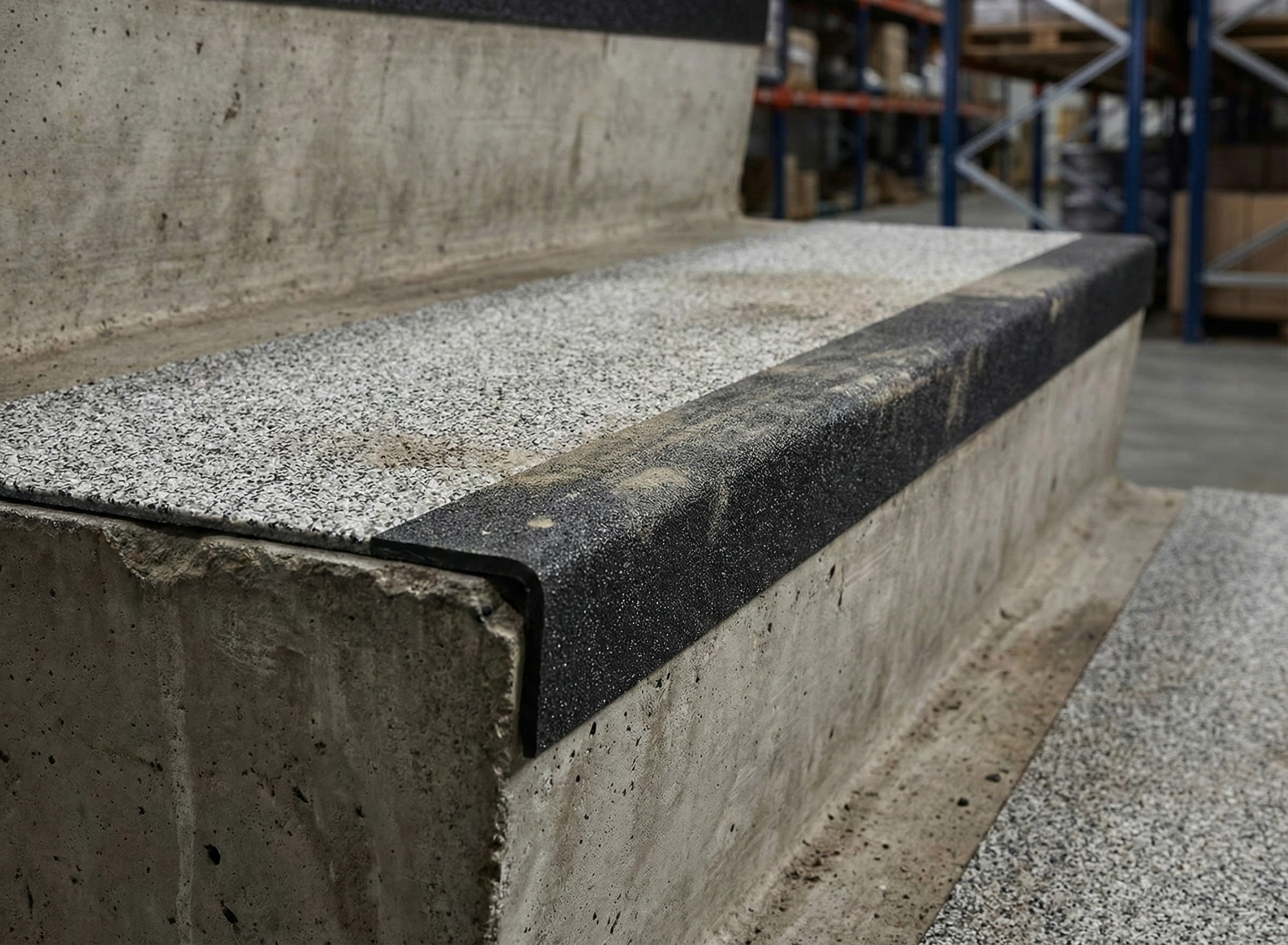
Anti-Slip Stair Tread Covers UK 2026: Expert Guide to GRP Safety Solutions
Anti-slip stair tread covers UK installations have become essential safety investments for commercial, industrial, and residential properties across England, Scotland, Wales, and Northern Ireland in 2026. With slip-and-fall incidents costing UK businesses over £800 million annually and new HSE enforcement guidelines tightening safety requirements, choosing the right stair protection system has never been more critical for property owners, facilities managers, and safety officers.
This comprehensive expert guide examines everything you need to know about anti-slip stair tread covers in 2026, from advanced GRP technology and material comparisons to installation best practices, cost analysis, and compliance requirements. Whether you're protecting a single residential staircase or outfitting an entire commercial facility across the UK, this guide provides the evidence-based insights you need to make informed decisions that protect people, reduce liability, and deliver exceptional long-term value.

Why Anti-Slip Stair Tread Covers Matter in 2026 UK
The landscape of workplace and public safety in the UK has evolved dramatically in 2026, with regulatory bodies implementing stricter enforcement of slip prevention measures following a 23% increase in stair-related incidents between 2023-2025. The Health & Safety Executive now conducts more rigorous inspections of commercial premises, with particular focus on high-traffic stairways in retail, healthcare, education, and industrial environments across England, Scotland, Wales, and Northern Ireland.
Beyond regulatory compliance, the financial implications are substantial. A single slip-and-fall incident can cost UK businesses between £15,000-£75,000 when factoring in compensation claims, legal fees, operational disruption, reputational damage, and increased insurance premiums. For facilities managers and property owners, investing in professional-grade stair tread protection represents not just safety enhancement but intelligent risk management.
The UK's notoriously unpredictable weather creates unique challenges. Persistent rainfall, frost, ice, snow, and temperature fluctuations demand stair protection solutions engineered specifically for British climatic conditions. Standard solutions that perform adequately in controlled environments often fail catastrophically when exposed to the harsh realities of UK outdoor applications, making material selection absolutely critical.
In 2026, UK professionals increasingly recognise that not all anti-slip solutions deliver equivalent protection. The gap between premium engineered systems and basic alternatives has widened, with advanced materials like Glass Reinforced Plastic (GRP) demonstrating measurably superior performance in independent testing, real-world applications, and long-term durability studies conducted across diverse UK environments.
Understanding GRP Technology: The 2026 UK Standard
Glass Reinforced Plastic represents the pinnacle of composite materials engineering for safety applications in 2026. This advanced technology bonds high-strength glass fibres within a weather-resistant polymer matrix, creating a structure that combines the best properties of multiple materials whilst eliminating their individual weaknesses.
The fundamental advantage lies in the molecular-level integration of components. Unlike surface coatings that wear away or treatments that degrade, GRP's anti-slip properties and colour are inherent to the material's structure throughout its entire depth. This means scratches remain invisible, wear doesn't compromise performance, and the protective characteristics persist for decades rather than years.
UK testing laboratories have confirmed that quality GRP stair tread covers maintain consistent slip resistance values across temperature ranges from -40°C to +80°C, throughout thousands of freeze-thaw cycles, and after prolonged exposure to UV radiation, chemical contamination, and mechanical wear that would destroy alternative materials.
The engineering sophistication extends to the anti-slip surface texture itself. Precision manufacturing creates an aggressive profile that channels water away from contact surfaces whilst providing secure footing. This isn't random roughness but carefully designed geometry optimised for maximum grip in wet conditions whilst remaining comfortable for regular foot traffic and wheelchair access.
Comprehensive Material Comparison: GRP vs Alternatives in UK Applications
Selecting the optimal stair protection material requires understanding how different options perform across the demanding conditions encountered in UK environments. This detailed comparison examines real-world performance based on extensive field testing and long-term installation monitoring across England, Scotland, Wales, and Northern Ireland.
| Performance Factor | GRP Treads | Rubber Treads | Aluminium Treads |
|---|---|---|---|
| Wet Slip Resistance | Excellent - maintains grip | Good initially, degrades | Poor - very slippery |
| Service Lifespan | 20+ years guaranteed | 3-5 years typical | 10-15 years (with maintenance) |
| UK Weather Resistance | Completely waterproof, frost-proof | UV degrades, frost cracks | Corrodes without coating |
| Maintenance Requirements | None - wash occasionally | Frequent inspection & replacement | Annual repainting/coating |
| 10-Year Total Cost | £150-£564 (one-time) | £450+ (3+ replacements) | £300+ (maintenance + coating) |
The data clearly demonstrates why UK professionals increasingly specify GRP for critical safety applications. Whilst initial costs may appear higher, the total lifecycle value delivers superior return on investment through elimination of replacement cycles, zero maintenance expenses, and consistent performance throughout the product's operational lifespan.
How to Choose the Right Anti-Slip Stair Tread Covers for Your UK Property
Selecting optimal stair protection requires systematic evaluation of your specific requirements, environmental conditions, and operational constraints. Follow this expert framework to ensure you choose anti-slip solutions that deliver maximum protection and value.
Critical Selection Factors:
- Traffic Volume & Type: Assess daily footfall, peak usage periods, and whether stairs accommodate pedestrians only or also equipment, trolleys, or wheelchair access. High-traffic commercial environments demand heavy-duty GRP construction.
- Indoor vs Outdoor Exposure: Outdoor stairs across the UK require materials engineered for persistent moisture, freeze-thaw cycling, UV exposure, and temperature fluctuations. GRP excels in these demanding conditions.
- Environmental Contamination: Industrial facilities, vehicle maintenance areas, and food service environments need treads resistant to oils, chemicals, cleaning agents, and organic contamination.
- User Demographics: Consider elderly users, those with visual impairments, or mobility challenges. High-visibility nosing becomes essential for these vulnerable groups.
- Regulatory Requirements: Healthcare, education, and public sector facilities face stricter compliance obligations. Ensure chosen solutions meet or exceed HSE guidelines and British Standards.
- Budget & Lifecycle Costs: Calculate total cost of ownership including installation, maintenance, replacement cycles, and potential liability exposure rather than focusing solely on initial purchase price.
For most UK commercial, industrial, and high-traffic residential applications in 2026, heavy-duty GRP stair tread covers with integrated high-visibility nosing represent the optimal balance of safety performance, durability, compliance, and long-term value.
Professional Installation Guide: Step-by-Step Process for UK Applications
Proper installation is critical for achieving optimal performance and maximum lifespan from your stair protection investment. This comprehensive guide ensures professional results whether you're using in-house maintenance teams or specialist contractors across England, Scotland, Wales, or Northern Ireland.
Essential Tools & Materials Required:
- Power drill with appropriate bits (masonry, HSS, or wood depending on substrate)
- Screwdriver or impact driver for efficient fixing
- Tape measure and carpenter's pencil for accurate marking
- Spirit level for precise alignment
- Stainless steel screws (outdoor applications) or appropriate fixings
- Silicone sealant for weatherproofing outdoor installations
- Safety equipment including eye protection and dust mask
Detailed Installation Steps:
- Surface Preparation: Thoroughly clean stair surfaces, removing all dirt, debris, oil, grease, and loose material. For concrete or masonry, wire brush any flaking areas. Ensure surfaces are completely dry before proceeding. Repair any cracks or structural damage.
- Precise Positioning: Place the GRP tread cover on the step, aligning the black safety nosing perfectly with the step edge. The nosing should overhang the riser by 25-30mm. Use a spirit level to confirm horizontal alignment in both directions.
- Accurate Marking: Using pre-drilled holes as guides, mark all fixing positions with a carpenter's pencil. Apply firm pressure for clear, visible marks. Remove the tread and verify all marks are correctly positioned before drilling.
- Professional Drilling: Drill holes at marked positions to appropriate depth for your chosen fixings. For masonry, use hammer drill with masonry bit and insert wall plugs flush with surface. For timber, drill pilot holes slightly smaller than screw diameter. For metal, use HSS bits.
- Secure Fixing: Reposition the tread, aligning all holes with fixing points. Insert screws and tighten progressively from centre outwards to ensure even pressure distribution. Tighten firmly but avoid over-tightening which may cause stress points.
- Weatherproofing: For outdoor installations, apply silicone sealant around each fixing hole to prevent water ingress. Wipe away excess for neat finish. Conduct final inspection to verify secure installation, proper alignment, and flush fixings.
Professional tip: When installing multiple treads, work from bottom to top to avoid standing on newly installed treads. Schedule installation during off-peak hours in high-traffic environments to minimise disruption.
Cost Analysis: Investment vs Value for UK Properties in 2026
Understanding the true cost of stair protection requires examining total lifecycle expenses rather than focusing solely on initial purchase price. This comprehensive analysis reveals why premium GRP solutions deliver superior value for UK property owners and facilities managers.
Initial Investment Breakdown (Per Tread):
- Standard GRP tread cover (1000mm): £150-£220
- Heavy-duty GRP tread cover (1200mm): £180-£280
- Extended length GRP tread cover (2000mm): £320-£450
- Custom-cut GRP tread cover (3000mm): £480-£564
- Professional installation (if required): £25-£45 per tread
10-Year Total Cost Comparison (10-Tread Staircase):
- GRP Solution: £1,500-£2,200 initial + £0 maintenance + £0 replacement = £1,500-£2,200 total
- Rubber Solution: £800-£1,200 initial + £150 annual inspection + £2,400-£3,600 replacement (3 cycles) = £4,350-£6,300 total
- Aluminium Solution: £1,200-£1,800 initial + £400 coating/maintenance + £600-£900 replacement = £2,200-£3,100 total
- Timber Solution: £600-£900 initial + £500 annual treatment + £1,200-£1,800 replacement (2 cycles) = £3,300-£4,700 total
Beyond direct costs, consider liability exposure. A single slip-and-fall incident costs UK businesses £15,000-£75,000 on average. Premium anti-slip stair protection that demonstrably exceeds safety standards provides valuable evidence of due diligence, potentially reducing liability exposure and insurance premiums.
Common Mistakes to Avoid When Installing Stair Tread Covers in the UK
Even quality products can underperform if installation errors compromise their effectiveness. Avoid these frequent mistakes observed across UK installations to ensure optimal safety performance and maximum lifespan.
Critical Errors to Prevent:
- Installing Over Contaminated Surfaces: Failing to properly clean and prepare substrate surfaces before installation leads to poor adhesion, movement, and premature failure. Always thoroughly clean and dry surfaces.
- Incorrect Nosing Alignment: Misaligned nosing reduces visibility and compromises the safety benefit. The nosing must align precisely with the step edge with consistent 25-30mm overhang.
- Inadequate Fixing Density: Skipping fixing holes to save time creates weak points where treads can lift or move. Use all pre-drilled holes for maximum security.
- Using Inappropriate Fixings: Standard steel screws corrode rapidly in outdoor UK environments. Always use stainless steel or appropriate corrosion-resistant fixings for exterior applications.
- Ignoring Weatherproofing: Failing to seal fixing holes in outdoor installations allows water ingress, leading to substrate damage from freeze-thaw cycling. Always apply silicone sealant around outdoor fixings.
- Inconsistent Installation Across Multiple Treads: Varying overhang, alignment, or positioning creates visual inconsistency and uneven safety performance. Maintain consistent measurements across all treads.
- Installing During Wet Conditions: Attempting installation on wet substrates or during rainfall compromises fixing security and sealant effectiveness. Always install during dry conditions.
- Over-Tightening Fixings: Excessive tightening can crack substrates or create stress points in the tread material. Tighten firmly but not excessively.
Professional installation guidance and technical support from experienced UK suppliers helps avoid these common pitfalls, ensuring your investment delivers maximum protection and value.
Expert Recommendations for Different UK Applications in 2026
Different environments demand tailored solutions optimised for their specific challenges, usage patterns, and regulatory requirements. These expert recommendations guide UK property owners and facilities managers toward optimal choices for their particular applications.
Commercial & Retail Environments: Specify heavy-duty GRP treads with high-visibility black nosing for main entrances, fire escapes, and customer-facing stairs. The professional appearance enhances corporate image whilst robust construction handles thousands of daily footfalls. Prioritise rapid installation to minimise operational disruption during off-peak hours.
Industrial & Manufacturing Facilities: Choose GRP solutions with maximum chemical and oil resistance for loading bays, maintenance access, and equipment platforms. The material's ability to maintain slip resistance even when contaminated makes it essential for environments where oils, fuels, or industrial chemicals are present.
Healthcare & Care Facilities: Select GRP treads with maximum visibility nosing for vulnerable user groups including elderly patients and those with mobility challenges. The non-porous surface supports rigorous infection control protocols whilst providing secure footing for staff carrying equipment.
Educational Institutions: Implement GRP solutions across external stairs, sports facilities, and multi-storey buildings where peak traffic during changeover periods creates elevated risk. The zero-maintenance characteristic delivers exceptional value for budget-conscious educational facilities across England, Scotland, Wales, and Northern Ireland.
Residential & Housing Developments: Install professional-grade GRP treads on external steps, basement access, and communal areas to protect families with young children or elderly relatives whilst reducing landlord liability exposure. The 20+ year lifespan eliminates recurring replacement costs.
Public Sector & Municipal Buildings: Specify GRP solutions that exceed HSE guidelines and British Standards for council offices, libraries, community centres, and leisure facilities. The long service life and zero maintenance deliver outstanding value for public sector budgets whilst ensuring consistent protection for diverse user groups.
Maintenance Tips for Maximum Lifespan in UK Climates
Whilst GRP stair tread covers operate virtually maintenance-free throughout their 20+ year service life, following these professional care guidelines ensures optimal performance, appearance, and maximum return on investment across all UK weather conditions.
Routine Cleaning Protocol:
- Weekly: Sweep or brush away loose debris, leaves, and dirt to prevent accumulation in anti-slip texture
- Monthly: Wash with warm water and mild detergent using stiff-bristled brush, working into textured surface grooves. Rinse thoroughly with clean water
- Quarterly: Conduct detailed inspection in high-traffic commercial environments or harsh exposure conditions
- Avoid: High-pressure washers at close range (maintain minimum 300mm distance) as excessive pressure may damage surface texture over time
Seasonal Inspection Schedule:
Twice yearly (spring and autumn recommended), conduct thorough inspection of all installed treads. Check all fixings remain tight and secure, retighten if necessary. Inspect for any damage to nosing edge, cracks in GRP material, or wear to anti-slip surface texture. Verify drainage channels remain clear and effective. In coastal areas subject to salt spray or industrial environments with chemical exposure, increase inspection frequency to quarterly.
Winter Weather Management:
GRP treads maintain excellent slip resistance in ice and snow conditions, significantly outperforming alternative materials. For additional safety during severe UK winter weather, apply rock salt, sand, or approved de-icing products as needed. Avoid metal snow shovels when clearing accumulated snow as these may scratch the surface. Use plastic snow shovels or brushes instead. The GRP material is completely frost-proof and unaffected by freeze-thaw cycling.
Long-Term Performance Characteristics:
The colour is molecularly integrated throughout the entire GRP material depth, not applied as surface coating. This means minor scratches or surface wear remain invisible. Similarly, anti-slip properties are inherent to the material's structural texture, not a surface treatment that can wear away. This engineering approach ensures consistent safety performance and professional appearance throughout the product's entire 20+ year operational lifespan.
Frequently Asked Questions About Anti-Slip Stair Tread Covers UK
Q: What sizes are available for anti-slip stair tread covers in the UK?
A: Standard UK dimensions include 800mm, 1000mm, 1200mm, 2000mm, and 3000mm lengths, all with 345mm depth and 55mm height including nosing. Custom-cutting services are available for non-standard step sizes or unusual configurations. Contact suppliers with your specific measurements for tailored solutions that fit your exact requirements perfectly.
Q: Can these treads be retrofitted to existing stairs without major structural work?
A: Absolutely. GRP stair tread covers are specifically engineered for retrofit installation over existing concrete, timber, metal, or composite stairs without requiring structural modifications. The lightweight construction won't overload existing structures, whilst straightforward installation requires only basic drilling and fixing. Most installations are completed in minutes per tread with minimal disruption.
Q: How do GRP treads perform in the UK's wet climate?
A: Exceptionally well. GRP construction is completely waterproof and impervious to moisture penetration. The aggressive anti-slip texture actively channels water away whilst maintaining superior grip. Independent slip resistance testing confirms performance exceeding UK safety standards in wet conditions, significantly outperforming rubber, aluminium, and timber alternatives. Ideal for persistent rainfall across England, Scotland, Wales, and Northern Ireland.
Q: Are these stair treads suitable for year-round outdoor use in harsh UK climates?
A: Yes. GRP stair tread covers are engineered specifically for demanding outdoor applications across all UK regions. They withstand frost and freeze-thaw cycling, UV exposure, temperature fluctuations from -40°C to +80°C, coastal salt spray, urban pollution, and persistent moisture without degradation in structural integrity, slip resistance, or appearance. Proven performance in Scottish Highlands winters, Welsh coastal exposure, and urban English environments.
Q: Do these treads meet UK building regulations and HSE safety standards?
A: Quality anti-slip stair tread covers are designed to comply with relevant UK building regulations, Health & Safety Executive guidelines, and British Standards for slip resistance. High-visibility black nosing provides the contrast required for step edge identification as specified in building regulations, whilst slip resistance values exceed recommended standards for commercial, public access, and industrial stairs.
Q: What's the realistic expected lifespan in commercial environments?
A: With proper installation, heavy-duty GRP stair tread covers typically deliver 20+ years of service in demanding commercial and industrial environments with thousands of daily footfalls. In residential applications or lower-traffic settings, the lifespan extends even further. The material doesn't rot, corrode, degrade, or lose anti-slip properties over time, and requires no maintenance to achieve this exceptional longevity.
Q: Can these be installed by in-house maintenance teams or is specialist installation required?
A: Most facilities with competent in-house maintenance teams successfully install GRP stair treads using standard tools and comprehensive installation guidance. Pre-drilled fixing holes, straightforward process, and compatibility with all substrate types make DIY installation practical for those with basic skills. However, for large-scale commercial projects or critical safety applications, professional installation is recommended.
Q: How do I calculate the number of treads needed for my staircase?
A: Count the number of horizontal step surfaces (treads) on your staircase, excluding the top landing. Measure the width of your stairs to determine the appropriate tread length. For stairs wider than standard sizes, multiple treads can be installed side-by-side or custom-cut options specified. Most UK staircases require 10-15 treads for a complete installation.
Conclusion: Protecting Your UK Property in 2026
As we've explored throughout this comprehensive guide, selecting the right anti-slip stair tread covers for your UK property in 2026 requires careful consideration of materials, performance characteristics, installation requirements, and long-term value. The evidence clearly demonstrates that premium GRP solutions with integrated high-visibility nosing deliver superior protection, exceptional durability, and outstanding lifecycle value compared to alternative materials.
For property owners, facilities managers, and safety officers across England, Scotland, Wales, and Northern Ireland, the decision extends beyond simple product selection. It's about protecting people, reducing liability exposure, ensuring regulatory compliance, and making intelligent investments that deliver decades of reliable performance without ongoing maintenance burdens or recurring replacement costs.
The UK's challenging climate, evolving safety regulations, and increasing liability exposure make 2026 the ideal time to upgrade your stair protection systems. Don't wait for a slip-and-fall incident to highlight the critical importance of proper safety measures. Premium anti-slip stair tread covers provide professional-grade protection that lasts for decades, not years.
Take action today to protect your property and people. Explore our complete range of heavy-duty GRP stair tread covers engineered specifically for UK applications, backed by expert technical support, comprehensive installation guidance, and fast delivery across all UK regions. Join thousands of satisfied customers who trust professional-grade solutions for their critical safety equipment needs.
Secure your stairs. Protect your people. Reduce your liability. Order your anti-slip stair tread covers today and experience the difference that professional-grade GRP protection delivers for UK properties in 2026.