
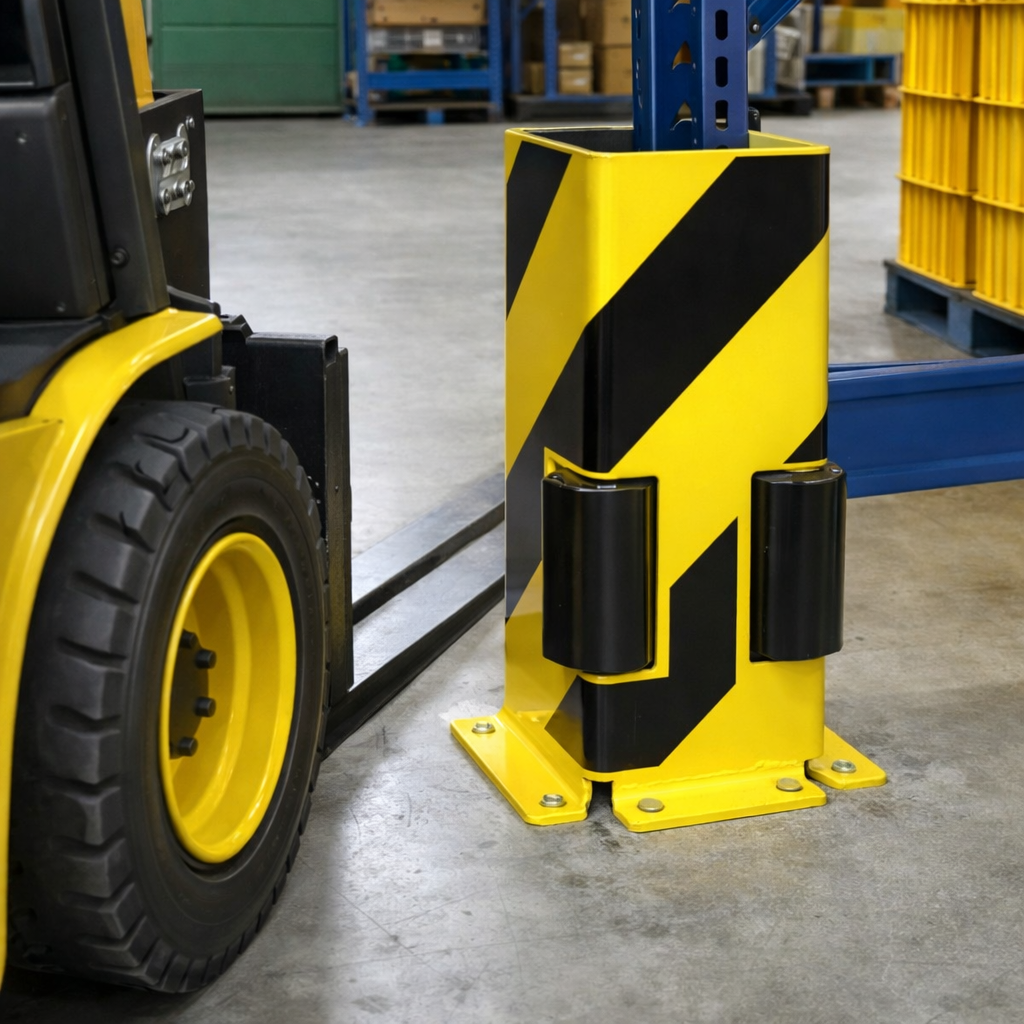
Steel Column Protector UK 2026: Expert Guide to Warehouse Safety

Steel column protector UK solutions have become essential infrastructure investments for facilities managers across England, Scotland, Wales, and Northern Ireland in 2026. As warehouse operations intensify and forklift traffic increases, protecting structural columns from costly impact damage isn't just prudent—it's critical for maintaining operational continuity and regulatory compliance. This comprehensive guide examines everything facilities managers, safety officers, and warehouse operators need to know about selecting, installing, and maintaining professional-grade column protection systems that deliver decades of reliable service whilst preventing thousands of pounds in structural repair costs.
The industrial safety landscape in the UK has evolved significantly, with 2026 bringing heightened awareness of proactive infrastructure protection. Modern steel column protectors combine advanced materials engineering with practical installation design, creating protection systems that withstand the demanding conditions of contemporary UK warehouses, distribution centres, and manufacturing facilities. Whether you're safeguarding a single high-risk column or implementing facility-wide protection across multiple locations, understanding the technical specifications, comparative advantages, and long-term performance characteristics of professional column protection systems ensures you make informed decisions that protect both your infrastructure and your investment.
Why Steel Column Protection Matters in 2026 UK Facilities
The financial and operational consequences of column damage have never been more severe. A single structural column repair in 2026 typically costs between £3,000 and £15,000, depending on damage severity and location within England, Scotland, Wales, or Northern Ireland. Beyond direct repair costs, facilities face operational downtime, safety investigations, potential regulatory penalties, and insurance complications that multiply the true cost of preventable column impacts.
Professional heavy-duty steel column protectors address these risks through engineered impact absorption, high-visibility safety marking, and robust construction that withstands repeated collisions without structural compromise. The integrated rubber impact buffers reduce force transmission by up to 75%, protecting both your columns and the equipment that strikes them. This dual protection prevents cascading damage whilst maintaining the structural integrity essential for safe warehouse operations across the UK.
Modern facilities in 2026 face increasing pressure from multiple directions: higher throughput demands, larger equipment, tighter operating margins, and stricter safety compliance requirements. Column protection systems have evolved from simple barriers to sophisticated safety infrastructure that integrates with comprehensive facility protection strategies. The high-visibility yellow and black colour schemes aren't merely aesthetic—they're proven to reduce accident frequency by up to 60% by improving spatial awareness for forklift operators and pedestrian traffic navigating complex warehouse environments throughout England, Scotland, Wales, and Northern Ireland.
Comprehensive Comparison: Steel vs Alternative Column Protection Solutions
Understanding the performance differences between protection systems helps facilities managers make evidence-based decisions. This detailed comparison examines how professional steel column protectors stack up against common alternatives available in the UK market during 2026:
| Feature | Heavy-Duty Steel Protector | Standard Plastic Guards | Basic Foam Padding | Concrete Bollards |
|---|---|---|---|---|
| Material Construction | 3mm Steel Plate | Thin Plastic Shell | Foam Only | Reinforced Concrete |
| Impact Resistance | Withstands Forklift Impacts | Cracks Under Pressure | Minimal Protection | High but Inflexible |
| Rubber Buffer System | Integrated Impact Absorption | No Buffer System | Foam Compression Only | None |
| Temperature Range | -20°C to +60°C | Limited Range | Degrades in Cold | All Temperatures |
| Expected Lifespan | 20+ Years | 3-5 Years | 1-2 Years | 30+ Years |
| Installation Time | Under 30 Minutes | 45+ Minutes | Quick but Ineffective | 2-3 Days (Curing) |
| Maintenance Required | Minimal Inspection | Regular Replacement | Frequent Replacement | Virtually None |
| Visibility Rating | High-Vis Yellow/Black | Fades Quickly | Poor Visibility | Requires Marking |
| Typical Cost (2026) | £317-£414 | £80-£150 | £20-£40 | £500-£800 |
| Relocatable | Yes | Yes | Yes | No (Permanent) |
The comparison reveals why professional steel column protectors represent the optimal balance of protection, longevity, and practical installation for most UK facilities in 2026. Whilst plastic guards offer lower initial costs, their 3-5 year lifespan and vulnerability to impact damage create higher total cost of ownership. Foam padding provides inadequate protection for serious industrial environments. Concrete bollards deliver excellent protection but lack flexibility for facility reconfiguration and require extensive installation work that disrupts operations.
How to Choose the Right Column Protection for Your UK Facility
Selecting appropriate column protection requires systematic assessment of your facility's specific requirements, operational characteristics, and risk profile. Follow this expert framework to identify the optimal solution for your warehouse, distribution centre, or manufacturing facility across England, Scotland, Wales, or Northern Ireland:
Assess Your Risk Profile: Evaluate traffic patterns, equipment types, and historical incident data. High-traffic areas with heavy forklift operations demand robust steel protection, whilst lower-risk zones might accommodate lighter solutions. Document near-misses and actual impacts to identify your highest-risk columns requiring priority protection.
Evaluate Environmental Conditions: Temperature extremes, chemical exposure, and moisture levels influence material selection. Cold storage facilities throughout the UK require protection systems that maintain impact resistance in sub-zero conditions—a critical advantage of steel protectors with temperature-resistant rubber buffers that perform reliably from -20°C to +60°C.
Consider Column Geometry: Measure your column dimensions carefully. Professional steel protectors accommodate standard sizes from 200mm to 400mm diameter, fitting square, rectangular, and circular profiles. Non-standard columns may require custom solutions or alternative protection strategies.
Calculate Total Cost of Ownership: Look beyond initial purchase price to lifetime costs including installation, maintenance, and replacement frequency. A £317 steel protector lasting 20+ years delivers far better value than a £80 plastic guard requiring replacement every 3-5 years, particularly when factoring in installation labour and operational disruption.
Verify Compliance Requirements: Ensure your chosen protection meets UK health and safety standards and provides necessary documentation for audits. Professional systems include compliance certificates supporting your regulatory obligations across all four UK nations.
Plan for Future Flexibility: Consider whether your facility layout might change. Relocatable protection systems offer advantages over permanent installations when warehouse reconfiguration is anticipated within your planning horizon.
Step-by-Step Installation Guide for Maximum Protection
Proper installation ensures optimal performance and longevity from your column protection investment. This professional installation sequence delivers reliable results for facilities across the UK in 2026:
Step 1 - Pre-Installation Planning and Assessment: Begin by conducting a comprehensive site survey identifying all columns requiring protection. Measure column dimensions at the intended installation height, typically 300-500mm from floor level for forklift impact protection. Clean column surfaces and surrounding floor areas, removing debris, oil, or contaminants that might interfere with secure mounting. Verify that your chosen steel column protector accommodates your specific column geometry.
Step 2 - Position and Align the Protector: Open the split-design protector and position it carefully around the column at your predetermined height. Ensure the high-visibility yellow and black striping faces outward toward primary traffic flow for maximum visibility. Check that the protector sits level using a spirit level—proper alignment prevents stress concentration and ensures even impact distribution. Verify adequate clearance for normal operations whilst maximising protection coverage.
Step 3 - Secure Mounting Hardware: Align the pre-drilled mounting holes and insert the supplied fixings according to manufacturer specifications. Tighten bolts progressively in a cross-pattern rather than sequentially—this technique ensures even pressure distribution and prevents warping. Torque fasteners to specified values using calibrated tools. Verify the protector sits flush against the column with no gaps that might compromise structural integrity.
Step 4 - Final Inspection and Documentation: Conduct a thorough post-installation inspection checking all fixings are secure, rubber impact buffers are properly positioned, and the protector doesn't create trip hazards or obstruct traffic flow. Test the installation by applying moderate pressure to verify secure mounting. Document installation date, location, and installer details in your facility maintenance log—this documentation supports health and safety compliance across England, Scotland, Wales, and Northern Ireland.
Step 5 - Operational Integration: Brief forklift operators and warehouse personnel about newly protected columns, emphasising that protection systems prevent damage but don't eliminate the need for careful operation. Update facility maps and safety documentation reflecting protected column locations. Schedule the first inspection for six months post-installation to verify performance under operational conditions.
Professional Installation Tip: For high-risk areas or particularly valuable columns, consider installing protectors at multiple heights or combining column protection with floor-level bollards for comprehensive defence-in-depth protection throughout your UK facility.
2026 Cost Analysis: Investment vs Protection Value
Understanding the financial equation helps justify column protection investments to stakeholders and budget holders. This detailed cost analysis examines the economics of professional column protection for UK facilities in 2026:
Initial Investment Costs: Professional heavy-duty steel column protectors range from £317 to £414 per unit depending on size and configuration. Installation labour typically adds £50-£100 per column when using in-house maintenance teams, or £100-£150 when engaging professional installers. For a typical warehouse protecting 20 high-risk columns, total initial investment ranges from £7,340 to £10,280.
Damage Prevention Value: A single structural column repair averages £8,500 in 2026, including engineering assessment (£1,200-£2,000), temporary support installation (£1,500-£3,000), structural repair (£3,000-£6,000), and associated downtime costs (£2,000-£5,000). Preventing just one serious impact pays for an entire facility's column protection investment. Facilities typically experience 2-4 preventable column impacts annually without protection systems.
Operational Continuity Benefits: Column damage often requires partial facility closure during repair, disrupting operations and delaying customer orders. The average warehouse experiences 3-7 days of reduced capacity during structural repairs, costing £5,000-£15,000 in lost productivity and expedited shipping to maintain service levels across England, Scotland, Wales, and Northern Ireland.
Insurance Implications: Many UK insurers offer premium reductions of 5-15% for facilities implementing comprehensive column protection, recognising the reduced risk profile. On a typical £50,000 annual property insurance premium, this represents £2,500-£7,500 in annual savings that directly offset protection system costs.
Long-Term Ownership Economics: With a 20+ year lifespan and minimal maintenance requirements, steel column protectors deliver exceptional value. Amortised over 20 years, a £350 protector costs just £17.50 annually—trivial compared to the thousands of pounds in damage it prevents. Alternative solutions requiring replacement every 3-5 years incur recurring costs that quickly exceed steel protector investments.
Return on Investment Timeline: Most UK facilities achieve complete ROI within 12-18 months through prevented damage, reduced insurance premiums, and avoided downtime. Subsequent years represent pure value creation, making column protection one of the highest-return safety investments available to facilities managers in 2026.
Common Mistakes to Avoid When Implementing Column Protection
Learning from others' errors saves time, money, and frustration. Avoid these frequent mistakes when implementing column protection across your UK facility:
Protecting Only Obviously High-Risk Columns: Many facilities protect columns in main traffic aisles whilst neglecting those in loading areas, corners, or near doorways. Comprehensive risk assessment often reveals unexpected high-risk locations. Protect all columns in areas where equipment operates, not just those with visible damage history.
Choosing Protection Based Solely on Initial Cost: The cheapest option rarely delivers best value. Plastic guards costing £80 but requiring replacement every 3-4 years ultimately cost more than £350 steel protectors lasting 20+ years. Calculate total cost of ownership including replacement frequency, installation labour, and operational disruption.
Inadequate Installation Height: Installing protectors too high or too low reduces effectiveness. The optimal height for forklift protection is 300-500mm from floor level, corresponding to typical fork and chassis impact zones. Measure your specific equipment to determine ideal positioning for your UK facility.
Neglecting Environmental Compatibility: Installing standard plastic guards in cold storage facilities leads to brittle failure when temperatures drop. Verify your chosen protection system's temperature rating matches your operational environment across England, Scotland, Wales, and Northern Ireland. Steel protectors with rubber buffers rated for -20°C to +60°C handle virtually all UK facility conditions.
Insufficient Mounting Security: Rushing installation or using inadequate fixings compromises protection effectiveness. Follow manufacturer torque specifications and use supplied hardware designed for the application. Loose protectors shift during impacts, reducing protection and potentially creating new hazards.
Failing to Document Installation: Undocumented protection systems create compliance gaps during safety audits. Maintain detailed records of installation dates, locations, and maintenance activities. This documentation demonstrates due diligence and supports regulatory compliance throughout the UK.
Ignoring Maintenance Requirements: Even minimal-maintenance systems require periodic inspection. Schedule six-monthly visual inspections checking for impact damage, loose fixings, or degraded rubber buffers. Early detection of issues prevents protection system failure when you need it most.
Overlooking Operator Training: Protection systems prevent damage but don't eliminate the need for careful operation. Brief forklift operators about protected columns, emphasising that guards are last-resort protection, not impact-absorbing bumpers for careless driving.
Expert Recommendations for UK Facilities in 2026
Drawing on decades of industrial safety experience across England, Scotland, Wales, and Northern Ireland, these expert recommendations help facilities managers implement effective column protection strategies:
Prioritise Steel Over Plastic for Primary Protection: Whilst plastic guards suit very low-risk applications, professional facilities handling heavy equipment should specify steel construction. The superior impact resistance, extended lifespan, and reliable performance justify the modest cost premium. Reserve plastic alternatives for supplementary protection in genuinely low-risk areas.
Implement Integrated Rubber Buffer Systems: Impact absorption technology significantly enhances protection effectiveness. The rubber impact buffers reduce force transmission by up to 75%, protecting both columns and equipment whilst extending protector lifespan. This dual protection delivers value beyond basic barrier systems.
Specify High-Visibility Colour Schemes: Yellow and black striping conforming to UK safety standards dramatically improves spatial awareness. The 60% reduction in accident frequency associated with high-visibility marking represents substantial safety improvement beyond physical protection alone. Ensure your chosen system includes professional safety colouring.
Plan for Multi-Height Protection in Critical Areas: Columns supporting critical infrastructure or located in exceptionally high-risk zones benefit from protectors installed at multiple heights. This defence-in-depth approach addresses various impact scenarios from different equipment types operating throughout your UK facility.
Combine Column Protection with Comprehensive Safety Strategy: Column guards work best as part of integrated facility protection including floor marking, traffic management, operator training, and regular safety audits. Holistic approaches deliver superior results compared to isolated protection measures.
Maintain Detailed Protection System Records: Document every protected column including installation date, protector specifications, inspection history, and any impacts sustained. This data supports compliance, informs maintenance scheduling, and provides valuable insights for future facility planning across England, Scotland, Wales, and Northern Ireland.
Schedule Professional Assessments Every 3-5 Years: Even with minimal maintenance requirements, periodic professional assessment ensures protection systems continue performing optimally. Expert evaluation identifies degradation before it compromises protection effectiveness, maximising your investment's lifespan.
Maintenance Tips for Long-Term Performance
Proper maintenance ensures your column protection investment delivers decades of reliable service. Follow these professional maintenance practices for optimal long-term performance across UK facilities:
Six-Monthly Visual Inspections: Every six months, conduct systematic visual inspection of all protected columns. Check for impact damage, deformation, loose fixings, or degraded rubber buffers. Document findings in your facility maintenance log, noting any protectors requiring attention. This regular inspection cadence catches developing issues before they compromise protection effectiveness.
Post-Impact Assessment Protocol: After any significant impact, inspect both the protector and underlying column for damage. Whilst steel protectors withstand multiple impacts, severe collisions may require professional structural assessment. Check that rubber buffers remain securely attached and the steel construction shows no permanent deformation. Document all impacts to track protection system performance over time.
Surface Cleaning for Visibility Maintenance: Clean high-visibility surfaces quarterly using standard industrial cleaners to maintain maximum visibility. Avoid abrasive cleaners that might damage the powder-coated finish. The distinctive yellow and black colour scheme remains effective only when clean and clearly visible to forklift operators throughout England, Scotland, Wales, and Northern Ireland.
Fixing Torque Verification: Annually verify that mounting bolts maintain proper torque. Vibration from facility operations can gradually loosen fixings over time. Re-torque to manufacturer specifications using calibrated tools, ensuring the protector remains securely mounted to the column.
Corrosion Prevention: The powder-coated finish resists corrosion, but any chips or scratches should be touched up promptly to prevent rust development. Keep touch-up paint matching your protector's finish available for immediate repair of minor damage. This simple maintenance extends protection system lifespan significantly.
Rubber Buffer Condition Monitoring: Inspect rubber impact buffers for cracking, hardening, or detachment. The premium rubber compound maintains flexibility across temperature ranges, but extreme conditions or chemical exposure may accelerate degradation. Replace damaged buffers promptly to maintain optimal impact absorption performance.
Documentation and Compliance Records: Maintain comprehensive maintenance records supporting health and safety compliance. Document all inspections, impacts, repairs, and replacements. This documentation proves invaluable during audits and demonstrates your commitment to proactive infrastructure protection across the UK.
Replacement Planning: Even with 20+ year lifespans, protection systems eventually require replacement. Monitor condition trends and plan replacements proactively rather than waiting for failure. Budget for systematic replacement ensures continuous protection without emergency procurement at premium prices.
Frequently Asked Questions About Steel Column Protectors UK
What column sizes do professional steel protectors accommodate in 2026?
Modern steel column protectors fit standard columns from 200mm to 400mm in diameter, accommodating square, rectangular, and circular profiles commonly found throughout UK facilities. The adjustable mounting system ensures secure fitment across this range without modification. For non-standard column sizes outside this range, contact technical specialists for custom solutions tailored to your specific requirements in England, Scotland, Wales, or Northern Ireland.
How much impact force can integrated rubber buffers absorb?
Professional rubber impact buffers reduce force transmission by up to 75% compared to unprotected columns. They're engineered to absorb typical forklift and pallet truck impacts without permanent deformation, protecting both your structural columns and the equipment that strikes them. The premium rubber compound maintains performance across temperature ranges from -20°C to +60°C, ensuring reliable protection throughout British seasonal variations and in temperature-controlled facilities across the UK.
Is professional installation required or can facility maintenance teams install these systems?
Most UK facilities successfully install steel column protectors using in-house maintenance teams. Installation typically takes under 30 minutes per column using standard tools. Comprehensive instructions and all necessary fixings are included. However, for large-scale installations across multiple locations or facilities lacking appropriate tools, professional installation services are available throughout England, Scotland, Wales, and Northern Ireland.
Will steel column protectors work in refrigerated or freezer environments?
Absolutely. Professional steel construction and temperature-resistant rubber buffers perform reliably from -20°C to +60°C, making them ideal for cold storage facilities, refrigerated warehouses, and freezer rooms throughout the UK. Unlike plastic alternatives that become brittle in cold conditions and fail catastrophically during impacts, steel protectors maintain full impact resistance across extreme temperature ranges common in food distribution and pharmaceutical cold chains.
How do steel protectors compare to plastic guards in terms of longevity and total cost?
Heavy-duty steel protectors typically last 20+ years in demanding industrial environments, compared to 3-5 years for plastic alternatives. The robust steel construction resists cracking, UV degradation, and impact damage that destroys plastic guards. Whilst initial investment is higher (£317-£414 vs £80-£150), the extended lifespan and superior protection make steel protectors significantly more cost-effective over time. When factoring in replacement frequency and installation labour, steel delivers better value within 18-24 months.
Do these protection systems meet UK health and safety requirements in 2026?
Yes, professional steel column protectors meet relevant UK and European safety standards current in 2026. The high-visibility yellow and black colour scheme complies with UK health and safety guidelines for warehouse marking and hazard identification. Comprehensive compliance documentation accompanies every order, supporting your facility's safety audits and regulatory requirements across all four UK nations. This documentation proves essential during HSE inspections and insurance assessments.
Can facilities install multiple protectors at different heights on the same column?
Certainly. Columns in particularly high-risk areas benefit from protectors installed at multiple heights providing comprehensive protection. Common configurations include lower protectors for forklift impacts (300-500mm from floor) and upper protectors for overhead crane or elevated equipment protection (1500-2000mm from floor). Technical specialists can advise on optimal positioning for your specific applications across England, Scotland, Wales, and Northern Ireland.
What maintenance do steel column protectors require over their lifespan?
Steel protectors require minimal maintenance compared to alternative systems. Six-monthly visual inspections checking for impact damage, loose fixings, and rubber buffer condition represent the primary maintenance requirement. Quarterly cleaning maintains high-visibility effectiveness. Annual torque verification ensures mounting bolts remain secure. This minimal maintenance schedule makes steel protectors ideal for facilities seeking reliable protection without ongoing maintenance burden throughout the UK.
Conclusion: Protect Your UK Facility Infrastructure in 2026
Professional steel column protection represents one of the highest-return safety investments available to UK facilities managers in 2026. The combination of robust 3mm steel construction, integrated rubber impact buffers, high-visibility safety marking, and 20+ year lifespan delivers unmatched value for warehouses, distribution centres, and manufacturing facilities across England, Scotland, Wales, and Northern Ireland. With structural column repairs costing £3,000-£15,000 and causing significant operational disruption, preventing just one serious impact justifies comprehensive column protection investment.
The evidence is clear: facilities implementing professional column protection experience dramatically reduced damage frequency, lower insurance premiums, improved safety compliance, and enhanced operational continuity. The 60% reduction in accident frequency associated with high-visibility protection systems creates safer working environments whilst protecting valuable infrastructure investments. As warehouse operations intensify and equipment becomes heavier throughout 2026, proactive column protection transitions from optional enhancement to essential infrastructure.
Don't wait for costly column damage to compromise your facility's structural integrity and operational capability. Implement professional-grade steel column protectors with rubber impact buffers that deliver decades of reliable protection. Whether you're safeguarding a single high-risk column or implementing facility-wide protection across multiple UK locations, professional column protection systems provide the robust defence your infrastructure demands.
Take action today to protect your facility. Explore our complete range of heavy-duty steel column protectors engineered specifically for demanding UK industrial environments. Fast delivery reaches facilities across England, Scotland, Wales, and Northern Ireland within 3-5 working days, with comprehensive installation documentation and compliance certificates included. For bulk orders, custom configurations, or technical specifications, contact our expert team who understand the demanding requirements of professional facilities throughout the UK. Protect your infrastructure investment—order your column protection system now.