
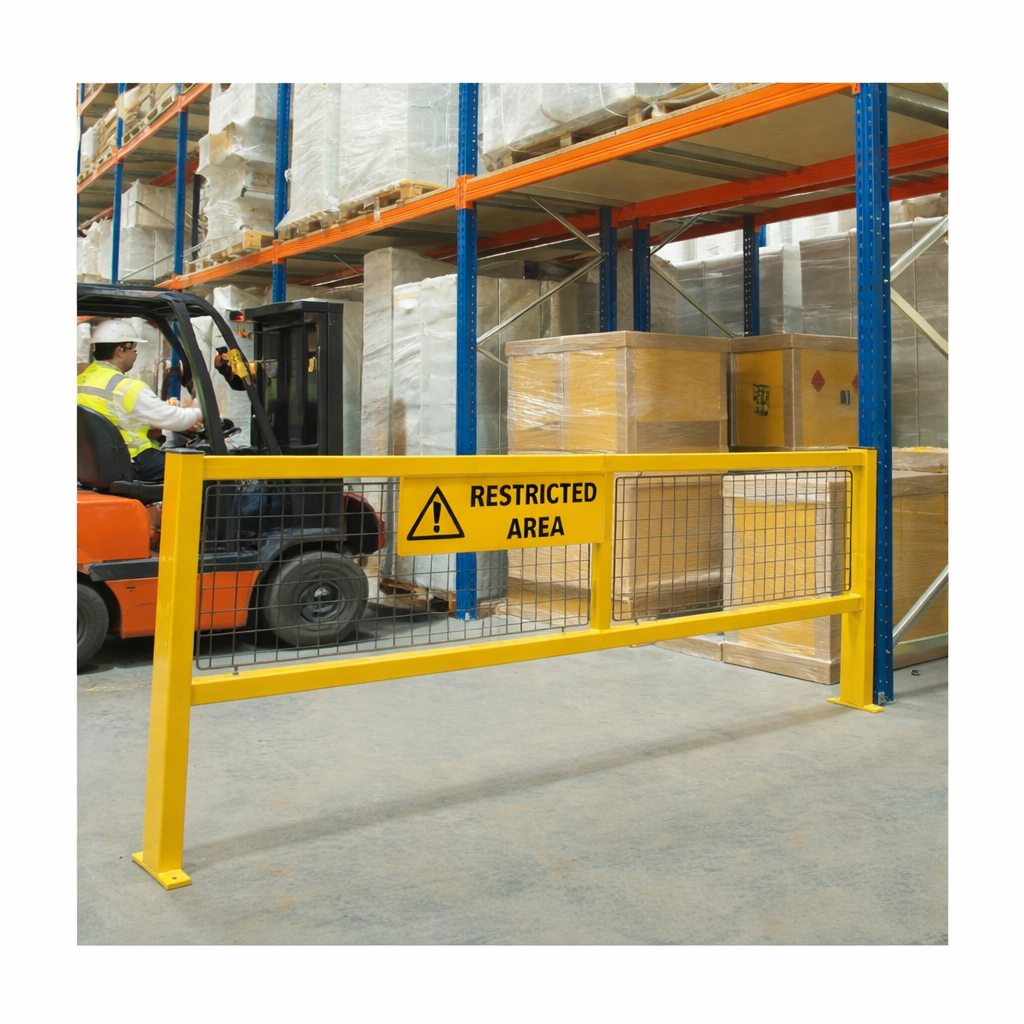
Warehouse Safety Barrier UK 2026: Expert Guide to Industrial Impact Protection
Warehouse safety barriers in the UK have become essential infrastructure for facilities managers prioritising workforce protection and regulatory compliance in 2026. As industrial operations across England, Scotland, Wales, and Northern Ireland face increasing scrutiny from HSE inspectors and heightened safety expectations, investing in professional-grade impact protection systems is no longer optional—it's a fundamental requirement for responsible facility management. This comprehensive guide examines everything you need to know about selecting, installing, and maintaining warehouse safety barriers that protect your people, assets, and business continuity throughout the UK.
Whether you're managing a distribution centre in Manchester, a manufacturing plant in Birmingham, a logistics hub in Glasgow, or a retail warehouse anywhere across the United Kingdom, understanding the critical role of heavy-duty warehouse safety barriers will help you make informed decisions that safeguard your operations for decades to come.
Why Warehouse Safety Barriers Matter in UK Facilities
The industrial landscape in the UK has evolved dramatically in 2026, with warehouse operations becoming increasingly mechanised, faster-paced, and more complex. Forklift traffic, automated guided vehicles, and high-density storage systems create environments where the potential for catastrophic accidents multiplies daily. Without proper physical barriers separating pedestrian zones from machinery operations, facilities expose themselves to preventable tragedies that destroy lives, devastate businesses, and trigger regulatory consequences.
HSE statistics consistently demonstrate that workplace transport incidents—particularly those involving forklifts and pedestrians—represent one of the most significant causes of fatal and serious injuries in UK warehouses. A single incident can result in life-changing injuries, prosecution under the Health and Safety at Work Act, unlimited fines, director disqualification, and reputational damage that takes years to repair. Professional warehouse safety barriers provide the physical separation that transforms high-risk environments into controlled, compliant operations.
Beyond regulatory compliance, safety barriers deliver measurable business value. They prevent costly damage to racking systems, protect expensive machinery from accidental impacts, reduce insurance premiums through demonstrated risk mitigation, and create visible safety culture that improves employee morale and retention. In 2026's competitive labour market across the UK, facilities that prioritise worker safety gain significant advantages in recruitment and retention.
Understanding Steel Mesh Impact Protection Systems
Not all warehouse barriers deliver equal protection. The heavy-duty steel mesh barrier system represents the premium standard for UK industrial facilities, combining maximum impact resistance with operational visibility that lightweight alternatives cannot match. The engineering behind these systems focuses on three critical performance factors: structural integrity under impact, permanent installation stability, and long-term durability in demanding environments.
Steel mesh construction distributes impact forces across the entire barrier structure rather than concentrating stress at single points. When a forklift strikes a properly engineered barrier, the mesh panel flexes to absorb energy whilst the floor-fixed posts anchor the system in place. This prevents the catastrophic failure modes common in plastic barriers or portable systems that shift, crack, or collapse under real-world impacts.
The open mesh design solves a critical operational challenge: maintaining visibility whilst providing protection. Solid barriers create blind spots that contribute to accidents, forcing operators to navigate without clear sightlines. Steel mesh barriers allow supervisors to monitor operations across the facility, enable forklift operators to coordinate movements safely, and maintain the spatial awareness essential for efficient warehouse operations throughout England, Scotland, Wales, and Northern Ireland.
Warehouse Safety Barrier Comparison: Making the Right Choice
Facilities managers evaluating barrier options in 2026 face numerous choices, each with distinct performance characteristics, cost implications, and suitability for different applications. Understanding these differences ensures your investment delivers the protection your facility requires.
| Feature | Heavy-Duty Steel Mesh | Standard Steel Barriers | Plastic/Composite | Portable Systems |
|---|---|---|---|---|
| Impact Resistance | Maximum - forklift rated | Moderate impacts only | Minimal protection | Very limited |
| Installation | Permanent floor-fixed | Floor-fixed | Surface mounted | Weighted/temporary |
| Visibility | Excellent - open mesh | Limited by solid sections | Variable | Often blocks sightlines |
| Lifespan | 20+ years | 10-15 years | 3-5 years | 1-3 years |
| Maintenance | Minimal | Moderate | Frequent replacement | Constant repositioning |
| HSE Compliance | Exceeds requirements | Meets basic standards | May not comply | Rarely compliant |
| Cost (10-year) | Lowest total cost | Moderate | High (replacements) | Highest (labour + replacement) |
The comparison clearly demonstrates why professional facilities across the UK choose heavy-duty steel mesh systems. Whilst initial investment exceeds lightweight alternatives, the total cost of ownership over a barrier's operational life strongly favours permanent, engineered solutions that deliver decades of reliable protection.
How to Choose the Right Warehouse Safety Barrier System
Selecting appropriate barriers requires systematic assessment of your facility's specific requirements, risk profile, and operational constraints. Follow this expert framework to ensure your investment delivers optimal protection:
Risk Assessment and Zone Identification: Map your warehouse to identify high-risk areas where vehicle-pedestrian interaction occurs, machinery operates, or valuable assets require protection. Consider traffic patterns, blind corners, loading zones, and areas where operational pressures might encourage unsafe shortcuts. Document current near-miss incidents and historical accident data to identify patterns requiring physical intervention.
Impact Force Calculation: Evaluate the types of vehicles operating in your facility and their typical speeds. Counterbalance forklifts carrying maximum loads represent significantly higher impact forces than pedestrian pallet trucks. Your barrier system must withstand the worst-case scenario—a fully loaded forklift at maximum operational speed—not just average conditions.
Visibility Requirements: Determine whether operations require clear sightlines through barriers or whether solid protection is acceptable. Distribution centres with cross-aisle traffic typically require mesh systems that maintain visibility, whilst perimeter protection around stationary machinery may accommodate solid barriers.
Environmental Considerations: Assess your facility's environmental conditions. Cold storage operations, chemical exposure, high humidity, or outdoor installations require enhanced corrosion protection. Premium powder-coated steel mesh barriers perform reliably across all UK climate conditions, from Scottish winters to coastal environments.
Compliance Verification: Ensure any barrier system meets current HSE requirements for your industry sector. Request compliance documentation, test certificates, and installation guidance that demonstrates regulatory conformance. In 2026, inspectors expect comprehensive documentation supporting your safety equipment choices.
Future Expansion Planning: Select modular systems that accommodate facility growth and layout changes. Your warehouse configuration will evolve; barriers should adapt without requiring complete replacement. The modular steel mesh system allows unlimited configuration possibilities as your operations expand.
Step-by-Step Installation Guide for Maximum Protection
Proper installation determines whether your safety barriers deliver their designed protection or fail when needed most. Follow this professional installation protocol for permanent, reliable performance:
Step 1 - Comprehensive Site Survey: Conduct detailed measurements of protection zones, documenting floor conditions, existing infrastructure, and operational constraints. Photograph areas requiring barriers and create scaled drawings showing proposed barrier locations relative to traffic routes, doorways, and equipment positions.
Step 2 - Floor Condition Assessment: Verify concrete floors meet minimum specifications for anchor installation. Check for adequate thickness (typically 150mm minimum), proper curing, absence of significant cracks or spalling, and freedom from subsurface utilities or heating systems. Mark any areas requiring remediation before barrier installation.
Step 3 - Precise Layout Marking: Transfer your installation plan to the warehouse floor using durable marking methods. Position barrier sections according to your protection strategy, ensuring alignment with traffic routes and maintaining required clearances. Use laser levels to ensure straight runs and proper corner angles.
Step 4 - Anchor Point Preparation: Drill fixing holes to specified depths using appropriate masonry bits and professional drilling equipment. Clean holes thoroughly using compressed air or vacuum extraction to remove all dust and debris—contaminated holes compromise anchor strength. Verify hole diameter and depth meet manufacturer specifications.
Step 5 - Post Installation and Securing: Insert heavy-duty expansion anchors or chemical anchors according to floor conditions and load requirements. Position barrier posts and torque fixing bolts to specified values using calibrated tools. Under-tightened fixings allow movement; over-tightening can damage anchors or crack concrete.
Step 6 - Panel Attachment: Install steel mesh panels between fixed posts, ensuring all connection points engage properly and panels align correctly. Check that mesh sections overlap at joins without gaps that could compromise protection. Verify all fasteners are secure and safety clips are properly engaged.
Step 7 - Structural Verification: Test the completed installation by applying moderate lateral pressure to verify stability. Barriers should not flex excessively or show movement at floor fixings. Document any issues requiring correction before operational handover.
Step 8 - Documentation and Training: Photograph completed installations, update facility safety plans, and brief warehouse staff on the new barriers. Emphasise that barriers protect them and must not be compromised by storing materials against them or using them as anchor points for other equipment.
Cost Analysis: Investment vs. Risk in 2026
Understanding the true cost of warehouse safety barriers requires looking beyond initial purchase prices to examine total cost of ownership, risk mitigation value, and potential liability exposure. In 2026, professional barriers represent one of the highest-return safety investments available to UK facilities.
Initial Investment Breakdown: Professional heavy-duty steel mesh barriers range from £754 to £1,208 per section depending on dimensions (1000-2000mm length, 900-1100mm height). A typical warehouse requiring 50 linear metres of protection might invest £15,000-£25,000 for comprehensive coverage including installation. This represents a fraction of the cost associated with a single serious incident.
Operational Cost Comparison: Over a 20-year operational life, steel mesh barriers require minimal maintenance—perhaps £500 total for occasional cleaning and inspection. Lightweight alternatives requiring replacement every 3-5 years accumulate costs of £40,000+ for the same protection period, plus ongoing labour for removal and reinstallation.
Risk Mitigation Value: HSE prosecutions for safety failures resulting in serious injury regularly exceed £500,000 in fines alone, before considering compensation claims, legal costs, and operational disruption. A single prevented incident justifies barrier investment many times over. Insurance providers increasingly offer premium reductions for facilities demonstrating proactive risk mitigation through permanent safety infrastructure.
Productivity Benefits: Clearly demarcated safe zones reduce operational hesitation and improve traffic flow efficiency. Warehouse staff work more confidently when physical barriers protect them, reducing the psychological stress that contributes to errors and accidents. Facilities report productivity improvements of 5-10% after implementing comprehensive barrier systems across the UK.
Asset Protection ROI: Preventing damage to racking systems, machinery, and building structures delivers immediate returns. A forklift collision with unprotected racking can cause £10,000+ in structural repairs plus inventory loss and operational downtime. Barriers positioned strategically around high-value assets pay for themselves by preventing the first major impact.
Common Mistakes to Avoid When Implementing Safety Barriers
Even well-intentioned facilities make critical errors that compromise barrier effectiveness. Avoid these common pitfalls identified across UK warehouses in 2026:
Choosing Price Over Performance: Selecting the cheapest barrier option typically results in inadequate protection, frequent replacement, and higher total costs. Lightweight barriers that fail during the first serious impact provide no protection whilst creating false confidence. Invest in engineered systems designed for your actual risk profile.
Inadequate Coverage: Installing barriers only in obvious high-risk areas whilst leaving gaps in protection creates vulnerabilities. Accidents occur where you least expect them. Conduct comprehensive risk assessment covering your entire facility, not just areas where incidents have already occurred.
Poor Installation Quality: Rushing installation or using inadequate fixings compromises barrier performance. Barriers must be anchored to manufacturer specifications using proper techniques and materials. Substandard installation voids warranties and creates liability if barriers fail during incidents.
Ignoring Visibility Requirements: Installing solid barriers that block sightlines can increase accident risk by creating blind spots. Choose mesh systems that maintain operational visibility whilst providing physical protection, particularly in high-traffic areas across England, Scotland, Wales, and Northern Ireland.
Neglecting Maintenance: Assuming barriers require no attention after installation leads to degraded performance. Implement quarterly inspection protocols to identify impact damage, loose fixings, or corrosion requiring attention. Document all inspections for compliance purposes.
Blocking Barrier Zones: Allowing materials, equipment, or pallets to accumulate against barriers defeats their protective purpose. Maintain clear zones around barriers and enforce policies preventing their use as storage locations or equipment anchors.
Failing to Update Documentation: Not incorporating barriers into facility safety plans, emergency procedures, and training materials means staff don't understand their protective function. Update all documentation and conduct regular training emphasising barrier importance.
Expert Recommendations for UK Facilities in 2026
Based on extensive experience across distribution centres, manufacturing plants, and logistics facilities throughout the United Kingdom, these expert recommendations ensure your barrier investment delivers maximum protection:
- Prioritise permanent over portable: Floor-fixed barriers provide reliable protection that portable systems cannot match. Invest in permanent installations for critical protection zones.
- Choose steel mesh for operational areas: Maintain visibility whilst providing maximum impact resistance in zones where vehicles and pedestrians interact.
- Implement comprehensive coverage: Protect all high-risk zones simultaneously rather than phased implementation that leaves vulnerabilities.
- Exceed minimum compliance: HSE requirements represent minimum acceptable standards. Professional facilities implement protection that exceeds regulatory baselines.
- Document everything: Maintain comprehensive records of risk assessments, barrier specifications, installation details, and inspection results for compliance and liability protection.
- Train continuously: Include barrier awareness in induction training and regular safety refreshers. Staff must understand barriers protect them and require respect.
- Plan for expansion: Select modular systems that accommodate facility growth without requiring complete replacement as operations evolve.
- Engage specialists: Work with safety equipment suppliers who understand UK regulations and can provide technical support throughout specification, installation, and operational life.
Maintenance Tips for Long-Term Performance
Professional warehouse safety barriers deliver decades of reliable protection when properly maintained. Implement these maintenance protocols to maximise your investment:
Quarterly Visual Inspections: Conduct systematic inspections checking for impact damage, loose fixings, corrosion at floor level, and structural deformation. Document findings and address issues immediately. Assign responsibility to specific personnel and schedule inspections in facility management systems to ensure consistency.
Post-Impact Assessment: After any significant collision, inspect affected barrier sections thoroughly. Even when barriers appear undamaged, impacts can compromise structural integrity or loosen fixings. Test stability and replace panels showing deformation that might reduce protection during subsequent impacts.
Annual Deep Cleaning: Clean barriers using mild detergent and water to remove accumulated warehouse dust, chemical residues, and environmental contamination. This cleaning provides opportunity for detailed inspection of powder-coated finishes, weld points, and connection hardware.
Corrosion Prevention: Inspect coating integrity, particularly at floor level where moisture accumulation occurs. Address any chips, scratches, or coating damage promptly using touch-up paint matched to the original finish. Preventing corrosion initiation extends barrier life significantly in UK environments.
Fixing Verification: Check anchor bolt tightness annually using calibrated torque tools. Vibration and repeated impacts can loosen fixings over time. Re-torque to specification and replace any damaged anchors or fixings showing wear.
Documentation Maintenance: Update facility records after each inspection, documenting barrier condition, maintenance performed, and any issues requiring future attention. This documentation demonstrates ongoing commitment to safety during HSE inspections and provides valuable evidence if incidents occur.
Frequently Asked Questions About Warehouse Safety Barriers UK
What impact forces can professional warehouse safety barriers withstand in 2026?
Heavy-duty steel mesh barriers are engineered to withstand impacts from standard warehouse vehicles including counterbalance forklifts (up to 5 tonnes capacity), reach trucks, and pallet trucks operating at normal warehouse speeds (typically up to 10 mph). The floor-fixed installation and mesh panel design distribute impact forces across the entire structure, preventing catastrophic failure. Specific impact ratings depend on barrier dimensions and configuration—consult technical specifications for your exact requirements across England, Scotland, Wales, and Northern Ireland.
How do warehouse safety barriers help with HSE compliance in the UK?
Professional barriers demonstrate compliance with Health and Safety at Work Act requirements for risk mitigation, HSE guidance on workplace transport safety (HSG136), and industry-specific regulations for pedestrian segregation. They provide physical evidence of proactive safety management during inspections, help satisfy duty of care obligations, and reduce liability exposure if incidents occur. Comprehensive documentation including risk assessments, installation records, and maintenance logs further supports compliance demonstrations.
Can safety barriers be installed in existing warehouses without major disruption?
Yes, professional installation teams can implement barrier systems in operational warehouses with minimal disruption. Installation typically occurs during normal working hours, with each barrier section requiring 30-60 minutes for fixing and panel attachment. Facilities can often maintain operations in unaffected areas whilst installation progresses. Planning installation during quieter periods or outside peak hours further reduces operational impact across UK facilities.
What's the expected lifespan of steel mesh warehouse barriers?
Premium steel mesh barriers with powder-coated corrosion protection deliver 20+ years of reliable service when properly maintained. The robust construction resists deformation, the coating prevents rust in UK environmental conditions, and the simple design eliminates wear-prone moving parts. Many facilities report barriers remaining fully functional for 25-30 years, making them one of the longest-lasting safety investments available.
How much warehouse space do safety barriers require?
Barrier footprint depends on post dimensions and installation method, typically requiring 100-150mm from the protected zone. The slim profile minimises space consumption whilst delivering maximum protection. When planning layouts, account for maintaining clear zones around barriers (typically 300-500mm) to prevent materials accumulating against them and compromising their protective function.
Are warehouse safety barriers suitable for cold storage facilities?
Absolutely. Premium powder-coated steel mesh barriers perform reliably in freezer and chilled storage environments common across UK food distribution. The corrosion-resistant finish withstands temperature cycling, condensation, and the challenging conditions typical of cold storage operations. Many frozen food distributors throughout England, Scotland, Wales, and Northern Ireland rely on steel mesh barriers for protection in sub-zero environments.
Can barrier systems be reconfigured if warehouse layouts change?
Yes, modular barrier systems allow reconfiguration to accommodate evolving facility layouts. Whilst floor-fixed installation provides permanent stability, barriers can be removed and reinstalled in new locations if operational requirements change. The original floor fixings will leave anchor points that can be filled or capped. This flexibility ensures your safety investment adapts as your business grows and warehouse configurations evolve.
What's the difference between warehouse safety barriers and bollards?
Barriers provide continuous linear protection ideal for segregating zones, protecting racking runs, and creating pedestrian walkways. Bollards offer point protection for specific assets like building columns, machinery, or electrical panels. Professional facilities typically use both: barriers for zone segregation and bollards for individual asset protection. The steel mesh barrier system excels at creating protected perimeters that bollards cannot achieve.
Conclusion: Invest in Professional Protection for Your UK Facility
Warehouse safety barriers represent one of the most critical investments facilities managers make in 2026. The choice between adequate protection and inadequate alternatives determines whether your facility operates safely, maintains compliance, and protects the people and assets that drive your business success across England, Scotland, Wales, and Northern Ireland.
Professional heavy-duty steel mesh barrier systems deliver the robust, reliable protection that UK facilities demand. With maximum impact resistance, permanent floor-fixed stability, excellent operational visibility, and decades of maintenance-free performance, these barriers provide the definitive solution for industrial impact protection.
Don't compromise on safety equipment that protects your most valuable assets—your workforce. Every day without adequate barriers exposes your facility to preventable incidents that destroy lives, devastate businesses, and trigger regulatory consequences. The investment in professional protection pays for itself by preventing the first serious incident whilst delivering peace of mind that your facility meets the highest safety standards.
Take action today to protect your facility. Explore the complete range of warehouse safety barriers engineered for maximum protection across the United Kingdom. With rapid delivery throughout England, Scotland, Wales, and Northern Ireland, comprehensive installation support, and expert technical guidance, you can have professional protection operational within days. Invest in safety infrastructure that will safeguard your operations for decades to come—because your people deserve nothing less than the best protection available in 2026.