
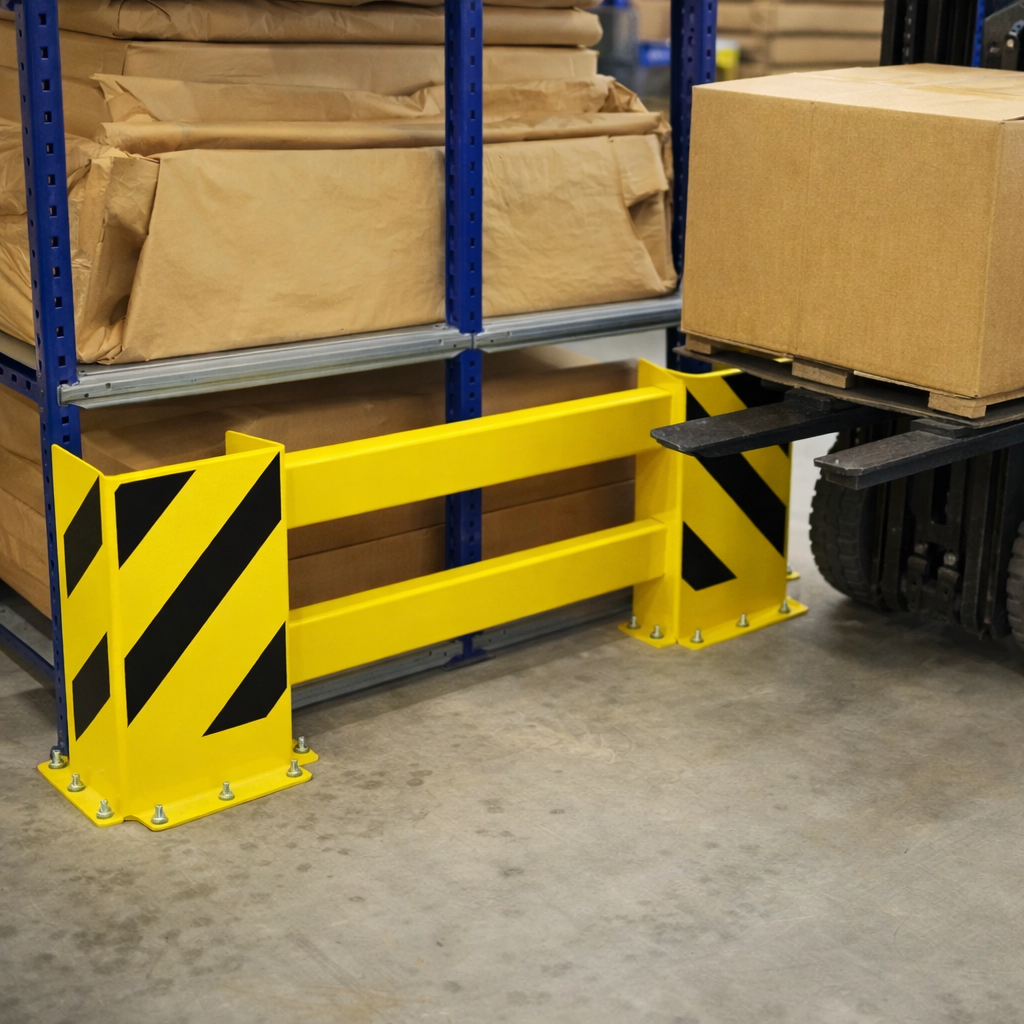
Warehouse Racking End Barrier UK 2026: Expert Guide

Warehouse racking end barriers represent one of the most critical safety investments for UK facilities in 2026, protecting both personnel and expensive infrastructure from costly forklift collisions. As facilities managers across England, Scotland, Wales, and Northern Ireland face increasing pressure to maintain HSE compliance whilst managing operational costs, selecting the right warehouse racking end barrier has never been more important. This comprehensive guide examines everything UK warehouse operators need to know about racking end protection in 2026, from regulatory requirements and installation best practices to cost analysis and expert recommendations that will help you make informed decisions for your facility.
The warehouse safety landscape in the UK continues to evolve in 2026, with the Health and Safety Executive maintaining rigorous standards for racking protection whilst facilities face unprecedented operational demands. Whether you're managing a distribution centre in Manchester, a cold storage facility in Edinburgh, or a manufacturing warehouse in Cardiff, understanding the nuances of professional-grade racking end barriers will help you protect your investment, ensure compliance, and create a safer working environment for your team.
Why Warehouse Racking End Barriers Matter in 2026
The importance of robust racking end protection has intensified in 2026 as UK warehouses face higher throughput demands, increased automation integration, and stricter liability frameworks. A single racking collapse can cost facilities £50,000 to £200,000 when accounting for damaged inventory, equipment repairs, operational downtime, and potential HSE enforcement actions.
Modern floor-fixed steel safety guards serve multiple critical functions beyond simple impact protection. They create visual safety zones that improve traffic management, support operator training initiatives, and demonstrate due diligence during safety audits. For facilities operating 24/7 shifts across the UK, high-visibility hazard markings reduce collision risk by up to 70% compared to unprotected racking systems.
Insurance considerations have also evolved in 2026, with many UK commercial insurers now requiring documented racking protection as part of warehouse coverage. Facilities without adequate end barriers may face higher premiums or coverage limitations, making professional-grade protection not just a safety investment but a financial necessity.
The integration of automated guided vehicles (AGVs) and autonomous mobile robots (AMRs) in UK warehouses has introduced new collision dynamics that make permanent, floor-fixed barriers essential. Unlike human operators who can adjust to temporary or portable barriers, automated systems require consistent, predictable safety infrastructure that won't shift or move under impact.
Understanding Warehouse Racking End Barrier Types
UK facilities managers in 2026 can choose from several racking end protection categories, each suited to different operational requirements and risk profiles. Understanding these distinctions helps ensure you select appropriate protection for your specific warehouse environment.
Floor-Fixed Steel Barriers: The gold standard for permanent racking protection, these heavy-duty units bolt directly to concrete warehouse floors using chemical or mechanical anchors. They offer maximum impact resistance and won't shift under collision forces. Ideal for high-traffic UK distribution centres and facilities with constant forklift operations.
Bolt-Down Modular Systems: Mid-range protection offering reasonable impact resistance with easier relocation capabilities. Suitable for warehouses that may reconfigure racking layouts periodically, though they provide less robust protection than permanently fixed alternatives.
Portable Barriers: Lightweight options that can be repositioned without floor fixings. Generally not recommended for serious warehouse protection in 2026 due to tendency to shift under impact, though they may serve temporary applications during facility modifications.
For professional UK facilities prioritising safety and compliance, heavy-duty floor-fixed barriers with integrated high-visibility markings represent the most reliable long-term solution. These systems distribute impact forces effectively, maintain position under collision, and require minimal ongoing maintenance.
Comprehensive Comparison: Choosing the Right Protection
Selecting appropriate racking end protection requires understanding how different options perform across critical criteria. This comparison helps UK facilities managers evaluate solutions based on 2026 operational requirements:
| Feature | Premium Floor-Fixed Barriers | Standard Bolt-Down Systems | Budget Portable Options |
|---|---|---|---|
| Steel Construction | Heavy-duty reinforced gauge | Standard gauge steel | Lightweight steel or composite |
| Mounting Method | Permanent floor-fixed anchors | Removable bolt-down | Weighted base or minimal fixing |
| Impact Resistance | Maximum - withstands forklift collisions | Moderate - handles light impacts | Minimal - cosmetic protection only |
| Visibility Markings | Integrated high-vis hazard stripes | Painted or applied markings | Reflective tape or basic paint |
| UK Compliance Support | Full HSE documentation provided | Basic installation guidance | Limited or no compliance support |
| Maintenance Requirements | Minimal - powder-coated finish | Periodic inspection and repainting | Frequent repairs and replacement |
| Typical Lifespan | 10+ years in UK warehouses | 5-7 years with maintenance | 2-3 years before replacement |
| Total Cost of Ownership | Lowest over lifecycle | Moderate with maintenance costs | Highest due to frequent replacement |
This analysis demonstrates why professional UK facilities increasingly specify premium floor-fixed barriers despite higher initial investment. The combination of superior protection, minimal maintenance, and extended lifespan delivers better value over the 10-15 year planning horizon typical for warehouse infrastructure.
How to Choose the Right Warehouse Racking End Barrier
Selecting appropriate racking end protection for your UK facility requires systematic evaluation of operational requirements, risk factors, and compliance obligations. Follow this expert framework to ensure optimal selection:
Assess Your Traffic Intensity: Facilities with constant forklift operations require maximum-strength floor-fixed barriers. Calculate daily vehicle movements past vulnerable racking ends to quantify collision risk. High-traffic UK distribution centres processing 500+ pallet movements daily need premium protection.
Evaluate Floor Conditions: Floor-fixed barriers require minimum 100mm reinforced concrete for proper anchor installation. Conduct floor surveys to verify substrate suitability before specifying protection systems. Facilities with specialist flooring may need custom mounting solutions.
Consider Equipment Types: Heavier forklifts and reach trucks generate greater impact forces requiring robust barriers. Document your equipment fleet specifications including maximum operating weights and typical speeds in racking aisles across your UK facility.
Review Compliance Requirements: HSE guidelines for warehouse safety in 2026 emphasise documented risk assessments and appropriate control measures. Ensure selected barriers support your compliance obligations with proper documentation and installation specifications.
Calculate Total Cost of Ownership: Look beyond initial purchase price to include installation labour, ongoing maintenance, expected lifespan, and replacement costs. Premium barriers typically deliver 40-60% lower total cost over 10 years compared to budget alternatives.
Verify Visibility Features: High-visibility hazard markings are essential for 24/7 UK warehouse operations. Integrated markings outperform applied tape or paint, maintaining visibility throughout the barrier's service life without periodic renewal.
For most professional UK facilities, heavy-duty floor-fixed barriers with powder-coated finish and integrated high-visibility markings represent the optimal balance of protection, durability, and lifecycle value.
Step-by-Step Installation Guide for UK Facilities
Proper installation is critical for barrier performance and longevity. This comprehensive guide ensures professional results whether you're using in-house maintenance teams or specialist contractors across England, Scotland, Wales, or Northern Ireland.
Step 1 - Site Assessment and Planning: Conduct thorough surveys of vulnerable racking end positions, identifying high-risk locations based on traffic patterns and historical incident data. Map underground services using facility drawings and GPR scanning where necessary. Document floor conditions and verify concrete thickness meets minimum 100mm reinforced specification.
Step 2 - Equipment and Materials Preparation: Assemble required tools including heavy-duty rotary hammer drill with appropriate masonry bits, calibrated torque wrench, precision spirit level, tape measure, chalk line, and dust extraction equipment for COSHH compliance. Verify all barrier components and fixings are present before commencing work.
Step 3 - Accurate Positioning and Marking: Position barriers at designated locations ensuring proper alignment with racking end frames and traffic flow patterns. Use spirit level to verify vertical and horizontal alignment, then mark drilling positions through pre-drilled mounting holes. Double-check measurements before drilling to prevent costly errors.
Step 4 - Precision Drilling: Drill anchor holes to specified depth using appropriate masonry bits, maintaining perpendicular angle to floor surface. Deploy dust extraction throughout drilling to maintain clean working environment and comply with UK health and safety regulations. Verify hole depth and cleanliness before anchor installation.
Step 5 - Anchor Installation: Clean drilled holes thoroughly using wire brush and compressed air to remove all dust and debris. Install chemical or mechanical anchors according to manufacturer specifications, ensuring correct depth and alignment. Allow chemical anchors to cure for specified period before loading.
Step 6 - Barrier Mounting and Torquing: Position barrier over installed anchors, insert all fixings hand-tight, then torque to specified values using calibrated wrench in cross-pattern sequence. This ensures even load distribution and prevents distortion. Document torque values for maintenance records.
Step 7 - Final Inspection and Documentation: Conduct comprehensive post-installation inspection verifying secure mounting, proper alignment, and absence of sharp edges. Test stability with moderate lateral pressure. Photograph installation and record details including date, location, installer, and torque specifications for facility safety records.
Professional installation typically requires 20-30 minutes per barrier for experienced teams. UK facilities installing multiple units should develop standardised procedures to ensure consistency across all locations.
Cost Analysis: Investment and Return for UK Warehouses
Understanding the complete financial picture helps UK facilities managers justify appropriate safety investments and demonstrate value to senior leadership. This analysis examines costs and returns for warehouse racking end barriers in 2026.
Initial Investment Breakdown: Premium floor-fixed barriers for UK facilities typically range from £800-£1,600 per unit depending on size and specification. Installation labour adds £50-£150 per barrier for in-house teams with appropriate equipment, or £150-£300 when engaging specialist contractors. A typical UK warehouse protecting 20 vulnerable racking ends might invest £18,000-£35,000 for comprehensive protection.
Ongoing Maintenance Costs: Premium powder-coated barriers require minimal maintenance, typically £20-£40 annually per unit for inspection and cleaning. Budget alternatives may require £100-£200 annually for repainting and repairs, plus £500-£800 every 2-3 years for replacement due to deterioration or damage.
Collision Cost Avoidance: Industry data from UK warehouses indicates unprotected racking experiences collision incidents every 18-24 months on average. Minor incidents cost £2,000-£8,000 for repairs and downtime, whilst major racking collapses can exceed £100,000 when including damaged inventory, equipment repairs, lost productivity, and HSE investigation costs.
Insurance Premium Impact: UK facilities with documented racking protection may qualify for 5-15% reductions on warehouse insurance premiums. For a facility paying £25,000 annually, this represents £1,250-£3,750 in annual savings that directly offset barrier investment costs.
Return on Investment Timeline: Comprehensive racking end protection typically achieves positive ROI within 12-24 months through avoided collision costs and insurance savings. Over a 10-year planning horizon, premium barriers deliver 300-500% return compared to operating without protection or using budget alternatives requiring frequent replacement.
Productivity Benefits: Beyond direct cost avoidance, proper racking protection improves warehouse efficiency by reducing incident-related disruptions, supporting smoother traffic flow, and enabling higher operating speeds with reduced collision anxiety. UK facilities report 3-8% productivity improvements following comprehensive safety infrastructure upgrades.
When evaluating professional-grade warehouse racking end barriers, focus on total cost of ownership rather than initial purchase price to ensure optimal long-term value for your UK facility.
Common Mistakes to Avoid When Implementing Racking Protection
UK facilities managers can avoid costly errors by understanding common pitfalls in racking end barrier selection and implementation. Learn from these frequent mistakes observed across warehouses in England, Scotland, Wales, and Northern Ireland:
Prioritising Initial Cost Over Lifecycle Value: Selecting budget barriers to minimise upfront investment often results in higher total costs due to frequent replacement, ongoing maintenance, and inadequate protection during collisions. Premium barriers deliver superior long-term value despite higher initial pricing.
Inadequate Floor Assessment: Installing barriers without verifying floor substrate suitability leads to anchor failure and compromised protection. Always confirm minimum 100mm reinforced concrete and check for underground services before drilling. Thin screeds and asphalt surfaces cannot support proper floor-fixed installation.
Insufficient Coverage: Protecting only the most obvious high-risk locations whilst leaving other vulnerable racking ends exposed creates false security. Conduct comprehensive facility surveys to identify all positions requiring protection, including less-obvious locations where occasional traffic still poses collision risk.
Improper Installation Techniques: Failing to follow manufacturer specifications for anchor depth, torque values, or curing times compromises barrier performance. Under-torqued fixings allow movement under impact, whilst over-torquing can damage anchors or distort barrier mounting points. Always use calibrated tools and document installation parameters.
Neglecting Maintenance Protocols: Even premium barriers require periodic inspection to verify fixing integrity and identify impact damage. Establish quarterly inspection schedules and document findings to support safety compliance and warranty claims. Address identified issues promptly to maintain continuous protection.
Ignoring Traffic Pattern Changes: Warehouse layouts evolve over time, creating new high-risk locations as traffic patterns shift. Review racking protection annually and after significant operational changes to ensure coverage remains appropriate for current conditions across your UK facility.
Mixing Incompatible Protection Standards: Combining premium barriers in some locations with budget alternatives elsewhere creates inconsistent protection levels and complicates maintenance. Standardise on professional-grade solutions throughout your facility for optimal results and simplified management.
Overlooking Compliance Documentation: Failing to maintain installation records, inspection logs, and manufacturer specifications undermines your ability to demonstrate HSE compliance during audits. Establish comprehensive documentation systems from initial installation through ongoing maintenance.
Expert Recommendations for UK Warehouse Operators
Drawing on decades of combined experience in industrial safety across UK facilities, these expert recommendations help warehouse operators maximise the value and effectiveness of racking end protection in 2026:
Specify Premium Floor-Fixed Barriers for Permanent Installations: The superior impact resistance, minimal maintenance requirements, and extended lifespan of heavy-duty floor-fixed systems justify the investment for professional UK warehouses. Budget alternatives rarely deliver acceptable long-term value in demanding operational environments.
Prioritise Integrated High-Visibility Markings: Barriers with factory-applied high-visibility hazard markings outperform field-painted or tape-applied alternatives, maintaining visibility throughout service life without periodic renewal. This feature is particularly valuable for 24/7 UK operations where consistent visual warnings reduce collision risk.
Implement Comprehensive Protection Strategies: Racking end barriers work best as part of holistic warehouse safety programmes including operator training, traffic management protocols, and regular safety audits. Don't rely solely on physical barriers whilst neglecting operational safety culture.
Engage Qualified Installation Resources: Whether using in-house maintenance teams or specialist contractors, ensure installers have appropriate concrete drilling experience, calibrated tools, and understanding of manufacturer specifications. Poor installation undermines even premium barrier performance.
Establish Proactive Maintenance Schedules: Quarterly visual inspections identify issues before they compromise protection. Document all inspections, impact events, and maintenance activities to support safety compliance and demonstrate due diligence during HSE interactions or insurance claims.
Plan for Multi-Site Standardisation: UK operators managing multiple warehouses should standardise on consistent barrier specifications across all facilities. This simplifies procurement, installation, maintenance, and staff training whilst ensuring uniform protection standards throughout your operation.
Consider Future Automation Integration: Even if not currently deploying AGVs or AMRs, specify barriers suitable for future automation. Permanent floor-fixed systems provide the consistent, predictable infrastructure automated systems require, avoiding costly retrofits when automation arrives.
Leverage Supplier Expertise: Work with knowledgeable UK safety equipment specialists who can provide technical guidance, compliance support, and installation best practices. Quality suppliers offer value beyond product supply through expert consultation and ongoing support.
For UK facilities seeking optimal racking end protection, heavy-duty floor-fixed barriers with professional powder-coated finish and integrated high-visibility markings represent the expert-recommended solution for 2026 and beyond.
Maintenance Tips for Long-Term Performance
Proper maintenance ensures your warehouse racking end barriers deliver reliable protection throughout their 10+ year service life in UK facilities. Follow these expert maintenance protocols:
Quarterly Visual Inspections: Conduct systematic inspections every three months, examining each barrier for impact damage, loose fixings, finish deterioration, or visibility marking degradation. Document findings in facility maintenance logs with photographs of any damage. Increase inspection frequency in high-traffic areas or following known collision events.
Annual Fixing Verification: Once yearly, verify all mounting fixings remain properly torqued using calibrated torque wrench. Re-torque any fixings that have loosened due to vibration or impact. This simple procedure prevents progressive loosening that could compromise barrier stability under future collisions.
Post-Impact Assessment: Following any significant collision, conduct detailed inspection of affected barrier including mounting integrity, structural deformation, and fixing torque. Minor cosmetic damage typically doesn't compromise protection, but structural deformation or loose fixings require immediate attention and potential barrier replacement.
Cleaning Protocols: Clean barriers periodically using mild detergent and water to maintain high-visibility markings and professional appearance. Avoid abrasive cleaners or solvents that may damage powder-coated finish. In food-grade UK warehouses, use approved cleaning agents compatible with hygiene standards and allergen control protocols.
Documentation Requirements: Maintain comprehensive records including installation dates, inspection findings, maintenance activities, impact events, and any repairs or replacements. This documentation supports HSE compliance, insurance claims, and demonstrates due diligence in facility safety management across your UK operations.
Proactive Replacement Planning: Monitor barrier condition trends to anticipate replacement needs before protection is compromised. Facilities experiencing frequent impacts may need to replace barriers every 8-10 years, whilst low-traffic locations may achieve 15+ years service life. Budget for systematic replacement as part of long-term facility maintenance planning.
Seasonal Considerations: UK warehouses operating in temperature-controlled environments should monitor barriers for condensation-related corrosion, particularly at floor-level mounting points. Premium powder-coated barriers resist environmental degradation, but periodic inspection ensures early detection of any issues.
Frequently Asked Questions About Warehouse Racking End Barriers
What floor types are suitable for floor-fixed barrier installation in UK warehouses?
Floor-fixed warehouse racking end barriers require minimum 100mm reinforced concrete for proper anchor installation and load distribution. This specification is standard in most UK industrial facilities built to modern warehouse standards. The floor-fixed design relies on solid concrete substrate to achieve optimal anchor performance and impact resistance. Barriers cannot be properly installed on asphalt surfaces, wooden floors, thin concrete screeds (less than 100mm), or floors with significant deterioration. For facilities with specialist flooring such as resin-coated surfaces or underfloor heating systems, consult technical specialists to determine appropriate fixing methods that won't compromise floor integrity or barrier performance.
How do warehouse racking end barriers support HSE compliance in 2026?
Warehouse racking end barriers support UK Health and Safety Executive compliance by providing documented risk control measures for racking protection. HSE guidelines emphasise employer duty to assess workplace risks and implement appropriate controls to prevent injury and property damage. Professional-grade barriers demonstrate due diligence in protecting personnel and infrastructure, supporting your defence against potential enforcement action following incidents. Quality suppliers provide installation documentation, technical specifications, and compliance guidance to support your safety audit requirements across England, Scotland, Wales, and Northern Ireland. However, overall HSE compliance depends on proper installation, ongoing maintenance, operator training, and integration within your comprehensive safety management system rather than barrier installation alone.
Can warehouse maintenance teams install barriers or is specialist contractor required?
Installation is straightforward for competent UK maintenance personnel with appropriate tools and concrete drilling experience. The process requires heavy-duty rotary hammer drill, calibrated torque wrench, spirit level, and understanding of proper anchor installation techniques. Most experienced maintenance teams can complete professional installations following manufacturer guidance. However, facilities lacking suitable equipment, qualified personnel, or confidence in concrete drilling should engage specialist contractors experienced in industrial safety equipment installation. Professional contractors typically charge £150-£300 per barrier including labour and equipment, ensuring optimal results and compliance with installation specifications. The investment in professional installation is modest compared to barrier cost and ensures proper performance throughout service life.
What is the typical lifespan of warehouse racking end barriers in UK facilities?
Premium floor-fixed warehouse racking end barriers with professional powder-coated finish typically deliver 10-15 years of reliable protection in UK warehouse environments with proper installation and minimal maintenance. The heavy-duty steel construction and corrosion-resistant finish maintain structural integrity and professional appearance throughout this service life. Actual lifespan varies based on traffic intensity, impact frequency, environmental conditions, and maintenance quality. High-traffic distribution centres experiencing frequent collisions may need replacement after 8-10 years, whilst low-traffic locations can achieve 15+ years service. Budget alternatives with basic paint finish typically require replacement every 2-4 years due to corrosion, finish deterioration, and structural degradation, making premium barriers more cost-effective over typical warehouse planning horizons.
How much impact force can warehouse racking end barriers withstand?
Heavy-duty floor-fixed warehouse racking end barriers are engineered to withstand typical forklift and pallet jack impacts encountered in normal UK warehouse operations. The reinforced steel construction and permanent floor-fixed mounting distribute impact forces across a wide area, preventing racking damage in most collision scenarios involving standard warehouse equipment operating at normal speeds. Specific impact ratings vary by barrier design and size, but professional-grade units typically handle impacts from 2-3 tonne forklifts travelling at walking pace (3-5 mph) without structural failure or mounting compromise. For facilities operating unusually heavy equipment, high-speed vehicles, or requiring specific impact rating documentation, consult technical specialists for detailed engineering specifications and potential custom solutions.
Are replacement parts and fixings available for long-term maintenance?
Yes, replacement fixings, anchors, and components are available through quality UK suppliers for ongoing maintenance and repair requirements. Facilities should maintain small stock of spare fixings for rapid response to any maintenance needs, ensuring continuous protection for racking systems. When ordering replacement components, specify exact barrier model and fixing type to ensure compatibility. Quality suppliers provide technical support to help identify appropriate replacement parts and guidance on proper installation. Maintaining relationships with original suppliers simplifies long-term parts availability and ensures access to expert technical support throughout barrier service life across your UK facilities.
Can barriers protect against all warehouse vehicle types and operating conditions?
Professional warehouse racking end barriers provide excellent protection against standard forklifts, pallet jacks, reach trucks, and warehouse vehicles commonly used in UK distribution centres, manufacturing facilities, and logistics operations. They are designed for typical warehouse operating conditions including normal traffic speeds, standard equipment weights, and routine material handling activities. However, facilities operating unusually heavy equipment (5+ tonne capacity forklifts), high-speed vehicles, or specialised handling equipment may require enhanced protection measures or custom barrier specifications. Similarly, extreme operating conditions such as outdoor exposure, corrosive environments, or extreme temperature fluctuations may necessitate specialist barrier designs. Consult safety equipment specialists to discuss your specific operational requirements and ensure appropriate protection levels for your unique UK facility conditions.
What are the insurance implications of warehouse racking end barrier installation?
Many UK commercial insurers now consider documented racking protection when underwriting warehouse coverage in 2026. Facilities with comprehensive barrier installation may qualify for premium reductions of 5-15% on warehouse insurance policies, recognising reduced collision risk and demonstrated safety commitment. Conversely, warehouses without adequate racking protection may face higher premiums, coverage limitations, or increased excess requirements. Following collision incidents, insurers typically investigate whether appropriate safety measures were in place, and absence of reasonable protection may affect claim settlements. Maintain thorough documentation of barrier installation, maintenance records, and inspection logs to support insurance requirements and demonstrate due diligence. Consult your insurance broker about specific requirements and potential premium benefits when implementing racking protection across your UK facilities.
Conclusion: Protecting Your UK Warehouse Investment in 2026
Warehouse racking end barriers represent essential safety infrastructure for professional UK facilities in 2026, delivering protection for personnel, inventory, and expensive racking systems whilst supporting HSE compliance and operational efficiency. The evidence is clear: premium floor-fixed barriers with integrated high-visibility markings provide superior long-term value compared to budget alternatives, achieving positive ROI within 12-24 months through avoided collision costs, insurance savings, and productivity improvements.
For facilities managers across England, Scotland, Wales, and Northern Ireland, the decision isn't whether to implement racking end protection, but rather which solution will deliver optimal performance throughout the 10-15 year planning horizon typical for warehouse infrastructure investments. Heavy-duty floor-fixed barriers with professional powder-coated finish and permanent mounting represent the expert-recommended choice for serious warehouse operators prioritising safety, compliance, and lifecycle value.
Don't wait for a costly collision to demonstrate the value of professional racking protection. Take action today to safeguard your warehouse infrastructure, protect your team, and demonstrate your commitment to workplace safety excellence. Invest in premium warehouse racking end barriers that deliver the protection, durability, and peace of mind your UK facility deserves.
Ready to upgrade your warehouse safety infrastructure? Explore our professional-grade warehouse racking end barriers designed specifically for demanding UK facilities, backed by expert technical support and fast nationwide delivery across all regions.